
Antique Marquetry Mirror
An antique marquetry mirror brings together intricate wood inlay and polished glass, offering a focal point crafted by makers across the Georgian, Victorian and Edwardian periods.
Antique Marquetry Mirror
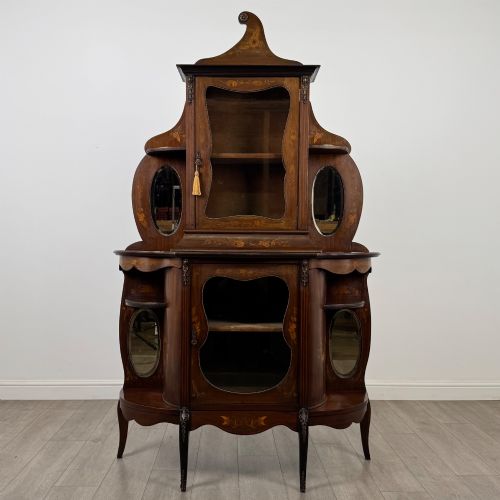
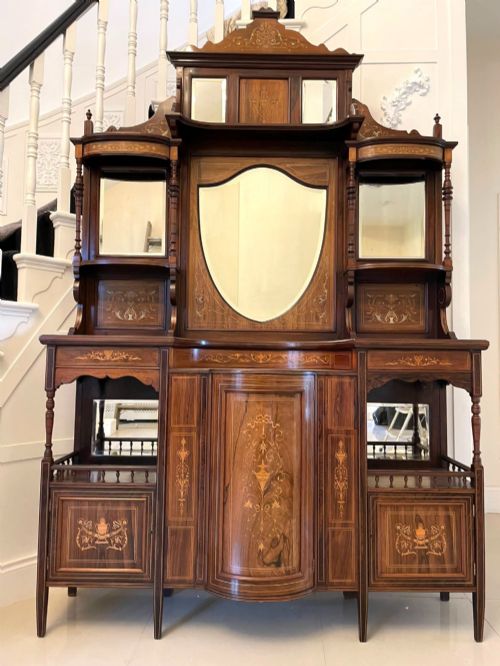
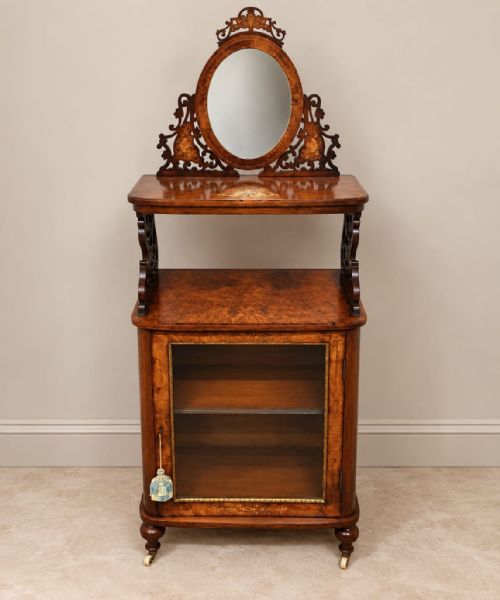
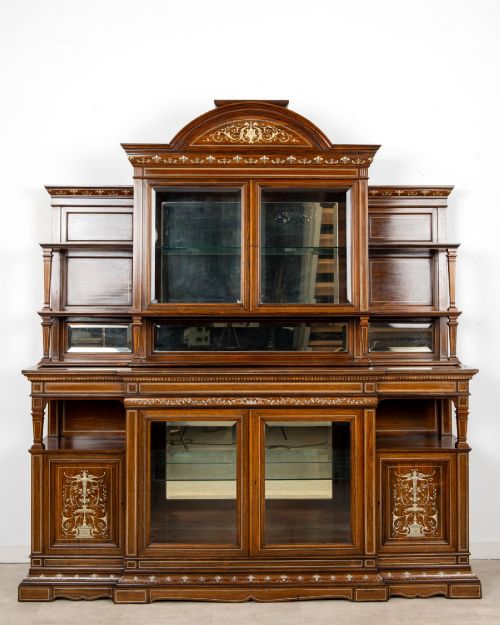
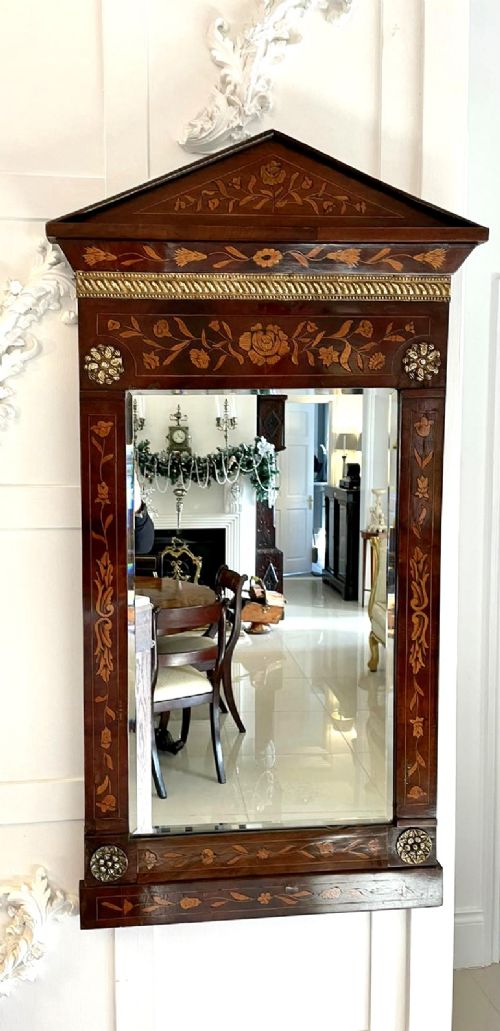
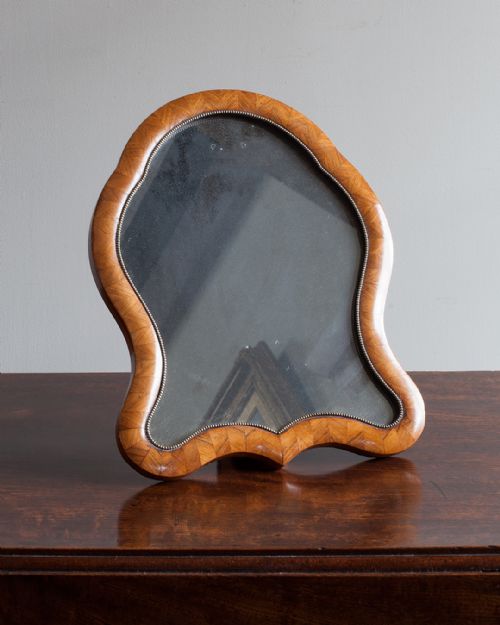
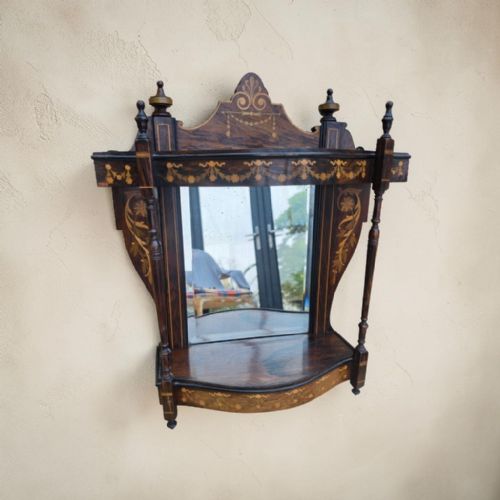
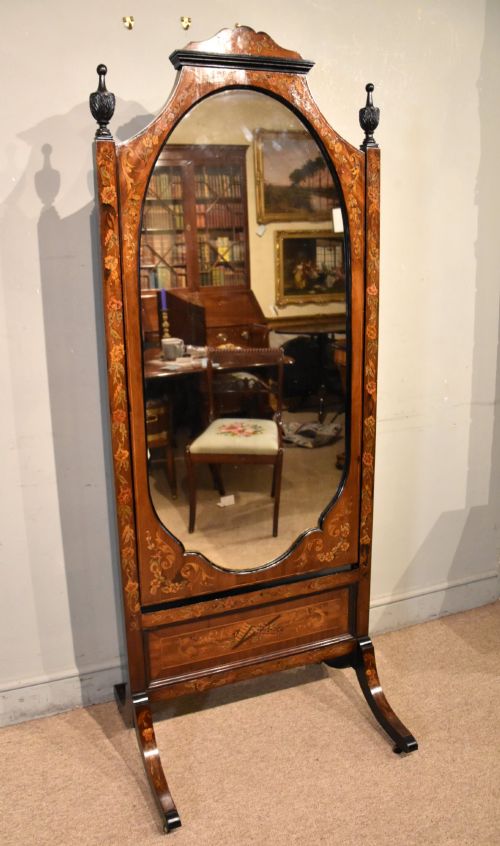
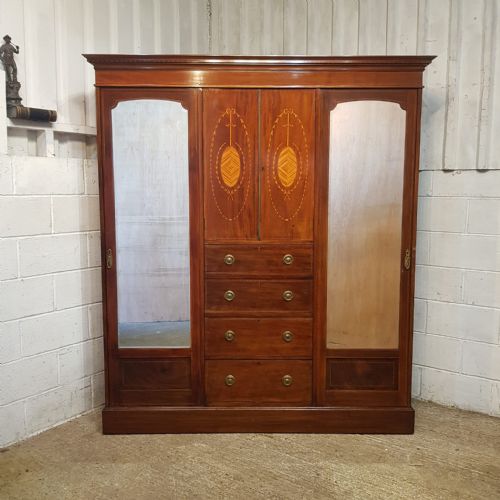
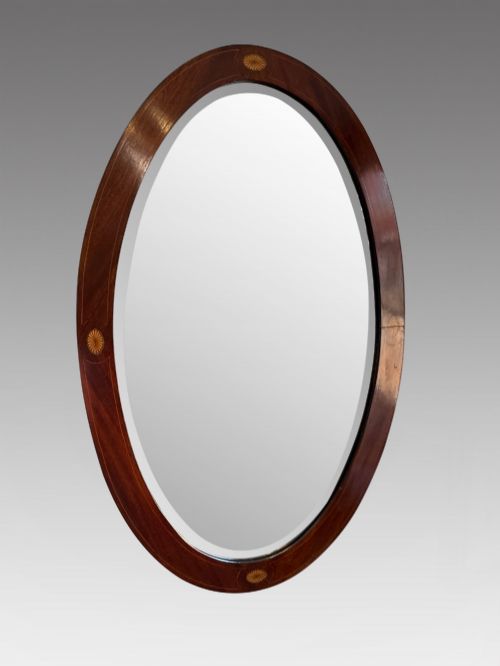
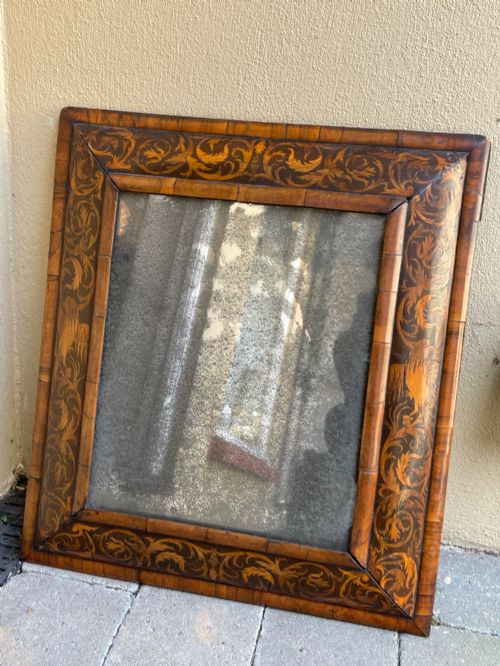
An antique marquetry mirror comprises wall hanging pieces, overmantels, cheval glasses and dressing table toilet mirrors formed from various timbers. These objects display decorative wood patterns set into surfaces like mahogany, walnut and rosewood.
Buyers meet examples spanning from George III and Dutch styles to Late Victorian and Edwardian iterations. The surviving pieces range from small table mirrors to large wall fixtures incorporating floral or geometric inlay.
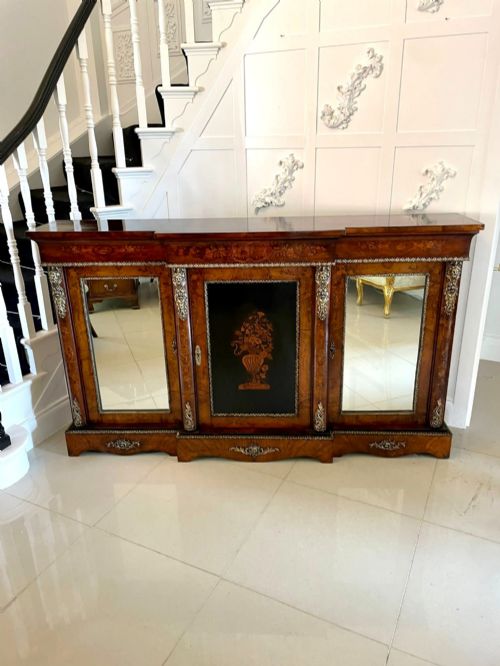
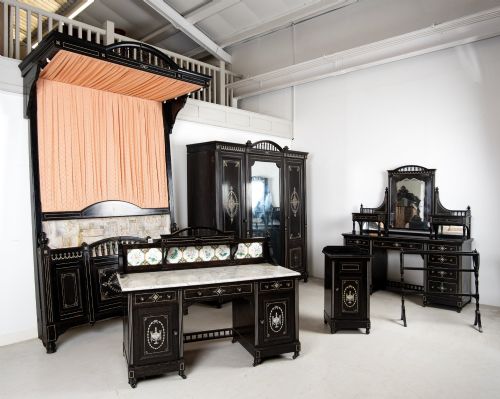
The selection includes items produced during the nineteenth century alongside Georgian and Edwardian variations. Many utilise contrasting timbers to create pictorial motifs on the frame or mirror surround.
How They Were Made
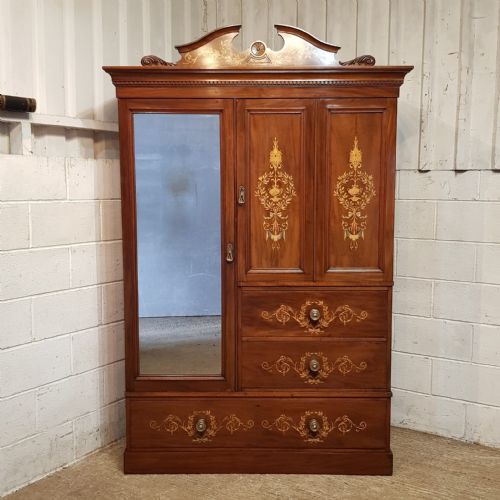
Cabinet makers utilised foundational timbers such as mahogany, walnut and rosewood, applying contrasting veneers of satinwood and kingwood for decorative effect. The technique of marquetry involved fitting thin slices of wood together to form pictorial or geometric designs before gluing them to the carcass.
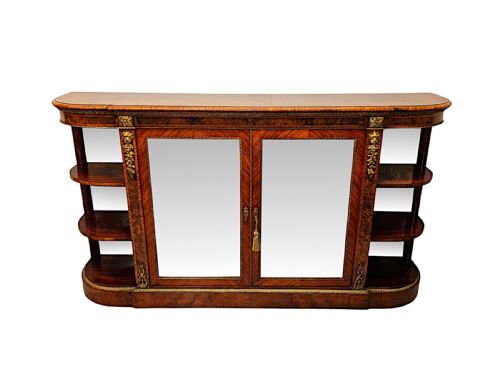
Glass panels were secured within rebated frames, sometimes accompanied by brass fittings, ormolu mounts or carved mouldings. Craftsmen finished the timber surfaces with polish or wax to highlight the grain and the varied tones of the inlaid woods.
An eighteenth-century mirror might reflect centuries of hasty cravat knots and powdered wigs without offering a single word of critique.
What Varies In Quality
The standard of execution in the marquetry work dictates the refinement of the piece, separating simple geometric patterns from elaborate pictorial compositions. Precision in cutting and fitting the wood veneers determines the crispness of the design.
The choice of primary timber and secondary framing materials influences the overall grade of the object. Examples featuring secondary woods like satinwood or burr walnut alongside well-preserved original glass plates represent the higher tier of production.
Collinson & Lock·Gillows·François Linke·Maple & Co·G. Durand·Edwards & Roberts·A J Rowley
The Antique Marquetry Mirror Glossary
- Marquetry
- The decorative technique of applying thin veneers of wood and other materials to form pictorial or geometric patterns on a structural surface. This method requires considerable skill to cut and fit the elements together seamlessly.
- Cheval mirror
- A full-length mirror hung in a frame that allows it to tilt back and forth on vertical pivots. Such pieces typically stand independently on the floor or upon a base.
- Toilet mirror
- A small dressing glass mounted on a stand or small set of drawers intended for placement on a table. These portable items became popular during the Georgian and Victorian eras.
- Ormolu
- Gilded bronze mounts applied to furniture and mirror frames for decorative enrichment. The technique involves treating bronze with a mixture of gold and mercury.
- Satinwood
- A durable, lustrous timber native to India and Sri Lanka, characterised by its yellow colour and reflective grain. Cabinet makers utilised it extensively for contrasting inlay and veneer.
Antique Marquetry Mirror: Frequently Asked Questions
How do I hang a heavy antique wall mirror?
Wall-mounted mirrors require secure fixings anchored directly into structural studs or masonry rather than relying solely on plaster. Professional framing fixings help distribute the weight evenly across the structure of the frame.
Ensuring the hanging wire or brackets match the mass of the timber prevents strain on the original joints. Checking the wall construction beforehand guarantees the fixture remains stable.
Are toilet mirrors and dressing table mirrors the same?
Toilet mirrors and dressing table mirrors both serve the purpose of personal grooming while resting on a horizontal surface. They share similar pivoting mechanisms supported by upright arms on a small base.
Historical terminology often distinguished smaller toilet stands from larger dressing table glasses. Both formats provide adjustable angles for viewing.
How can I tell a Georgian mirror from a Victorian one?
Georgian mirrors often feature distinct proportions, simpler framing techniques and specific wood selections such as early mahogany or walnut. Their construction methods reflect the hand-working tools of the eighteenth century.
Victorian examples frequently display denser timber usage, machine-sawn backing boards and heavier marquetry patterns. Stylistic revivals during the nineteenth century also incorporate varied ormolu mounts and ebonised details.
What is the difference between marquetry and inlay?
Marquetry covers the entire surface of a panel with fitted veneer pieces to create a cohesive picture or pattern. The design is assembled like a puzzle before being applied to the substrate.
Inlay involves cutting recesses into a solid wood surface and sinking pieces of contrasting material into those cavities. Marquetry constructs a mosaic veneer layer, whereas inlay sits within carved channels.
How should I care for antique wood and glass?
Maintaining antique timber involves applying microcrystalline wax sparingly to nourish the wood without building up heavy residues. Avoiding direct sunlight prevents the veneers and polished surfaces from fading over time.
Glass panels require gentle cleaning with a soft cloth and mild solution applied to the cloth rather than the mirror. Keeping the environment at a stable humidity protects both the backing boards and the delicate veneer.