



Ebonised Floral Cabinet
An ebonised floral cabinet brings dark timber and bright inlaid petals together, offering a striking centrepiece for display and storage.
Ebonised Floral Cabinet
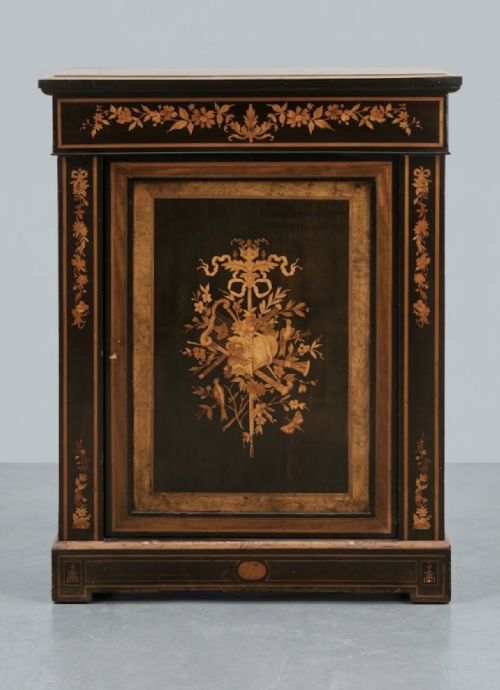
When you search for an ebonised floral cabinet, you encounter dark-finished timber furniture adorned with intricate marquetry flowers. These pieces combine sombre dark surfaces with vibrant botanical details in fruitwood and other contrasting materials.
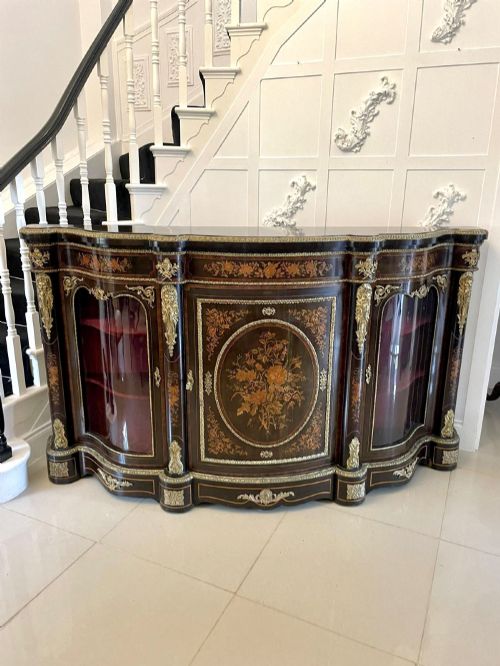
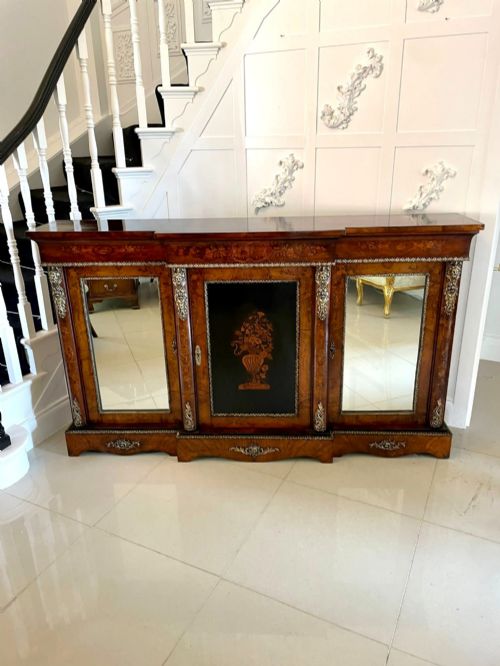
The versions most frequently met on this page belong to the Victorian era and the Aesthetic Movement. They typically take the form of credenzas, side cabinets, and serpentine-fronted sideboards designed for formal entertaining rooms.
Originating largely from nineteenth-century British and French workshops, these items reflect both Victorian revival tastes and Napoleon III styling. They serve as functional storage units that double as decorative showcases for fine porcelain or glassware.
Materials and construction methods
The dark finish is achieved by ebonising wood such as mahogany, pine, or walnut to imitate costly ebony. Upon this dark ground, craftsmen apply delicate fruitwood inlay to create floral marquetry motifs.
Metal mounts in ormolu and brass edge the panels and frame glass doors, adding structural definition and decorative contrast. Marble tops frequently complete the upper surface on French-influenced and serpentine designs.
Ebonised Floral Cabinet Retail Price Guide 2026
Typical asking prices for ebonised floral cabinet among the pieces listed under this phrase on Sellingantiques today, from the lower quarter to the upper quarter. They describe what is for sale here now, not the wider market.
Materials recorded across the inventory include ebonised wood, walnut, rosewood, fruitwood inlay, brass, ormolu, marble, and glass.
Judging quality and craftsmanship
Quality reveals itself in the precision of the marquetry and the crispness of the gilt or ormolu mounts. Superior pieces display finely shaded floral petals and seamless inlay work that remains flush with the surrounding timber.
The ambition of the silhouette dictates the tier of the piece, moving from straightforward rectangular side cabinets to complex serpentine credenzas. Heavier use of cast bronze and polished marble indicates higher workshop production values.
The Ebonised Floral Cabinet Glossary
- Ebonised wood
- Timber treated to simulate expensive ebony. This dark staining technique creates a high-contrast background for lighter floral inlays.
- Marquetry
- The art of applying pieces of veneer to a structure to form decorative patterns. Floral designs are built up from various tinted woods.
- Ormolu
- Gilded bronze used for decorative mounts and framing. It brings a metallic gleam to the corners and borders of the cabinet.
- Credenza
- A grand side cabinet or sideboard used for display. These pieces often feature curved glass doors and elaborate marquetry friezes.
- Serpentine front
- A curved furniture front shaped in a convex-concave-convex wave. This sophisticated silhouette demands expert carpentry.
Ebonised Floral Cabinet: Frequently Asked Questions
What is an ebonised floral cabinet?
An ebonised floral cabinet is a nineteenth-century storage piece featuring dark-stained wood decorated with botanical marquetry. These items were designed for grand Victorian reception rooms.
They combine dark timber grounds with contrasting fruitwood inlays, often framed by glass doors and metal mounts. Their primary role was both to store dining wares and to display ornamental objects.
How do I date an ebonised cabinet?
Dating relies on identifying stylistic markers associated with Victorian, Aesthetic Movement, or Napoleon III periods. Construction traits and timber choices also provide clues to the decade of manufacture.
Nineteenth-century examples frequently incorporate walnut, mahogany, or pine beneath their ebonised finishes. Examining the hardware, such as brass or ormolu mounts, helps narrow down the historical context.
Where were these cabinets placed?
These cabinets sat in formal drawing rooms, dining spaces, or parlours where guests would admire them. Their flat tops and glass shelving offered ideal display surfaces.
Marble-topped versions were particularly favoured for rooms where robustness and water resistance mattered. They anchored the wall space while holding porcelain collections or silver.
What styles influence these designs?
Many pieces show French revival and Napoleon III influences alongside British Victorian aesthetics. The Aesthetic Movement also contributed simpler, gilt-highlighted geometric formats.
Marquetry techniques often drew upon continental cabinet-making traditions adapted for domestic British interiors. This cross-channel exchange produced varied serpentine and straight-fronted variants.