

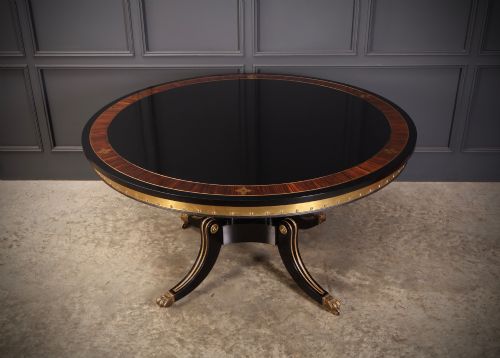
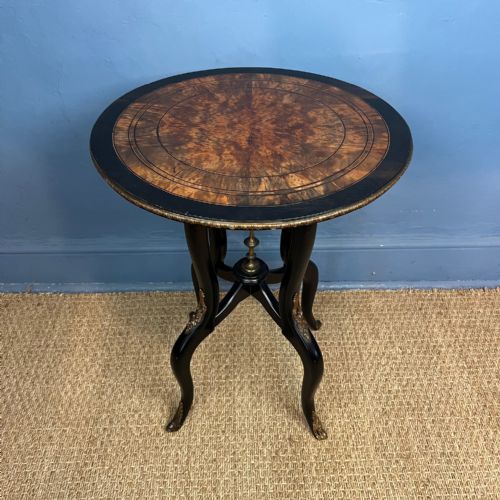
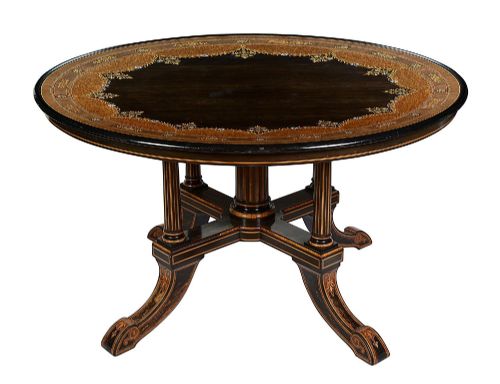
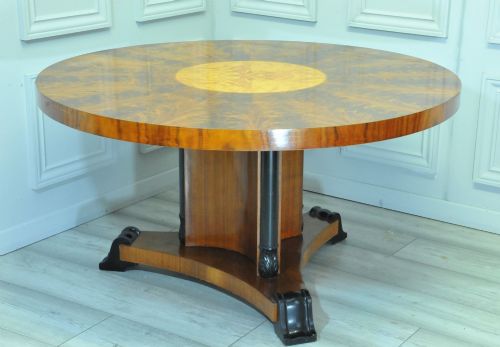




Ebonised Circular Table
An ebonised circular table brings a striking dark finish and balanced proportions to a room, offering a functional surface with distinct historical character.
Ebonised Circular Table
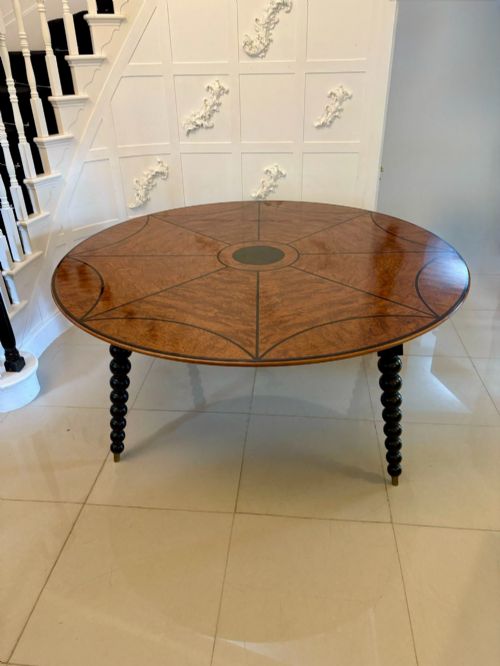
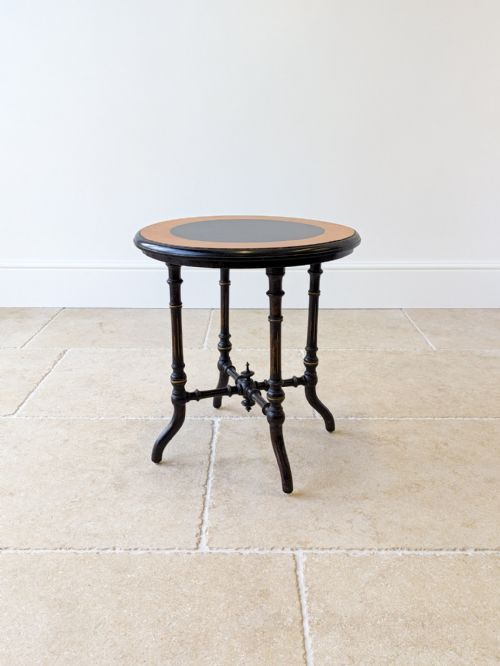
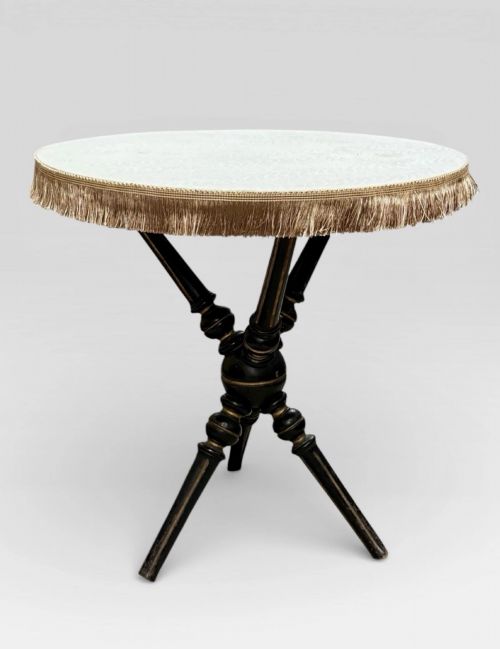
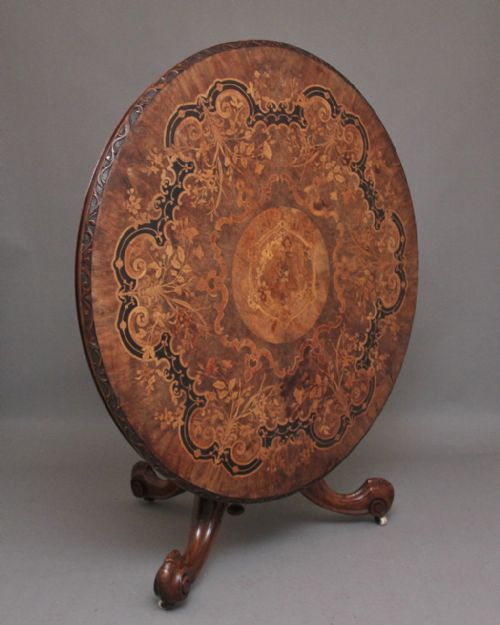
An ebonised circular table encompasses a range of round forms designed for various domestic uses, including centre tables, occasional tables, side tables, and dining tables. When searching for an ebonised circular table, buyers encounter examples spanning the nineteenth century, the Victorian era, and the nineteen-thirties.
The assortment on this page includes pieces shaped by design movements such as the Aesthetic Movement, Art Deco, and the Regency period. Alongside standard tables, the selections feature variations with marble tops, brass inlays, and tiered structures.
Materials and construction
The construction relies on woods such as ebonised wood, walnut, mahogany, and beech, frequently enhanced with contrasting inlays of brass or lighter timbers. Surfaces are often completed with marble inserts or finished to replicate the deep dark tone characteristic of ebonised furniture.
Techniques range from traditional joinery seen in nineteenth-century workshops to the structural layouts typical of nineteen-thirties modernist design. Details like brass inlay and marquetry reflect the specific decorative methods of their respective periods.
Ebonised Circular Table Retail Price Guide 2026
Typical asking prices for ebonised circular table among the pieces listed under this phrase on Sellingantiques today, from the lower quarter to the upper quarter. They describe what is for sale here now, not the wider market.
Several items double as conversation starters, including a hand-held double-sided mirror and a pop-up cocktail drinks bar table.
Evaluating the craftsmanship
Quality in an ebonised circular table reveals itself in the precision of the timber preparation and the crispness of any inlay work. Finer examples display careful attention to the ebonised finish, maintaining an even tone across the entire round surface.
The integration of secondary materials, such as fitted marble tops or brass detailing, distinguishes finer pieces from simpler utilitarian items. Structural stability in the pedestal or legs ensures the round top remains level and secure.
The Ebonised Circular Table Glossary
- Ebonised wood
- Timber treated to resemble ebony by staining or painting it a deep black. This finish was widely utilised during the nineteenth century to achieve a formal appearance.
- Centre table
- A freestanding piece designed to be viewed from all sides, traditionally placed in the middle of a room. These tables often feature circular tops supported by a central pillar or multiple legs.
- Guéridon
- A small French table supported by one or more columns, frequently featuring a circular marble top. The form gained popularity in the nineteenth century.
- Occasional table
- A small, movable table intended for specific, intermittent use rather than permanent placement. They appear across various periods in circular formats.
Ebonised Circular Table: Frequently Asked Questions
Where should I place an ebonised circular table?
These tables suit hallways, reception rooms, and living spaces where a freestanding round surface can be appreciated from all angles. Centre tables work well in open spaces, while smaller occasional versions fit beside seating.
Their dark finish provides a strong visual anchor against lighter walls or contrasting floor coverings, making them adaptable focal points in traditional and modern interiors.
How do I care for an ebonised surface?
Maintain the finish by dusting regularly with a soft, dry cloth to prevent the accumulation of particles that might scratch the dark coating. Avoid placing hot or wet items directly on the wood.
Keep the table away from direct sunlight and strong heat sources to protect the ebonised treatment and any underlying timber from fading or drying out over time.
How do I identify the period of a round table?
Examine the construction methods, secondary timbers, and decorative vocabularies such as brass inlay or marquetry. Aesthetic Movement and Victorian examples often feature distinct geometric or Japonisme influences.
Nineteen-thirties pieces tend to display cleaner lines, blonde or contrasting wood combinations, and simplified structural forms compared to earlier nineteenth-century designs.
What is the difference between a centre table and a side table?
A centre table is traditionally finished on all sides to stand freely in the middle of a room, functioning as a primary decorative and practical piece. A side table is generally designed to sit against a wall.
Circular formats appear in both categories, though centre tables frequently incorporate heavier pedestal bases to support larger round tops.