



Ebonised Bureau Cabinet
An ebonised bureau cabinet brings a dark, dramatic finish and clever compartments to a study, combining fine writing surfaces with disciplined storage.
Ebonised Bureau Cabinet
When you search for an ebonised bureau cabinet, you encounter sophisticated writing furniture designed for private correspondence and display, spanning periods from the eighteenth century to the Edwardian era.
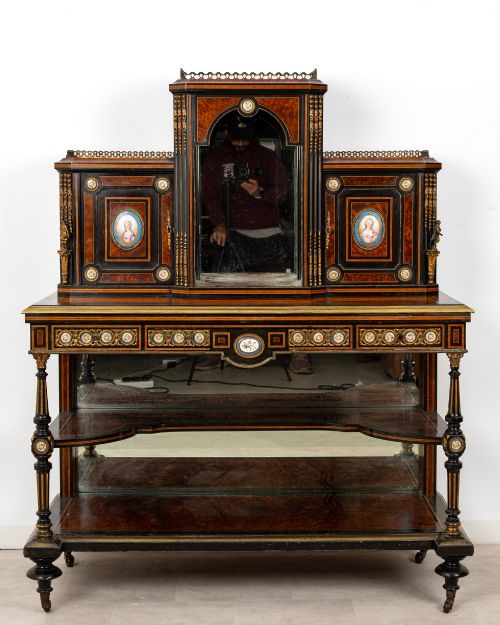
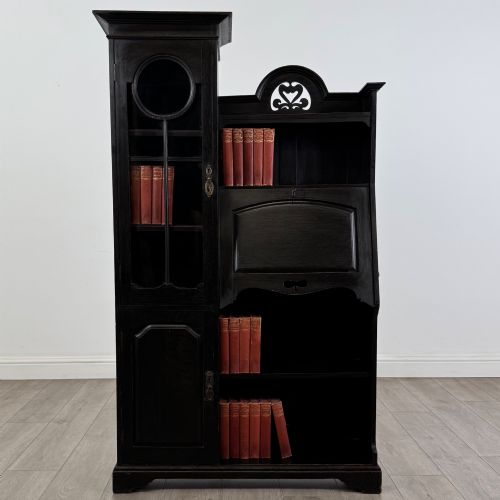
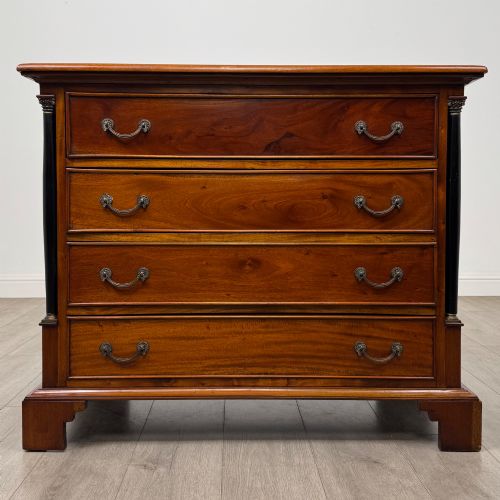
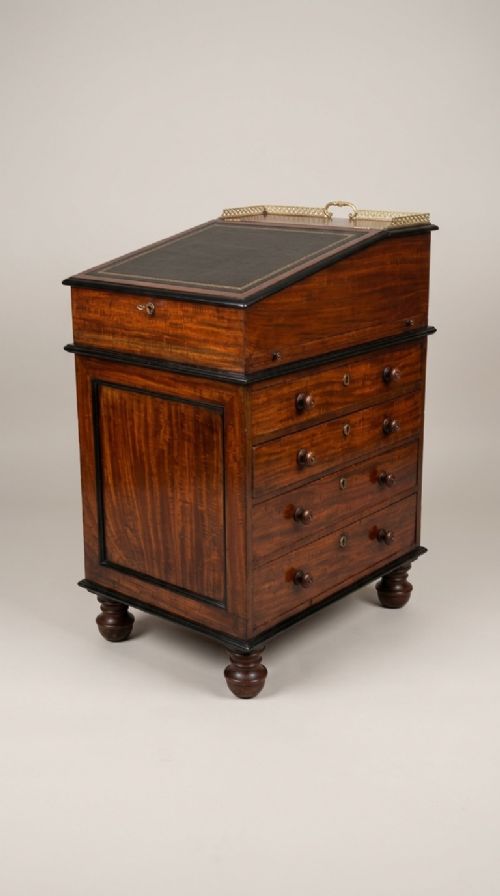
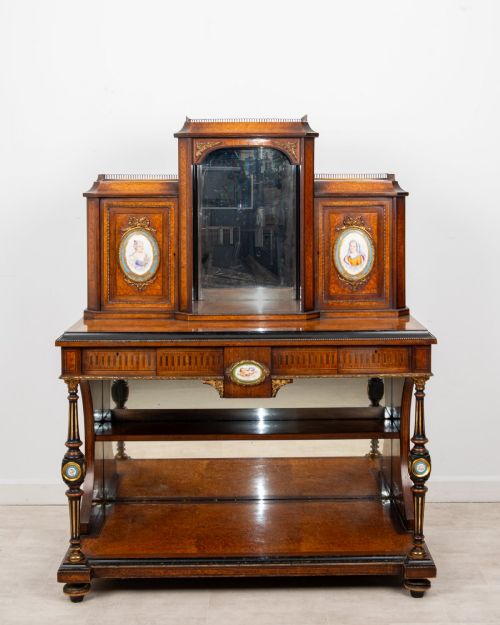
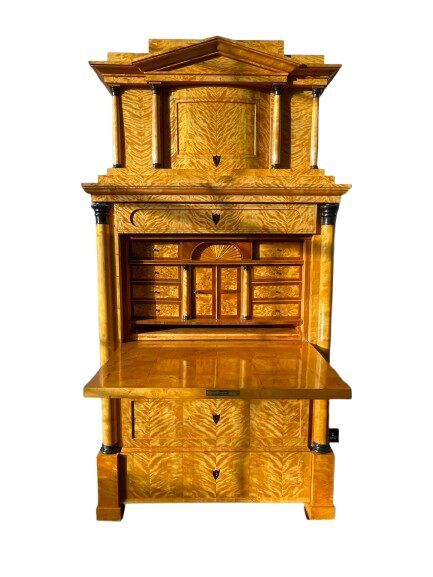
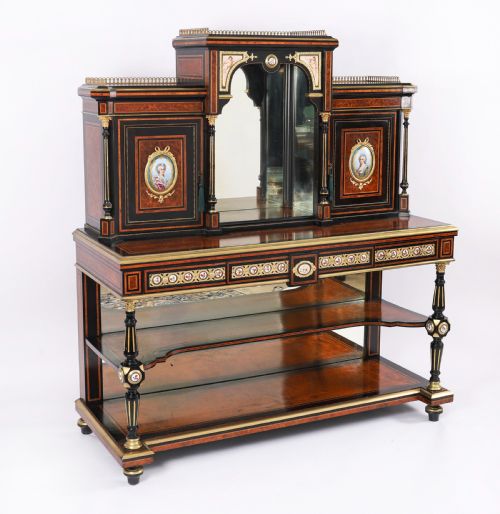
The selections on this page demonstrate varied forms including bureau bookcases, bonheur du jour writing desks, and secretaires reflecting styles such as Regency, Biedermeier, and French Napoleon III.
Most examples combine a dark, dark-stained or blackened wood surface with internal compartments, drawers, and fitted writing slopes suited to formal domestic spaces.
Materials and construction methods
Craftsmen utilised timbers such as oak, mahogany, birch, and amboyna, often applying a deep ebonised finish to imitate costly ebony and provide a stark, uniform ground for decoration.
Surfaces frequently incorporate contrasting brass mounts, ormolu, porcelain plaques, and intricate inlay of burr walnut or lighter veneers to create visual depth against the dark exterior.
A porcelain plaque embedded in a desk surface proves that some writing furniture was meant to be admired rather than written upon.
Distinctions in craftsmanship
The distinction between standard and superior pieces rests upon the precision of the ebonised finish, the crispness of brass or ormolu mounts, and the integration of delicate inlaid details.
Internal engineering of the writing compartments, secret drawers, and drop-front mechanisms demonstrates the maker's mastery and directly shapes the standing of the piece.
Gillows·Befort Jeune
The Ebonised Bureau Cabinet Glossary
- Ebonised
- Wood treated with stain, dye, or paint to achieve the deep, black appearance of ebony. This finish gained immense popularity during the nineteenth century.
- Bonheur du jour
- A light lady's writing desk featuring a small cabinet or set of drawers on top. It typically stands on slender legs and serves decorative purposes.
- Secretaire
- A piece of furniture containing a built-in writing drawer or a drop-down writing flap concealing pigeonholes and small drawers. Biedermeier examples often emphasise clean architectural lines.
- Ormolu
- Gilded bronze applied to furniture mounts and decorative hardware. It provides metallic contrast against dark ebonised surfaces.
- Pietra dura
- An artistic technique using cut and fitted polished coloured stones to create geometric or pictorial designs. It appears on select nineteenth-century writing surfaces.
Ebonised Bureau Cabinet: Frequently Asked Questions
What is an ebonised bureau cabinet?
An ebonised bureau cabinet is a piece of writing furniture finished in a dark, blackened stain designed to mimic solid ebony. These pieces typically incorporate a drop-front desk surface alongside integrated shelving or cabinetry.
They emerged strongly during the nineteenth century, drawing on historical revival styles such as French Napoleon III and Biedermeier design.
How do I identify a nineteenth-century piece?
Nineteenth-century examples often display specific stylistic markers like ormolu mounts, amboyna veneers, or porcelain plaque inserts. Construction methods within the internal drawers offer further clues to the period of origin.
Cabinetmakers of this era favoured dramatic contrasts between blackened timber and bright metal or light inlay work.
Where should I place this cabinet?
These cabinets suit studies, drawing rooms, or quiet corners where their dark finish acts as a focal point. Their compact writing compartments function well for display and light correspondence.
Keep them away from direct heat sources to protect the ebonised finish and delicate wood veneers from splitting.
What styles are common?
The inventory demonstrates a range of styles including Regency, Biedermeier, Arts and Crafts, and French Napoleon III revivals. Each style brings different proportions and decorative restraint to the dark cabinetry.
Some pieces lean towards architectural severity, while others embrace elaborate brass inlay and porcelain details.