



Gilt Bronze Bureau Cabinet
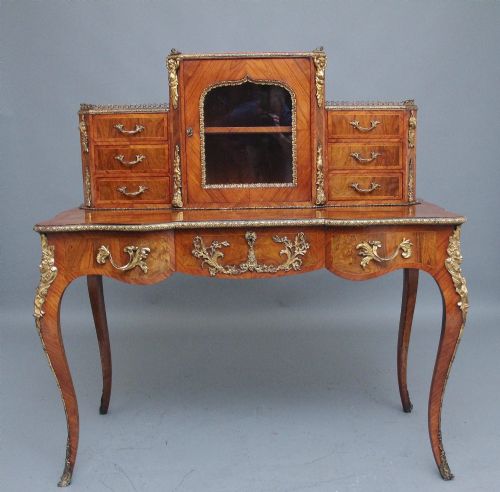
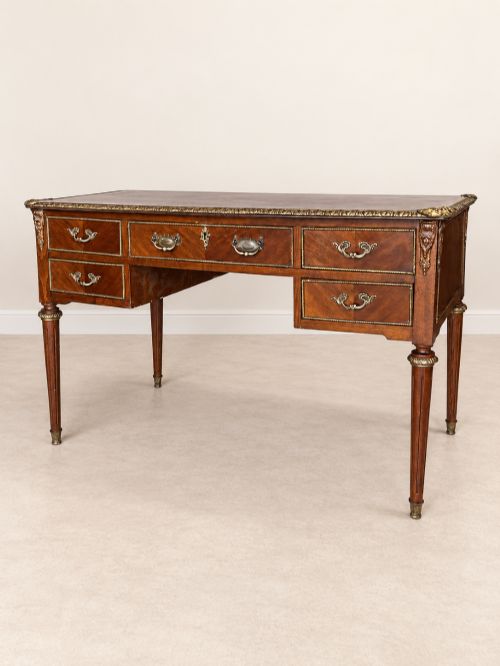
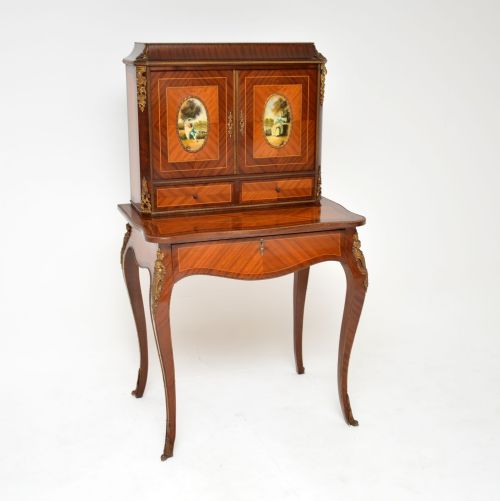
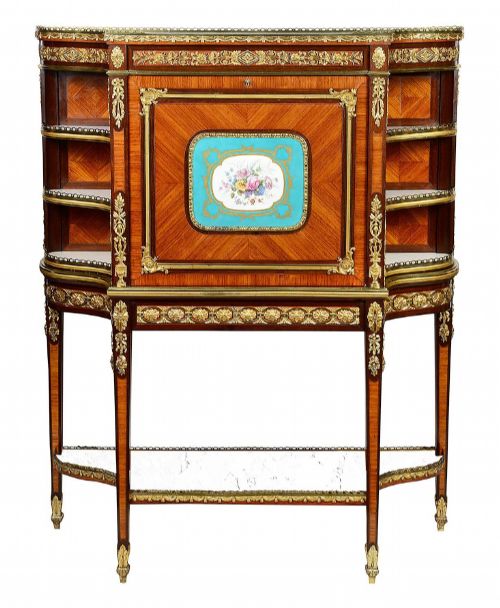
These gilt bronze bureau cabinet pieces combine rich cabinet woods with cast mounts, offering both a fitted writing surface and display storage.
Gilt Bronze Bureau Cabinet
A gilt bronze bureau cabinet brings together refined writing furniture and decorative cabinetry, drawing heavily on French revival designs. When exploring this selection, a buyer encounters pieces predominantly from the nineteenth century, including Victorian examples and the Louis XVI style.
The forms vary from larger secretaire abattants and writing cabinets to compact bonheur du jour desks. Many incorporate marble tops, porcelain plaques, or glazed compartments alongside the central writing drop-front.
What Varies in Quality
The refinement of the cast bronze or ormolu mounts dictates much of the visual distinction, with sharper chiselling and weightier gilding marking out superior examples. The intricacy of the timber veneers, from geometric parquetry to detailed floral marquetry, also separates standard production from exceptional cabinet work.
Integration of secondary materials such as hand-painted porcelain plaques, genuine marble tops, and specialist enamel or Vernis Martin panels introduces another tier of craftsmanship.
Materials span kingwood, walnut, ormolu, marble, porcelain, and ebonised wood.
Maison Krieger·Paul Sormani·Befort Jeune
The Gilt Bronze Bureau Cabinet Glossary
- Ormolu
- Gilded bronze or brass applied as mounts and decorative highlights on furniture. This technique was widely utilised by nineteenth-century cabinet makers to accentuate classical and revival designs.
- Bonheur du Jour
- A light lady's writing desk featuring a small cabinet or set of drawers on top of the writing surface. These pieces often incorporate porcelain plaques and delicate ormolu mounts.
- Secrétaire Abattant
- A tall upright cabinet with a hinged fall-front writing flap that conceals a fitted interior of small drawers and compartments. They frequently feature marble tops and rich veneer patterns.
- Parquetry
- Geometric patterns formed by fitting small pieces of veneer together on a surface. It appears frequently on the panels of nineteenth-century French writing cabinets.
- Pietra Dura
- The technique of inlaying polished, coloured stones to create pictorial designs. It is occasionally found on specialised cabinet panels.
Gilt Bronze Bureau Cabinet: Frequently Asked Questions
What is a bonheur du jour?
A bonheur du jour is a small, elegant writing desk topped with a miniature cabinet or pigeonholes. They gained popularity in the nineteenth century as refined ladies' writing furniture.
These pieces typically feature delicate ormolu mounts and veneered surfaces, making them suitable for drawing rooms and intimate studies.
How do I style a bureau cabinet?
Place a bureau cabinet against a primary wall in a study or drawing room where its detailed veneers and gilt bronze mounts can be appreciated. The drop-front or writing surface provides a functional desk area while keeping correspondence concealed.
Keep surrounding furniture complementary in period to let the cabinet serve as a focal point without cluttering the room's proportions.
How do I identify Louis XVI style?
Louis XVI style pieces rely on straight lines, fluted columns, and classical symmetry, diverging from the flowing curves of earlier rococo designs. Look for restrained geometric forms accented by crisp ormolu mounts.
In nineteenth-century revivals, makers often combined these classical proportions with rich kingwood veneers and marble tops.
Where were these cabinets made?
The majority of these bureau cabinets and writing desks originate from French workshops and Parisian cabinet makers working during the nineteenth century. Major makers produced high-end revival furniture for international clientele.
Some examples also emerge from Vienna and British workshops adopting continental decorative techniques.