




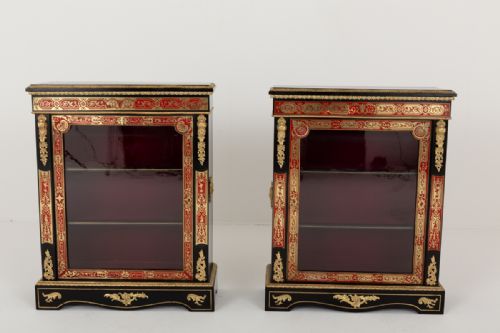


Ebonised Brass Inlay Cabinet
An ebonised brass inlay cabinet brings dark polished timber and bright metallic work together, offering a striking centrepiece for display and storage.
Ebonised Brass Inlay Cabinet
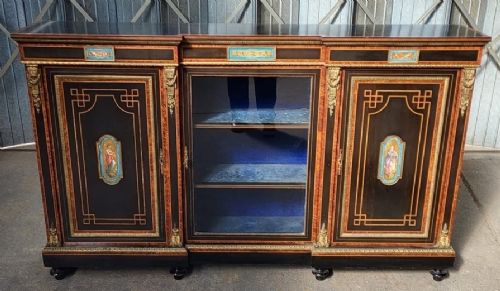
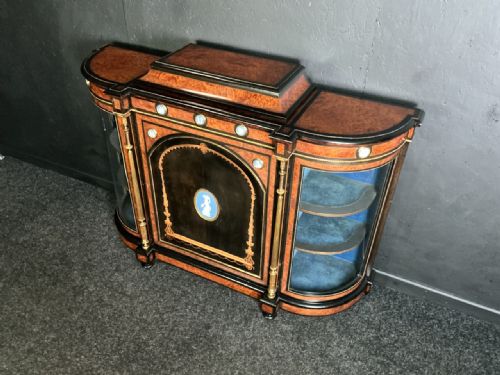
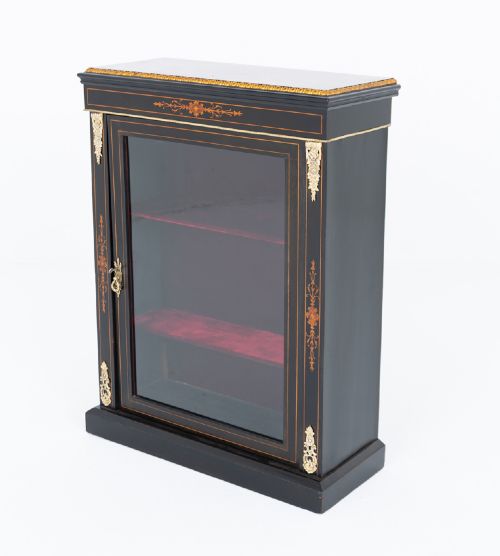
An ebonised brass inlay cabinet brings together dark timber surfaces and metallic embellishment, originating predominantly from the nineteenth century across Victorian and French Napoleon III periods. The selection encompasses side cabinets, display cabinets, pier cabinets, bookcases, credenzas, and writing desks.
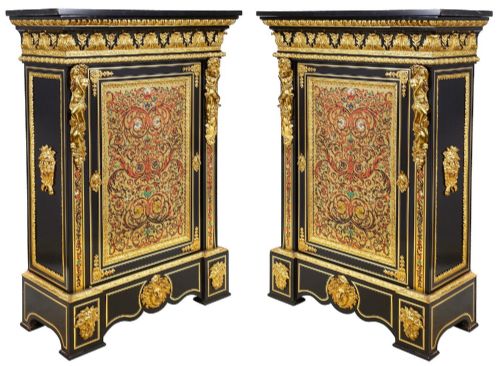
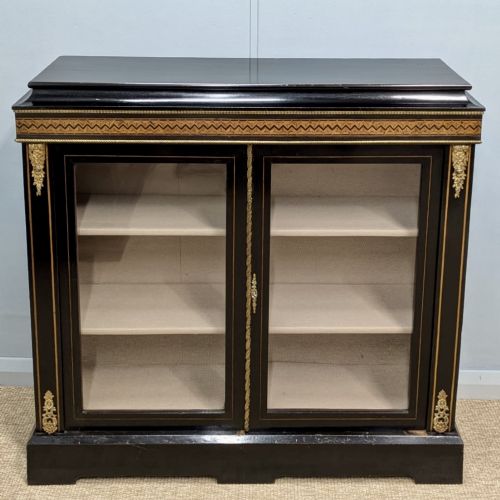
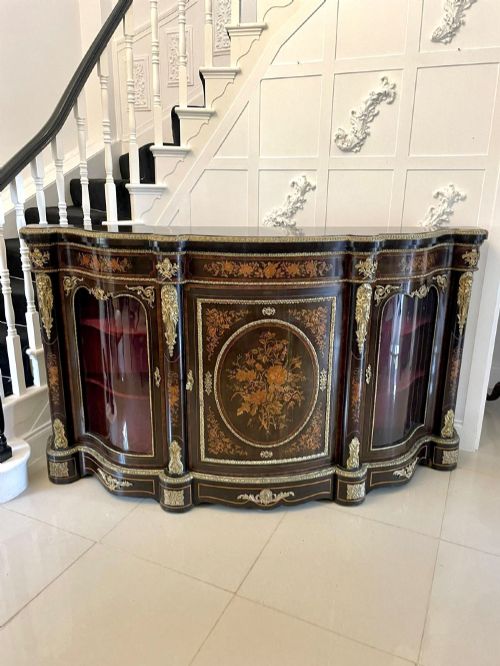
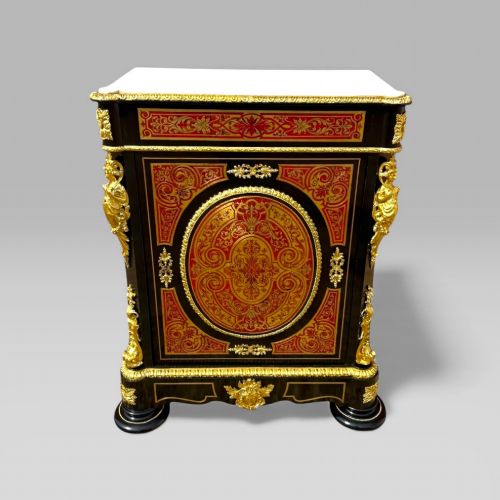
Victorian and French Napoleon III examples dominate the selection, often featuring boulle work alongside ormolu mounts and marble tops. Pieces range from compact pier cabinets and writing desks to large breakfront credenzas and bookcases with glass doors.
Makers and workshops produced these forms using ebonised wood combined with tortoiseshell, porcelain, amboyna, and burr walnut. The decorative schemes utilise floral marquetry alongside intricate brass inlay to create highly ornamental furniture designed for formal reception rooms.
How they were made
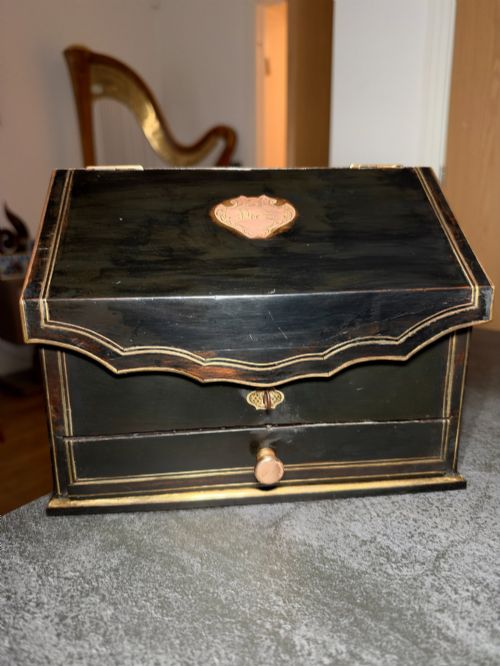
Craftsmen built these cabinets using timber carcases treated with ebonisation techniques to achieve a deep black finish that mimics ebony. This dark ground served as a contrasting base for detailed brass inlay and tortoiseshell work.
Makers incorporated cast ormolu mounts, bronze fittings, and glass panels into the structural design of side cabinets and credenzas. Marquetry elements and delicate brass lines were set directly into the wooden surfaces, complemented by velvet linings in display sections.
Ebonised Brass Inlay Cabinet Retail Price Guide 2026
Typical asking prices for ebonised brass inlay cabinet among the pieces listed under this phrase on Sellingantiques today, from the lower quarter to the upper quarter. They describe what is for sale here now, not the wider market.
Listings feature pieces from the eighteenth and nineteenth centuries, including Victorian and Napoleon III periods, constructed from ebonised wood, brass, ormolu, and tortoiseshell.
What varies in quality
The precision of the brass inlay work and the intricacy of the boulle marquetry distinguish finer pieces from standard production. Sharper lines in the metalwork and richer depth in the tortoiseshell or amboyna panels indicate superior workshop execution.
The quality of the cast ormolu mounts and the weight of the timber carcase determine the overall grade of the furniture. Cabinets featuring serpentine shaped fronts, marble tops, and matching pairs demonstrate higher standards of nineteenth-century design.
The Ebonised Brass Inlay Cabinet Glossary
- Ebonised
- Wood treated to imitate ebony by staining or painting it black. This finish provides a dark, uniform background for brass inlay.
- Boulle
- A form of marquetry using brass and tortoiseshell inlaid in contrasting patterns. Named after the French cabinetmaker Andre-Charles Boulle.
- Ormolu
- Gilded bronze used for decorative mounts and feet on nineteenth-century furniture. It adds metallic highlight to the dark ebonised surfaces.
- Pier cabinet
- A tall, narrow cabinet designed to stand against the wall space between windows. These pieces often feature glass doors for displaying porcelain.
- Credenza
- A large sideboard or display cabinet with doors, frequently mounted with ormolu and brass. Originating in Italy, it became a focal point in Victorian drawing rooms.
Ebonised Brass Inlay Cabinet: Frequently Asked Questions
What rooms suit an ebonised brass inlay cabinet?
These cabinets work well in reception rooms, drawing rooms, or hallways where their dark finishes and metallic details stand against lighter walls. Their enclosed shelving and glass display areas provide practical storage for collections.
Matching pairs of pier cabinets or larger credenzas serve as focal points in formal settings. Smaller writing desks and table cabinets fit easily into study spaces or private libraries.
How do I identify French Napoleon III pieces?
French Napoleon III examples often incorporate elaborate boulle work combining brass and tortoiseshell on ebonised timber. Ormolu mounts and marble tops frequently accompany these French designs.
Victorian British alternatives share similar ebonising and brass inlay techniques but typically display different proportioning and secondary timbers like walnut or amboyna.
How should I care for ebonised wood?
Maintain ebonised surfaces by dusting with a soft, dry cloth to prevent abrasion on the dark finish. Avoid using liquid polishes or chemical sprays that might damage the brass inlay or tortoiseshell.
Keep the timber away from direct sunlight and steady heat sources to protect the wood from warping and to preserve the integrity of the glue holding the brasswork.
What is the difference between a credenza and a pier cabinet?
A credenza is typically a broad, low cabinet featuring three or more doors, designed to stand against a main wall. These pieces often include central display sections flanked by cupboards.
A pier cabinet is narrower and taller, specifically designed for the wall space between two windows. They frequently feature a single glass door and interior shelving for porcelain.