
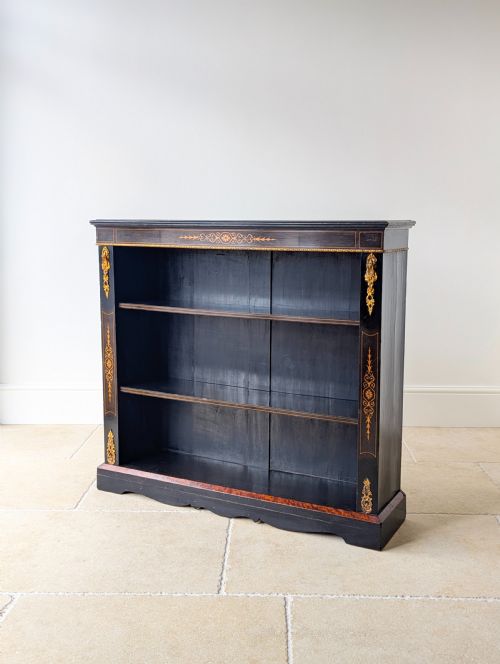

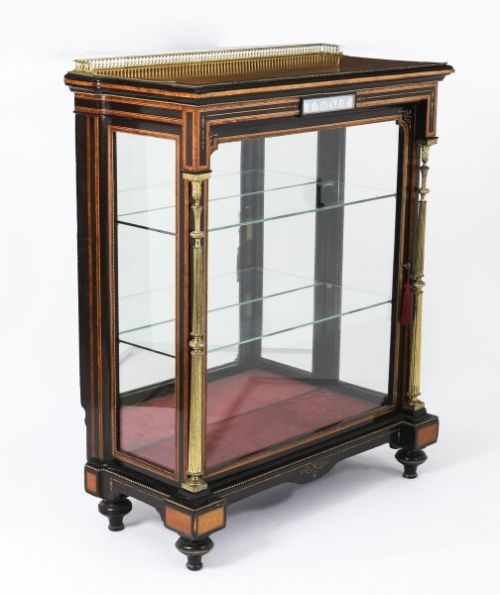


Ebonised Brass Display Cabinet
An ebonised brass display cabinet brings nineteenth-century dark wood and bright metalwork together to show off treasured objects.
Ebonised Brass Display Cabinet
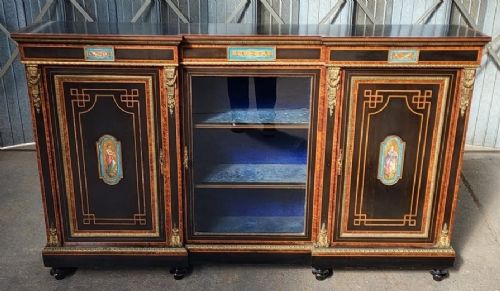
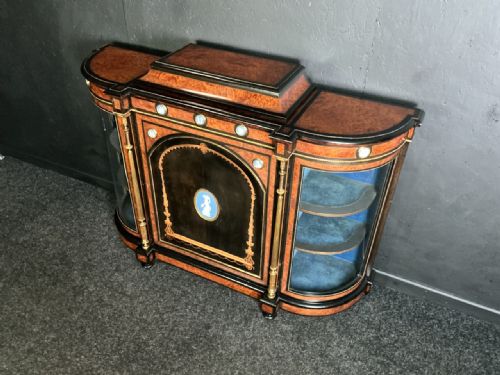
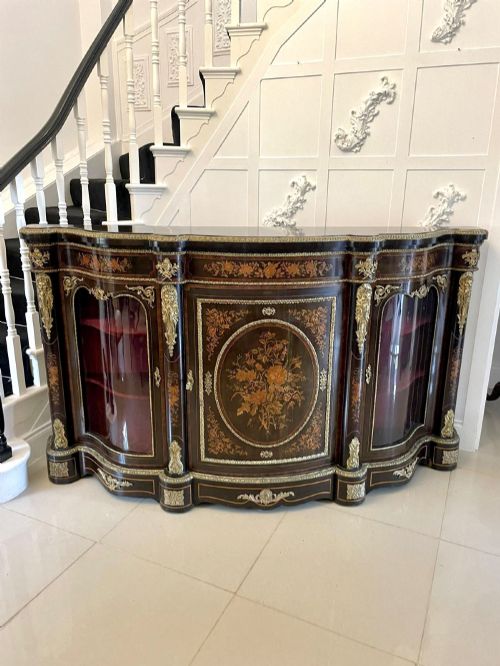
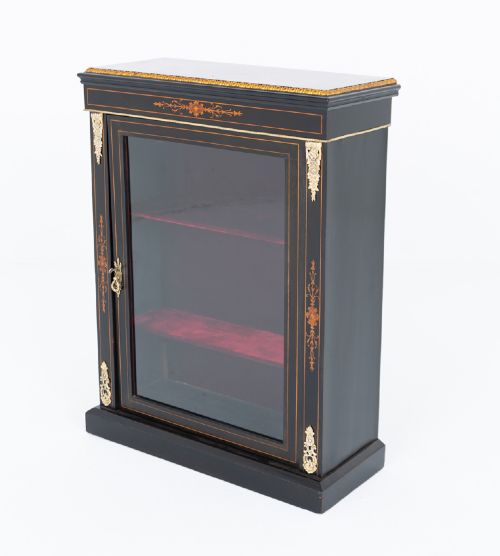
When you search for an ebonised brass display cabinet, you enter a world of nineteenth-century dark-finished furniture designed to showcase ceramics, books and ornaments behind glass. The pieces range from compact pier cabinets and open bookcases to grand three-door credenzas and breakfront sideboards.
Victorian and Napoleon III examples dominate the selection, often drawing on French styles like Empire and Louis XVI. You encounter single freestanding cabinets, matched pairs, and low credenzas fitted with glazed doors and velvet linings.
What varies in quality
Quality rests in the crispness of the brass mounts and the precision of the boulle marquetry. Finer cabinets display detailed floral inlay, well-cast ormolu, and undamaged tortoiseshell panels set into solid timber carcasses.
The sophistication of the internal fittings, such as velvet linings and adjustable shelving, distinguishes standard production from exceptional examples. The harmony between the ebonised finish and the applied brass hardware dictates the visual success of each piece.
Materials span ebonised wood, glass, brass, ormolu, tortoiseshell, porcelain, velvet, and gilt metal across French and English styles.
SAGE AND CO
The Ebonised Brass Display Cabinet Glossary
- Ebonised
- Timber treated with stain or paint to imitate the dark, dense appearance of ebony. This finish became popular during the Victorian and Napoleon III periods for dramatic contrast with metal mounts.
- Ormolu
- Gilded bronze mounts applied to furniture for decorative effect. High-quality pieces show sharp chasing and rich gilding on these metal elements.
- Pier cabinet
- A narrow cabinet designed to stand against the wall space between windows. These tall, glazed pieces are typical of Victorian and French nineteenth-century interiors.
- Credenza
- A low sideboard or cabinet featuring cupboards and glass doors. They often incorporate elaborate marquetry and brass mounts.
- Breakfront
- A piece of furniture where the central section projects forward from the flanking sides. This architectural form adds depth and presence to large bookcases and side cabinets.
Ebonised Brass Display Cabinet: Frequently Asked Questions
What is an ebonised brass display cabinet?
It is a nineteenth-century glass-fronted case made from dark-finished timber and decorated with brass mounts, stringing, or boulle work. These cabinets were built to protect and display ceramics, books and ornamental objects.
They appear in various forms, from narrow pier cabinets designed for tight wall spaces to wide credenzas and bookcases.
How do I date an ebonised cabinet?
Dating relies on stylistic clues such as Victorian proportions, Napoleon III French influences, or Aesthetic Movement lines. The presence of specific materials like tortoiseshell marquetry, ormolu mounts and sevres plaques points directly to the nineteenth century.
Construction details, including the type of hinges, interior linings and timber preparation, help narrow the decade of manufacture between 1850 and 1920.
Where were these cabinets placed originally?
Victorian and French drawing rooms utilised pier cabinets between windows and grand credenzas against principal walls. They served as focal points for entertaining, holding curated collections of porcelain and curiosities.
Shop display counters and key cupboards also exist from this era, showing that similar glazing and ebonised techniques served commercial interiors.
How do I care for ebonised wood and brass?
Keep ebonised furniture away from direct sunlight and dramatic humidity changes to protect the dark finish and the wood beneath. Dust the surfaces gently with a dry cloth and avoid harsh chemical polishes.
Brass and ormolu mounts require minimal intervention; gentle cleaning preserves the aged metal lustre without stripping the original finish.