
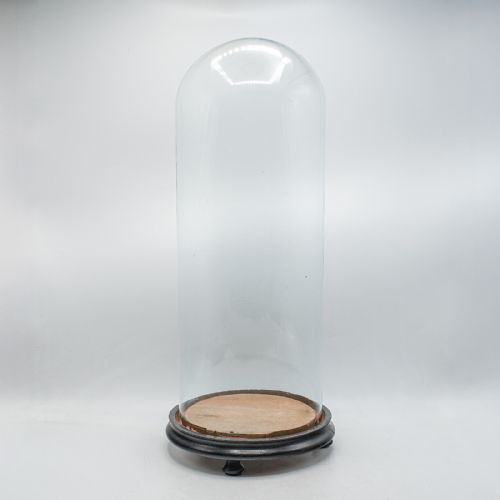


Ebonised Base Glass Dome
An ebonised base glass dome shelters delicate interior displays behind clear glass, offering a traditional way to protect prized ornaments and specimens.
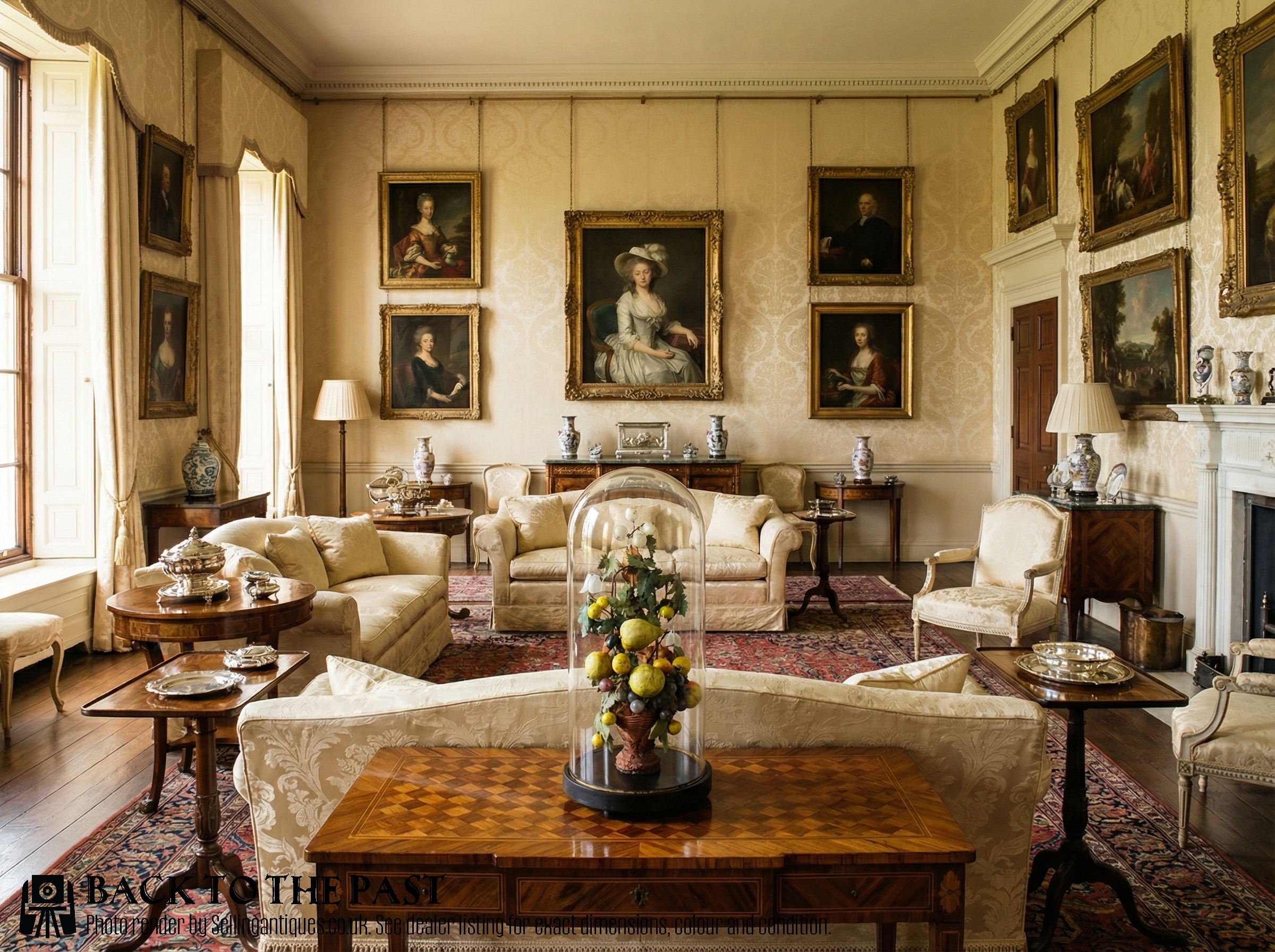
Ebonised Base Glass Dome
An ebonised base glass dome combines a transparent blown glass cover with a dark, blackened wooden plinth. These protective enclosures emerge most frequently from the Victorian and Edwardian eras, serving to shelter fragile interior displays from household dust and disturbance.
The primary forms seen on this page include tall and wide display domes, clock cases, and specimen showcases. Interiors typically house taxidermy such as birds and kestrels, botanical specimens, still-life fruit arrangements, skeleton clocks, and pocket watch holders.
Most examples originate from English workshops spanning the mid-nineteenth century through to the early twentieth century. Buyers encounter round, oval, and ovoid glass covers resting securely upon turned or flat wooden plinths.
What varies in quality
Quality differences lie primarily in the clarity and historical integrity of the blown glass cover. Hand-blown glass featuring original bubbles and flow lines sits at a different level from later replacement covers.
The finish and stability of the ebonised wooden base also dictate the grade of the piece. Well-preserved blackened surfaces that retain their original texture without excessive flaking indicate superior preservation.
A solitary stuffed kestrel once surveyed its parlour surroundings for over a century under its original glass dome.
A Pollard·James Gardner
The Ebonised Base Glass Dome Glossary
- Ebonised
- Wood treated with a dark stain or finish to simulate the appearance of true ebony. This treatment gives the display base a uniform black appearance.
- Cloche
- A bell-shaped glass cover designed to protect plants or delicate objects. The term is frequently used interchangeably with glass dome.
- Taxidermy
- The art of preparing, stuffing, and mounting the skins of animals for display. These specimens form the interior focus of many period domes.
- Ovoid
- An egg-shaped three-dimensional form. This descriptor applies to glass domes featuring a gently tapering profile.
- Baize
- A coarse woolen material resembling felt. It frequently lines the underside or interior surface of the display base.
Ebonised Base Glass Dome: Frequently Asked Questions
How do I clean the inside of the dome?
Lifting a large glass dome requires two people and extreme care to avoid chipping the heavy edges against the wooden base. Clear the surrounding area before attempting to access the interior display.
Use a soft, dry microfiber cloth on the glass and a gentle dusting brush for delicate contents like taxidermy or botanical specimens. Avoid liquid cleaners that might stain or degrade historic fabrics and wood.
What were these domes originally used for?
Victorian and Edwardian households utilised glass domes to protect fragile ornaments, clocks, and delicate taxidermy from dust and soot. They elevated domestic displays into objects of scientific curiosity and refined taste.
Specimens such as birds, fruit arrangements, and pocket watches remained visible yet entirely shielded from daily handling. This preservation method allowed collectors to showcase botanical and animal studies safely in parlours.
How can I tell a Victorian dome from a later one?
Nineteenth-century glass often displays minor imperfections, such as tiny air bubbles, subtle waviness, and slight thickness variations from manual blowing techniques. Later or replacement glass tends to show greater uniformity and clarity.
Examine the construction of the ebonised wooden base and any underlying baize or velvet lining. Period materials, timber shrinkage, and traditional joinery methods help establish the manufacturing era.