




Earthy Oil Painting
An earthy oil painting brings rural landscapes and farmyards into a room through rich tones and textured brushwork.
Earthy Oil Painting
An earthy oil painting captures rural life, landscapes, and farm scenes, drawing on natural palettes of browns, greens, and muted ochres. Buyers seeking this style encounter works spanning the nineteenth century through the mid-twentieth century.
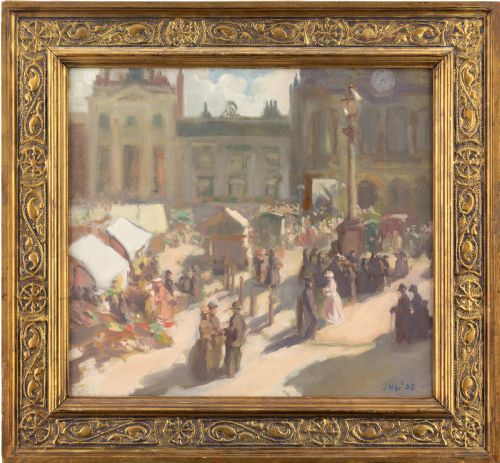
The pieces on this page originate from British, Scottish, and continental European traditions, often depicting woodlands, rivers, and agricultural subjects. Works range from intimate depictions on wood panels to larger canvases rendered in British Impressionist and Barbizon styles.
Materials and Construction
Painters applied oil paint directly onto stretched canvas, prepared boards, or solid wood panels. The combination of slow-drying oils allowed artists to build up heavy impasto and blend tones on the support.
Many works retain their original gilt frames, which complement the darker green and brown pigments characteristic of the rural subjects.
Styles represented include British Impressionism, the Barbizon School, and the Norwich School.
Assessing Quality and Execution
Quality rests in the handling of light and the surety of the brushwork rather than the subject matter alone. Superior examples demonstrate a confident control of tone that gives depth to shadowed woodlands and skies.
The preservation of the pigment layer and the stability of the original canvas or wood panel dictate the enduring integrity of the artwork.
William H Myers·Tom Campbell·John Hodgson Lobley·Raimond Louis Lecourt·Herbert Royle·William JB Jenkins·Reginald Grange Brundrit·Vincenzo Irolli·John Frederick Herring·Robert Finley McIntyre·Thomas Creswick·Owen Bowen·William Traies·Ernest Higgins Rigg·Frederick William Jackson·Kershaw Schofield·Alois Arnegger·George F Wetherbee·William Greaves
The Earthy Oil Painting Glossary
- Impasto
- Paint applied thickly to a canvas or board, standing out in relief from the surface. This technique adds tactile dimension to foliage, earth, and water.
- Wood Panel
- A rigid flat support made from timber used by painters before canvas became dominant. Panels provide a stable surface that preserves fine detail.
- Barbizon School
- A mid-nineteenth-century art movement focused on tonal realism and direct observation of nature. Practitioners favoured dark, earthy palettes and atmospheric landscapes.
- Stretcher
- The wooden frame that holds a canvas taut during and after painting. Inscriptions or labels found on the stretcher often provide provenance.
- Gilt Frame
- A wooden moulding coated with a thin layer of gold leaf or metallic paint. These frames enclose the canvas and protect the edges from damage.
Earthy Oil Painting: Frequently Asked Questions
What subjects appear in earthy oil paintings?
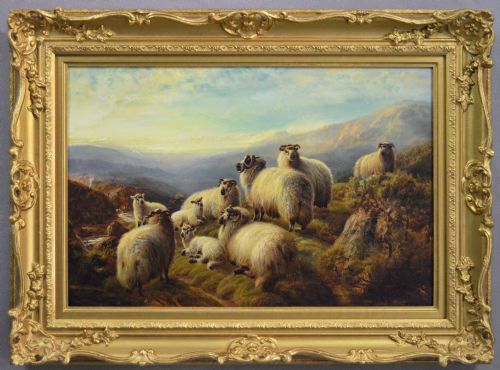
These works predominantly feature rural scenes, including sheep grazing in highland landscapes, Yorkshire farmyards, woodland paths, and working horses by rivers. Artists focused on capturing everyday agricultural life and natural topography.
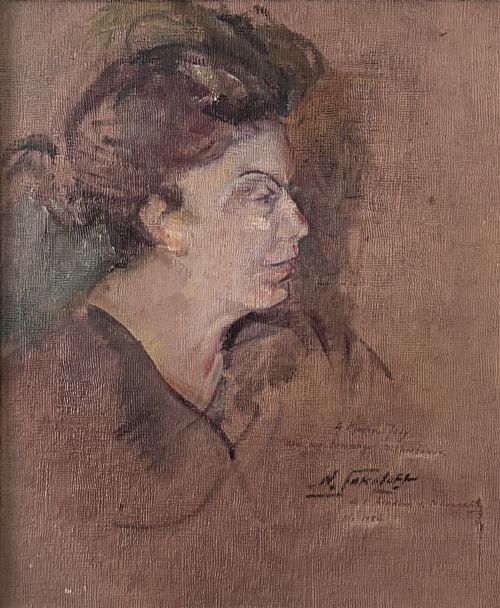
Subjects also extend to pastoral portraits and quiet village views rendered in naturalistic tones.
How should I care for an oil painting on wood panel?
Keep the painting away from direct sunlight and sources of heat to prevent the wood panel from warping or cracking. Stable room temperatures protect both the rigid support and the oil pigments.
Dust the surface gently with a soft, dry brush and avoid applying liquid cleaners to the paint layer.
How do I distinguish nineteenth-century works from later pieces?
Nineteenth-century paintings often feature heavier canvas weaves, traditional dark varnishes, and detailed academic brushwork associated with pastoral and Barbizon styles. Framing methods and stretcher construction also offer clues to the era.
Twentieth-century examples tend toward looser impressionistic handling and brighter, though still muted, palettes.
Where were these landscape paintings created?
The pieces originate from various artistic hubs across Britain, France, and wider Europe. Many focus on specific regional landscapes such as Yorkshire, Cumberland, and the Scottish Highlands.
Artists often worked plein air or recorded local farms, rivers, and coastal towns in their surrounding countryside.