






Earthy Green Fine Art
Earthy green fine art captures quiet pastoral landscapes and rural views through traditional British and Irish painting.
Earthy Green Fine Art
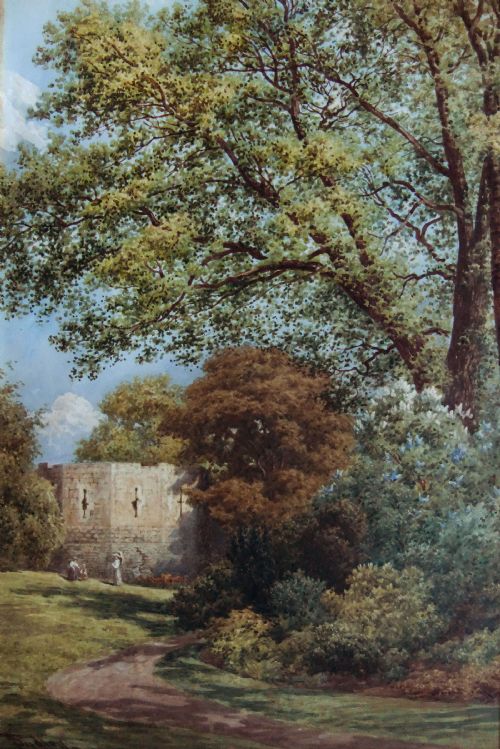
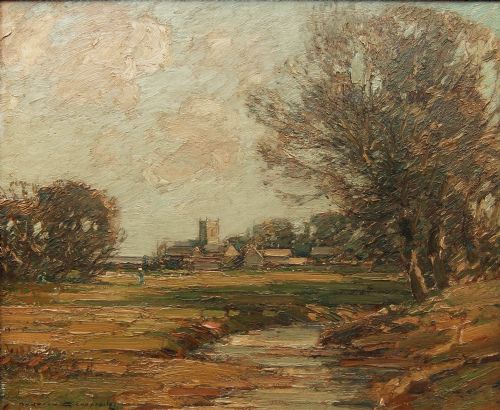
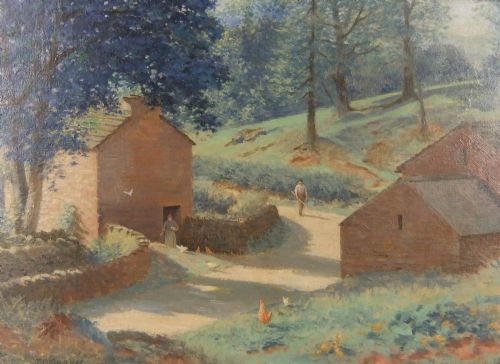
Earthy green fine art encompasses traditional landscape paintings created across the nineteenth and early twentieth centuries by British and Irish artists. These works focus on rural scenery, country lanes, and pastoral views rendered in natural, muted tones.
The pieces on this page are predominantly oil paintings and watercolours depicting subjects like Scottish highlands, Yorkshire villages, and cattle watering scenes. Collectors encounter these works on canvas, wood panel, board, and paper from periods including the Victorian era and the 1920s or 1930s.
Makers represented in these listings include notable painters such as Tom Campbell, Reginald Grange Brundrit, Robert Finley McIntyre, and Alfred Grey. Each piece reflects the characteristic styles of British Impressionism, the Scottish School, and late Victorian landscape art.
Materials and techniques
Artists of these periods applied oil paint and watercolour onto prepared surfaces such as canvas, wood panel, board, and paper. These traditional supports provided stable bases for building up layers of pigment and natural colour.
The handling of paint ranges from the fluid washes characteristic of watercolour on paper to the heavier impasto of oil on canvas and wood panel. Painters utilised these varied mediums to capture natural light and organic textures in rural settings.
Several artists captured specific local landmarks, ensuring that quiet corners of Yorkshire and Cumberland remain permanently preserved in oil.
Assessing quality
Quality in these works rests upon the artist's handling of tone and composition to convey depth within a natural landscape. Stronger pieces demonstrate confident brushwork and a balanced integration of earthy green and brown palettes.
The relationship between the subject matter and the support influences the overall success of the painting. Works executed with deliberate observation tend to present a more compelling view of rural life than standard topographical records.
Tom Campbell·Reginald Grange Brundrit·Robert Finley McIntyre·Alfred Grey·Thomas Creswick·Tom Dudley·Alfred Banner·Ernest Higgins Rigg·Frederick William Jackson·Kershaw Schofield·T.B. Garvie·William Greaves·Benjamin Williams Leader
The Earthy Green Fine Art Glossary
- Oil painting
- A work created using pigments bound in a drying oil, typically applied to canvas, board, or wood panel. This medium allows for rich colour depth and varied surface textures.
- Watercolour
- A painting method where fine pigment is suspended in a water-based solution and applied to paper. It produces translucent washes of colour.
- Wood panel
- A rigid wooden support used by artists instead of canvas. It provides a firm surface for detailed brushwork in oil.
- British Impressionism
- A late nineteenth and early twentieth century painting style influenced by French movements. It focuses on contemporary subject matter and loose brushwork capturing light.
- Pastoral
- A genre of art depicting rural life and peaceful countryside scenes, often featuring livestock or farm buildings.
Earthy Green Fine Art: Frequently Asked Questions
What periods do these paintings come from?
The works span from the Victorian period through to the early decades of the twentieth century. Many pieces date specifically from the 1890s up to the 1930s.
This timeframe covers late Victorian landscape art, British Impressionism, and the Scottish School. Painters working during these decades often focused on rural British and Irish scenery.
What surfaces were used for these artworks?
Artists utilised canvas, wood panel, board, and paper as supports for their compositions. Oils were commonly applied to canvas or wood, while watercolours were painted on paper.
The choice of support often relates to the period and the specific technique employed by the painter. Wood panels and canvases provided sturdy bases for heavier oil pigments.
How do I identify a pastoral landscape?
Pastoral scenes typically depict quiet countryside views, farming activities, and rural animals. Common motifs include cattle watering, old cart sheds, and village lanes.
These compositions emphasise a harmonious relationship between the land and its inhabitants. The palette relies heavily on natural greens and earthy tones.
Who are some of the recorded artists?
The listings feature works by named painters such as Benjamin Williams Leader, Reginald Grange Brundrit, and Alfred Grey. Other recorded figures include William Greaves and Kershaw Schofield.
Many of these artists exhibited their landscapes through established schools and academies during the nineteenth and twentieth centuries.