



Yorkshire River Oil Artwork
Yorkshire river oil artwork captures northern waterways through historic brushwork, offering buyers a direct window into nineteenth and early twentieth century landscapes.
Yorkshire River Oil Artwork
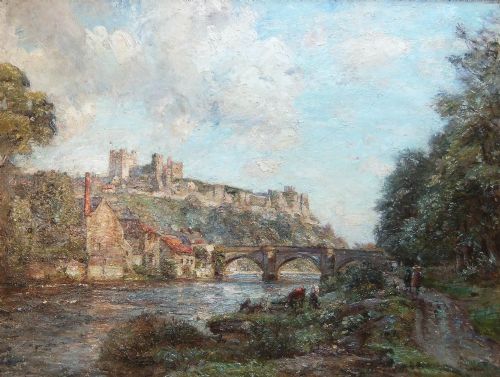
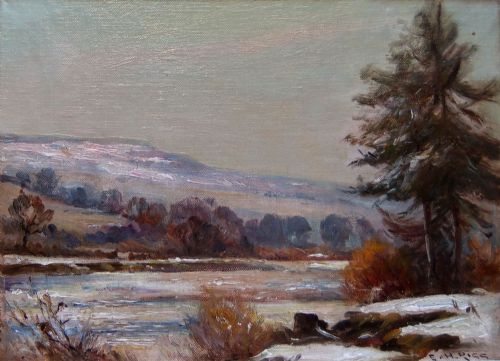
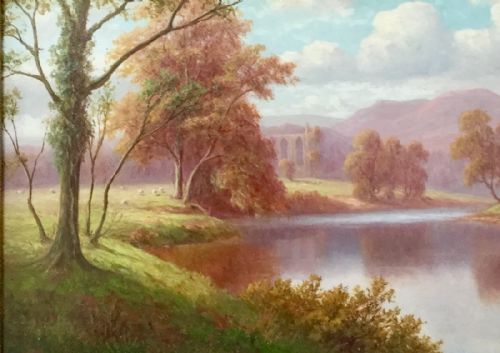
Yorkshire river oil artwork encompasses paintings depicting northern waterways, most frequently featuring the River Wharfe, the River Swale, and the River Nidd. These canvases record specific Yorkshire locations such as Bolton Woods, Wetherby, and Wharfedale through regional topographical observation.
The selections available here lean heavily into early twentieth century and Victorian periods. Pieces range from Victorian naturalism and realism to British impressionism, capturing regional topography under changing light and weather conditions.
Common formats include framed works on canvas and board, often enhanced with gold leaf detailing. Subject matter focuses on local river life, ranging from quiet rural banks and mills to figures by the water.
How they were made
These works rely on oil paint applied to canvas or wood boards, utilising the rich pigment load and slow drying time characteristic of traditional oil painting. Artists built up textures and brushwork to render the play of light across Yorkshire rivers.
Surfaces are housed within period wooden frames, occasionally incorporating gold leaf to finish the presentation. The physical support structures reflect standard studio practices of the late nineteenth and early twentieth centuries.
Several canvases record local bathers sharing the Wharfe with grazing livestock.
What varies in quality
Quality rests upon the artist's ability to capture atmospheric light and specific topography rather than sheer scale. Stronger examples demonstrate confident brushwork and a nuanced handling of regional colour palettes.
Provenance and documentation elevate certain works, particularly when titles specify exact Yorkshire landmarks and identifiable regional artists. The integrity of the original surface and the appropriateness of the framing further distinguish individual pieces.
Herbert Royle·Owen Bowen·Florence Hess·William Mellor·Fred Stead·William Manners·Ernest Higgins Rigg·Ernest Moore·T. Watts·Walter Meegan·Everett Watson Mellor
The Yorkshire River Oil Artwork Glossary
- Oil on canvas
- Pigment suspended in a drying oil applied to stretched woven fabric. This medium allows for rich texture and subtle blending.
- British Impressionism
- A painting style focusing on light and everyday subjects using loose brushwork. This approach emerged strongly in late nineteenth and early twentieth century British art.
- Victorian Naturalism
- An artistic movement emphasising detailed observation of the natural world. Works in this vein record flora, water, and light with careful fidelity.
- Gold Leaf
- Thin sheets of beaten gold applied to frames or surfaces for decoration. It provides a warm metallic border that complements landscape paintings.
Yorkshire River Oil Artwork: Frequently Asked Questions
Which rivers appear most often in these paintings?
The River Wharfe dominates many compositions, alongside the River Swale and the River Nidd. Artists frequently returned to specific northern stretches.
These waterways provided varied topography, from wooded banks to open dales.
How do I date a Yorkshire river painting?
Dates rely on artist biography, stylistic markers, and recorded signatures on canvas or board. Victorian and early twentieth century works show distinct handling of light.
Framing materials and stretcher construction also offer chronological clues.
What is the Staithes group connection?
Certain artists associated with this regional painting tradition worked along the Yorkshire coast and inland waterways. Their technique reflects plein air observation.
This connection highlights a shared regional artistic network.
Where should I hang an oil painting?
Keep works away from direct sunlight and excessive humidity changes to protect the oil paint and canvas. Stable room temperatures preserve the structural integrity of the wood and gesso.
Proper wall placement ensures the gold leaf and frame remain secure.