






Earthy Brown Watercolour
These earthy brown watercolour paintings capture quiet landscapes and village scenes across the nineteenth and twentieth centuries.
Earthy Brown Watercolour
An earthy brown watercolour is typically a framed work on paper depicting rural landscapes, village scenes, coastal views, or still life subjects. Buyers searching for this phrase encounter framed artwork dating from the Victorian period through to the nineteen-forties.
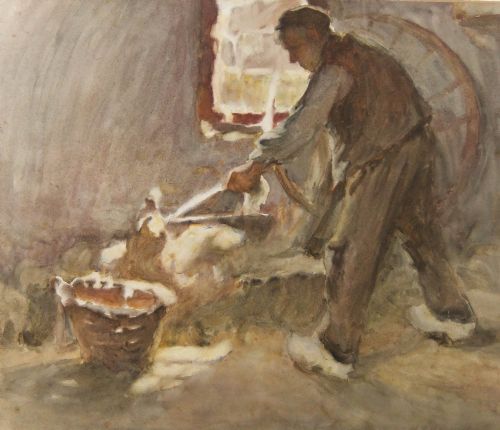
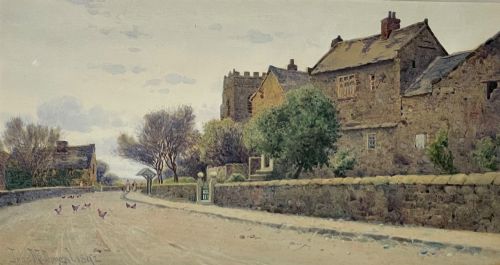
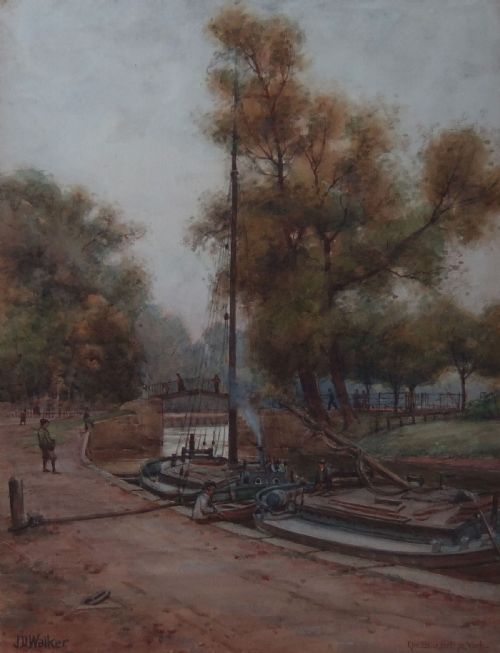
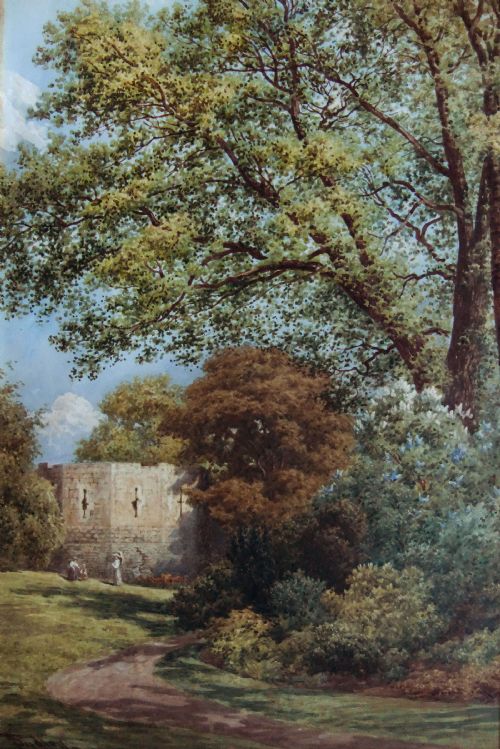
The pieces represented on this page span British Impressionism, Edwardian Landscape, and Mid-Century Modern styles. Works often highlight natural settings, architectural landmarks, and agricultural farmyards executed in muted brown pigment and ink.
Materials and technique
These works are executed using watercolour paint and pigment combined with ink on paper. Artists applied washes to build tonal depth, relying on the natural texture of the paper substrate to define highlights.
Framed presentation utilises wood surrounds and glass protection to preserve the delicate pigment. The combination of ink outlines and watercolour washes creates the characteristic earthy palette seen across these paintings.
Styles represented include British Impressionism, Edwardian Landscape, Post-Impressionism, and British Realism.
Factors of quality
The preservation of the paper and pigment integrity also separates works. Strong composition and clear atmospheric perspective distinguish accomplished artists from routine topographical sketches.
John McDougal·Henry Silkstone Hopwood·James Hayllar·James Tower·James Orrock·John Atkinson·Alfred Grey·R.P.Noble·Rowland Henry Hill·Tom Dudley·Francis William Topham·Charles Branwhite·Maurice Asselin·Fred C. Jones·John D. Walker·Fred Lawson
The Earthy Brown Watercolour Glossary
- Watercolour paint
- A medium consisting of colour pigments suspended in a water-soluble vehicle, applied to paper to create translucent washes.
- Framed artwork
- A piece enclosed within a protective wooden structure and glass cover to shield the paper from environmental damage.
- British Impressionism
- An artistic movement focusing on light, everyday subjects, and loose brushwork adapted by British painters.
- Wash
- A thin, fluid layer of transparent watercolour pigment spread across the paper to create tone or sky effects.
Earthy Brown Watercolour: Frequently Asked Questions
How should I hang an earthy brown watercolour?
Keep watercolours away from direct sunlight to prevent the brown pigments and paper from fading over time. Hang them on interior walls with stable humidity.
Ensure the frame is securely fastened to the wall using appropriate fixings for the weight of the wood and glass.
Are these watercolours original paintings?
Yes, the listings comprise original hand-painted works on paper rather than mass-produced prints or reproductions. Each piece shows unique brush marks and pigment variations.
Artists utilised watercolour and ink directly on the paper surface to create these distinct landscape and village scenes.
What periods do these watercolours cover?
The selection spans from the Victorian era and nineteenth century through to the nineteen-forties. This encompasses Edwardian landscape artists and mid-century practitioners.
Dates are attributed based on artist active periods and stylistic evidence recorded within the titles.
How do I identify different landscape styles?
Victorian and nineteenth-century works often feature detailed topographical views and narrative elements. Later twentieth-century pieces adopt looser impressionist brushwork and simpler compositions.
Comparing the treatment of light and architecture helps distinguish between early academic approaches and later modernist tendencies.