
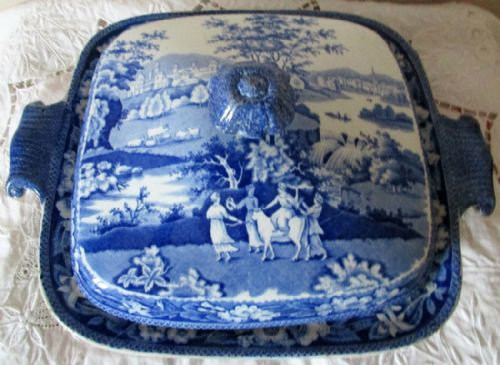


Earthenware Transfer Dish
These earthenware transfer dishes bring domestic dining histories to life through printed scenes transferred onto ceramic bodies.
Earthenware Transfer Dish
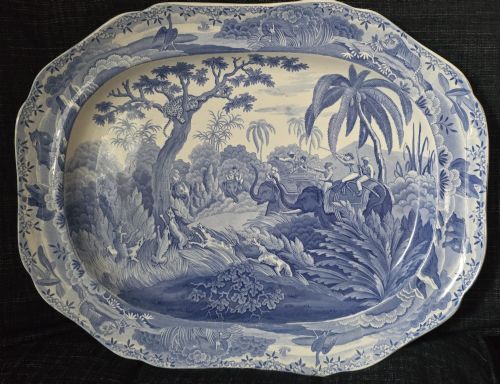
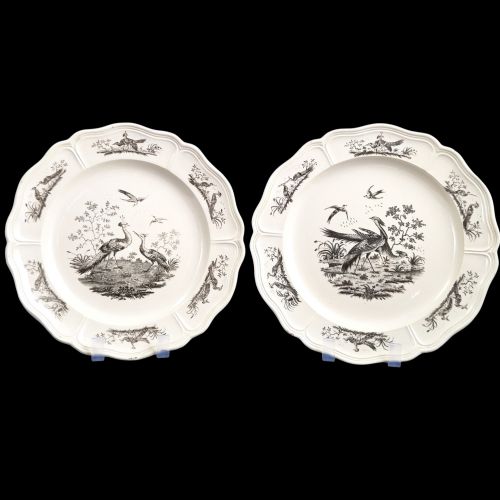
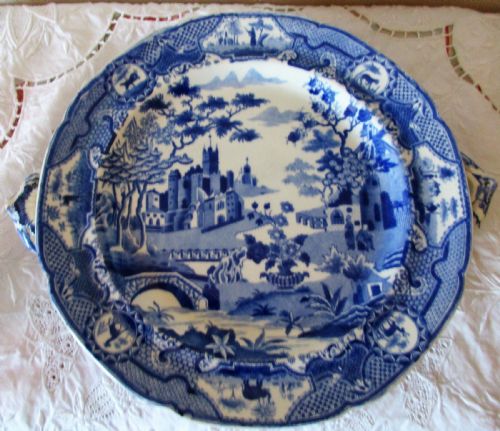
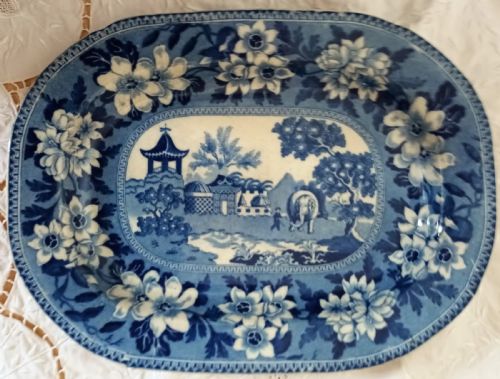
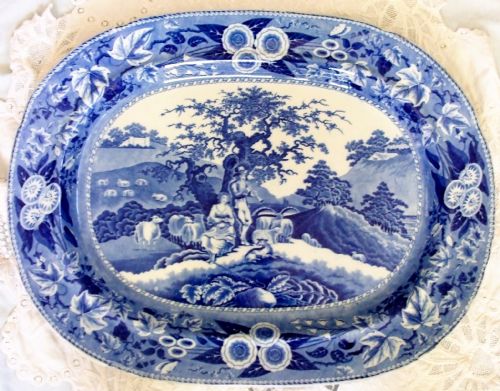
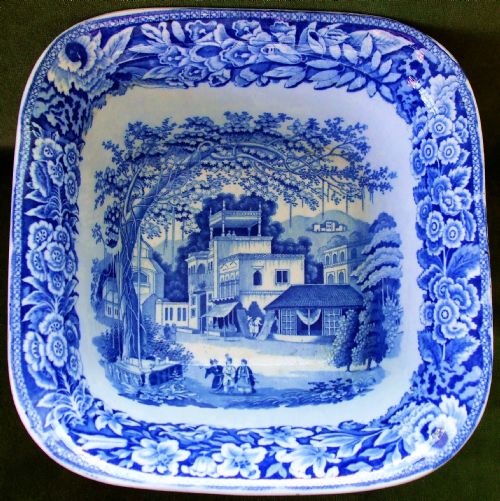
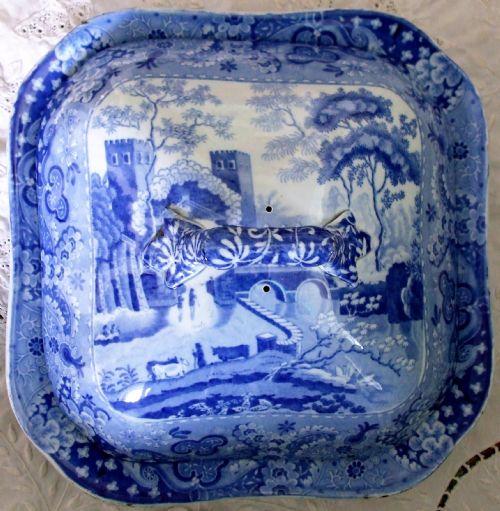
An earthenware transfer dish represents a functional ceramic vessel decorated with a printed design applied via a paper transfer from an engraved copper plate. When you search for an earthenware transfer dish, you encounter platters, plates, vegetable tureens, and serving dishes spanning the Georgian and Victorian periods. Most examples on this page date from the nineteenth century and carry blue and white pictorial patterns.
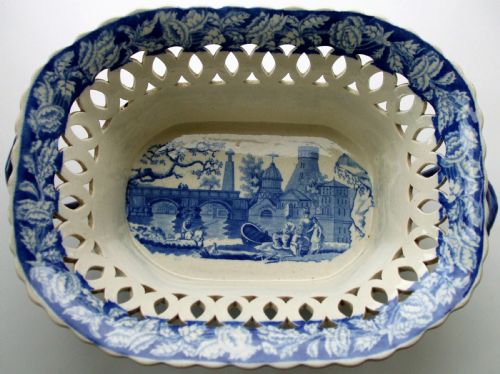
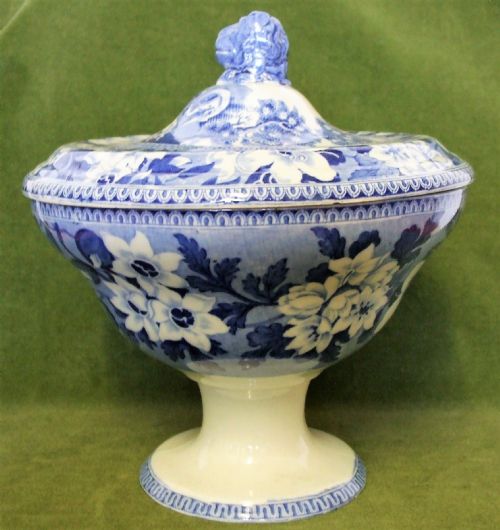
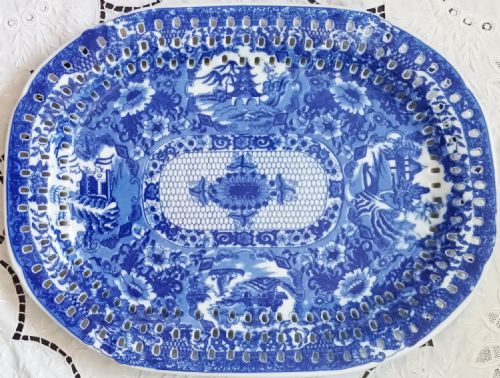
The forms range from large meat platters with gravy wells to chestnut baskets, bread stands, and lidded tureens. Makers produced these items in utilitarian shapes intended for heavy table service during formal and everyday meals. Staffordshire potteries dominate the selections, alongside examples originating from Leeds and other regional centres.
Materials and technique
Potters shaped earthenware bodies from refined clay mixtures, often incorporating pearlware formulations to achieve a whiter, smoother surface for printing. Cobalt pigment served as the primary colourant for the transfer design, mixed into an oil-based medium before application onto tissue paper.
Workers pressed the printed paper onto the bisque ceramic surface to transfer the ink before glazing and firing the vessel in a kiln. A lead glaze provided a protective, glossy coat that sealed the cobalt pigment into the ceramic matrix during high-temperature firing.
Forms span Georgian and Victorian periods, including meat platters, vegetable tureens, and chestnut baskets.
What varies in quality
The clarity and crispness of the cobalt transfer print separate standard utility wares from finer artistic outputs. Master engravers cut intricate lines into copper plates, resulting in sharp architectural details and botanical borders that lesser workshops blurred during pressing.
The complexity of the ceramic form itself dictates the upper tiers of the range, seen in pierced serving dishes, handled tureens with matching covers, and moulded tazzas. Potteries such as Spode and John Rogers achieved superior integration between the printed landscape and the thrown ceramic body.
Spode·John Rogers & Son·J. & R. Clews·J. & R. Riley·William Adams·Thomas Lakin·Brameld & Co.·Mason·James Wallace & Co.
The Earthenware Transfer Dish Glossary
- Pearlware
- A refined type of earthenware featuring a bluish-tinted lead glaze that masked the natural cream colour of the underlying clay body.
- Transferware
- Ceramic pottery decorated by applying a printed paper design from an engraved copper plate onto the unglazed or bisque surface.
- Tureen
- A deep covered vessel used for serving soups, sauces, or vegetables at the dining table during formal meals.
- Tazza
- A shallow ornamental bowl or plate raised on a pedestal foot, used for serving fruit or small dishes.
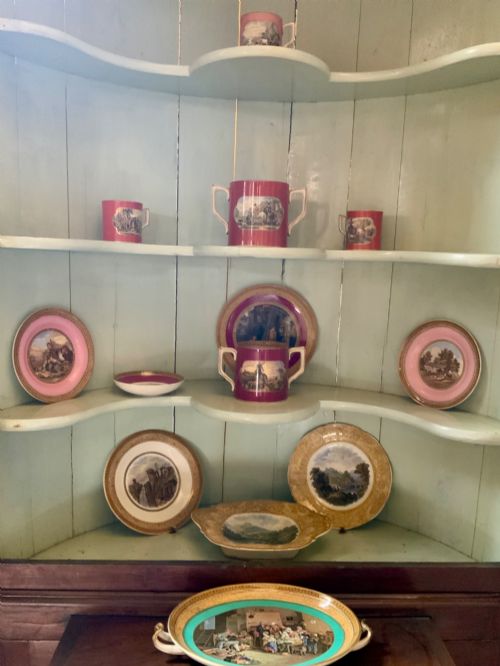
- Prattware
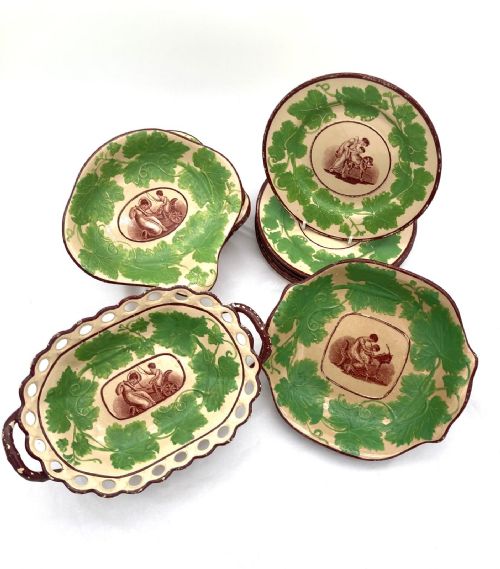
- Coloured earthenware produced in Staffordshire featuring underglaze painting in limited hues like ochre, blue, and brown.
Earthenware Transfer Dish: Frequently Asked Questions
How were these dishes used originally?
These vessels served functional roles in nineteenth-century dining rooms, holding meats, vegetables, sauces, and desserts for communal table service. Large platters often included drainage wells to collect juices from roasted joints.
Servants transported food from kitchens to dining tables in covered tureens designed to retain heat. Everyday domestic routines relied heavily on these durable ceramic pieces for serving family meals.
How do I date an earthenware dish?
Dating relies on stylistic markers within the printed border, the shade of the blue pigment, and the composition of the ceramic body. Early nineteenth-century pieces often utilise pearlware glazes with deep cobalt tones.
Backstamps, impressed potters' marks, and specific pictorial patterns help narrow down production eras. Comparing the style of transfer scenes to documented factory outputs provides reliable chronological brackets.
Can I use these antiques for serving food?
Using nineteenth-century earthenware for modern dining requires caution due to historical lead glazes and fragility accumulated over centuries. Surface wear and micro-cracks can harbour bacteria during food contact.
Most collectors prefer to display these items as wall plates or cabinet pieces rather than risking thermal shock or chemical leaching. Gentle hand washing without soaking preserves the historical glaze integrity.
What caused the blue colour variation?
Variations in the blue hue stem from differences in cobalt pigment preparation and kiln temperatures during firing. Some workshops achieved deep indigo shades, while others produced lighter slate blues.
The chemical reaction between the cobalt and the lead glaze during high-temperature firing created unique tonal depths across different Staffordshire kilns.