



Earth Tone Paper Landscape
Earth tone paper landscape works capture quiet rural views and coastal scenes through delicate washes.
Earth Tone Paper Landscape
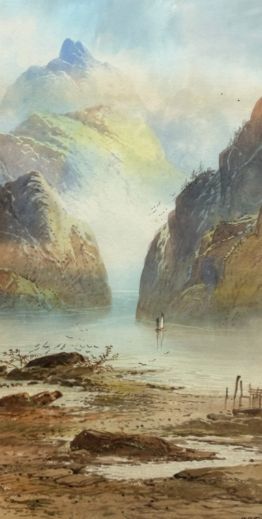
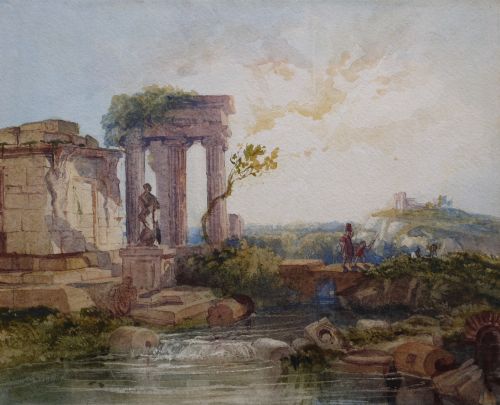
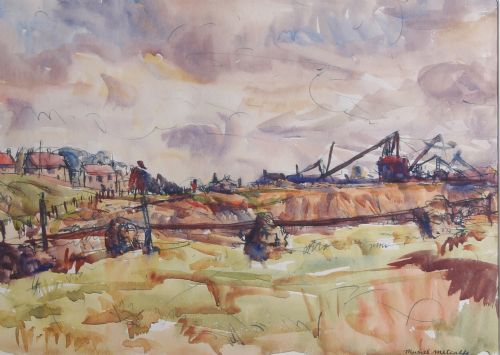
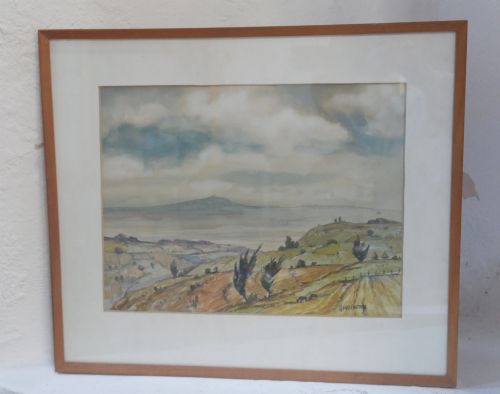
An earth tone paper landscape is an original watercolour painting executed on paper support, depicting natural scenery, rural villages, and coastal views. These works span from the Victorian period through the mid-twentieth century, capturing British and continental subjects with muted, natural palettes.
Buyers will most frequently encounter nineteenth-century and early twentieth-century British landscape watercolours on this page. These pieces often feature traditional scenes such as Yorkshire harbours, Welsh valleys, and Suffolk village streets rendered in subtle browns, greens, and ochres.
Materials and techniques
Artists apply watercolour pigment and watercolour paint directly onto paper sheets, frequently utilising graphite underdrawing to outline the composition before laying down washes. The absorbent nature of the paper allows pigments to settle softly, creating gentle gradations of tone.
Protective framing behind glass preserves these delicate watercolours from environmental moisture and airborne pollutants. Wooden frames often house the paper works, securing them alongside the glass barrier.
Several artists preferred painting ducks and passing vessels over grand vistas.
Quality factors in paper landscapes
Fine examples demonstrate confident brushwork and a sophisticated handling of light that creates genuine atmospheric depth within the scene. Superior pieces maintain vibrant pigment integrity across the paper surface without excessive fading or discoloration from past exposure to light.
Compositional balance and precision in architectural or topographical details separate accomplished works from routine topographical sketches. The skilful use of the unpainted paper surface to denote highlights reveals the artist's technical control.
William Henry Earp·Richard Principal Leitch·Alfred George Morgan·John Edward Bale·Kate E Booth
The Earth Tone Paper Landscape Glossary
- Watercolour pigment
- Finely ground colour particles suspended in a water-soluble binder, used to create transparent washes on paper.
- Graphite
- A form of carbon used for preliminary sketching beneath watercolour paint to map out proportions and perspective.
- Wash
- A thin, fluid layer of diluted watercolour paint spread evenly across the paper to represent skies or water.
- Support
- The physical base material, typically paper, upon which the artist applies the watercolour pigments.
Earth Tone Paper Landscape: Frequently Asked Questions
How should I hang a watercolour painting?
Position watercolour paintings away from direct sunlight to prevent the pigments from fading and the paper from yellowing over time.
Ensure the room maintains stable humidity levels to protect both the paper support and the wooden frame from warping.
What periods do these landscapes cover?
The available watercolours primarily date from the Victorian era through the mid-twentieth century, with strong representation from the Edwardian period.
Earlier nineteenth-century examples sit alongside later modernist interpretations, showing how landscape depiction evolved over decades.
Are these works original paintings?
Every listed piece is an original hand-painted watercolour on paper rather than a reproduction or print. Artists applied the pigment directly, making each composition a unique historical record.
Signatures from the period often appear in the lower corners, inscribed by the artist in graphite or watercolour.
How do I identify a Victorian watercolour?
Victorian watercolours often feature detailed British or European topography rendered with careful attention to architectural elements and atmospheric lighting.
The paper stock and framing style frequently align with nineteenth-century manufacturing methods and aesthetic preferences.