




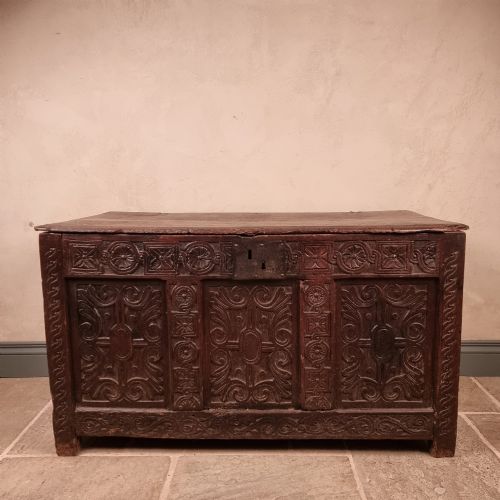
Early Wooden Trunk
An early wooden trunk is a heavy storage piece built to hold household goods, offering honest timber construction and centuries of domestic history.
Early Wooden Trunk
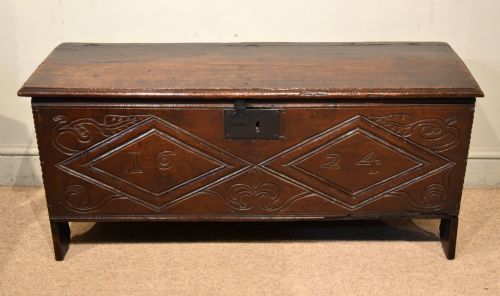
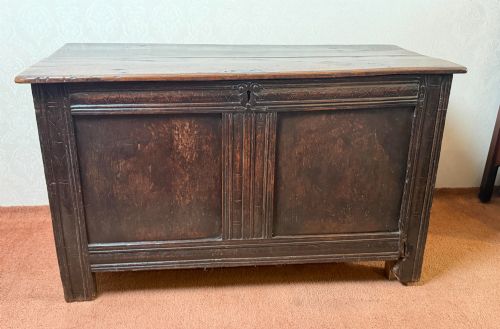
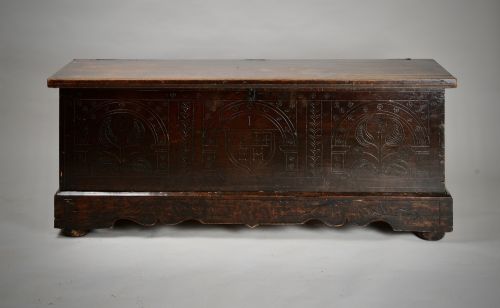
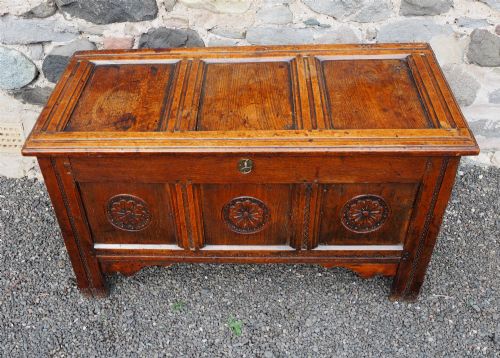
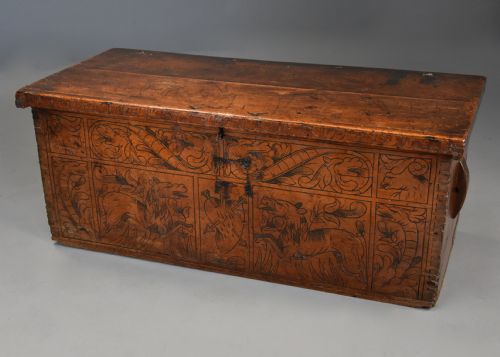
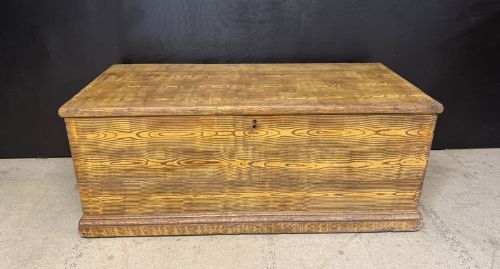
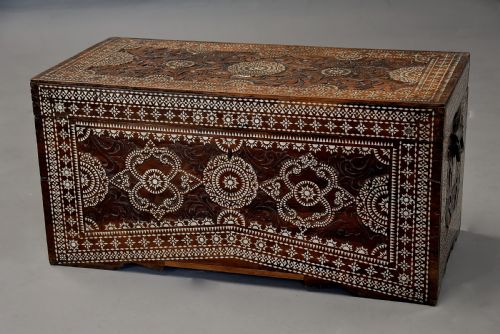
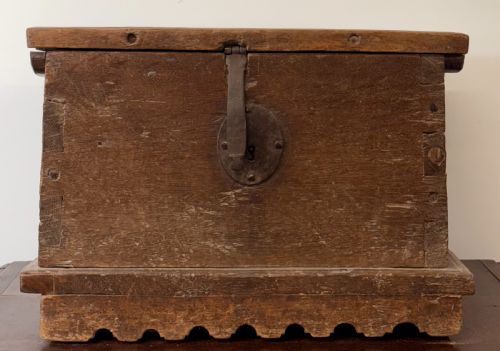
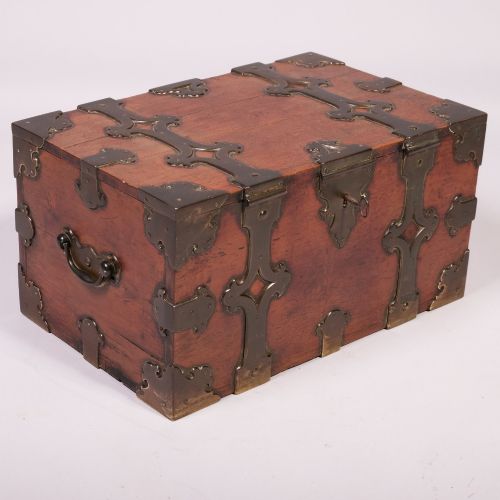
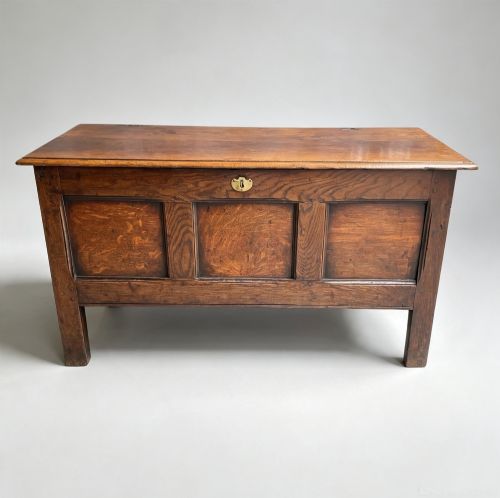
When you search for an early wooden trunk, you encounter robust storage boxes primarily fashioned from oak, pine, and camphor wood across periods spanning the sixteenth century to the early twentieth century. The forms range from plain plank coffers and panelled joined chests to campaign chests of drawers and painted marriage chests.
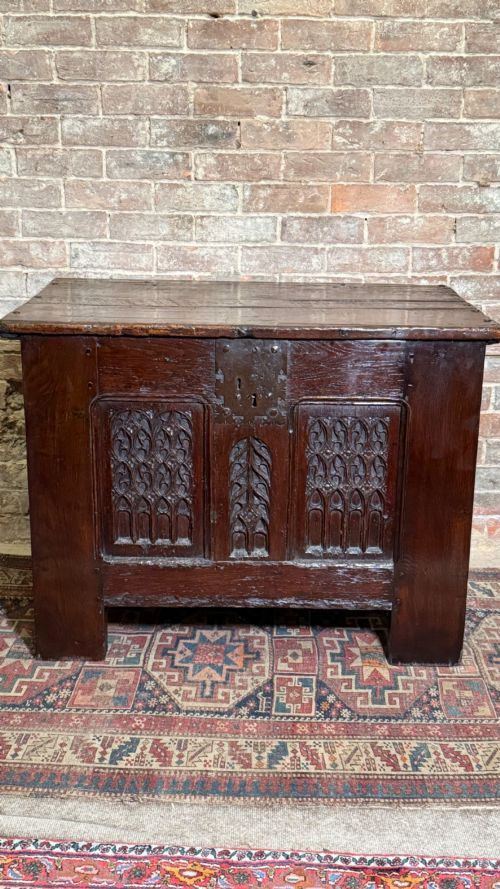
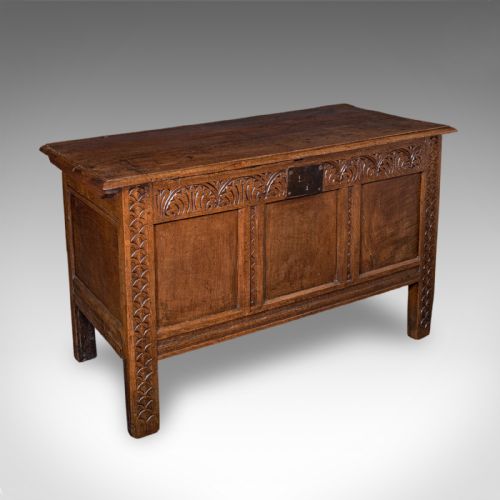
You are most likely to meet seventeenth-century and eighteenth-century oak coffers on this page, often featuring simple board construction or carved panels reflecting Jacobean and Tudor influences. These domestic pieces served to secure textiles, valuables, and provisions in households long before fitted wardrobes existed.
Regional variations also appear through Welsh pine chests, Flemish and Italian imports, and Swedish marriage chests, demonstrating how local timbers and painting traditions shaped utilitarian storage. Later examples shift into nineteenth-century campaign furniture and early twentieth-century travel trunks fitted in mahogany, teak, and pine.
Materials and Construction
Makers relied on native hardwoods like oak and softwoods like pine, joining thick planks with dovetails, tongue-and-groove boards, or simple edge-joined panels secured by dowels. Early sixteenth and seventeenth-century pieces typically utilised joined framing with pegged mortise and tenon joints surrounding flat or carved panels.
Metalwork played a structural and protective role, with hand-wrought iron hinges, strapwork, and brass mounts reinforcing heavy lids and corners. Later campaign and travel trunks integrated brass carrying handles, reinforced corners, and fitted interior compartments designed for transit.
Early Wooden Trunk Retail Price Guide 2026
Typical asking prices for early wooden trunk among the pieces listed under this phrase on Sellingantiques today, from the lower quarter to the upper quarter. They describe what is for sale here now, not the wider market.
Among the heavy oak and iron sits a Swedish marriage chest painted by hand to celebrate a union centuries ago.
Evaluating Quality in Early Trunks
The standard of a piece rests in the integrity of its timber, the honesty of its construction, and the preservation of its original surface. Trunks retaining untouched waxed surfaces or early paint show greater integrity than those stripped down or heavily restored in later centuries.
Joinery detail distinguishes utilitarian boxes from fine cabinet work, seen in the crispness of hand-carved panels on seventeenth-century coffers versus the straightforward construction of vernacular pine farmer chests. Original ironwork, locks, and hinges further separate standard utility boxes from superior examples.
The Early Wooden Trunk Glossary
- Coffer
- A heavy wooden chest, typically with a flat lid, used for storing valuables and household goods. These pieces formed the backbone of domestic storage before dedicated cupboards became common.
- Six Plank Coffer
- A primitive chest constructed from six simple boards joined at the edges. This method represents the earliest and most direct form of box construction.
- Campaign Chest
- A modular chest of drawers built in two or more sections with recessed brass handles for military transport. These items were designed to be packed easily for travel.
- Mule Chest
- A chest featuring one or more drawers beneath the main storage well. This form bridges the evolution between the traditional coffer and the modern chest of drawers.
- Cassone
- An Italian Renaissance chest often decorated with rich carving or painted finishes. These luxurious storage vessels were traditionally commissioned for marriages.
- Patina
- The surface sheen and colour developed on wood through age, handling, and wax polishing over centuries. It serves as a key indicator of genuine antiquity.
Early Wooden Trunk: Frequently Asked Questions
What is an early wooden trunk?
An early wooden trunk is a sturdy storage container made from solid timber, designed to hold clothes, linens, and valuables.
These pieces range from primitive six-plank oak coffers of the sixteenth century to panelled joined chests and later travel trunks.
How were these trunks used?
Historically, these boxes served as secure storage for household goods, textiles, and personal documents in domestic settings.
Many sturdy examples also functioned as seating benches or travel containers for military officers and merchants on the move.
How do I live with an early trunk?
These versatile pieces function well as coffee tables, window seats, or end-of-bed blanket storage in modern interiors.
Their robust timber construction allows them to endure daily use while providing deep, concealed storage space.
How do I tell periods apart?
Early periods from the sixteenth and seventeenth centuries rely on pegged oak joinery, heavy planking, and geometric or floral carvings.
Later pieces from the nineteenth and twentieth centuries introduce painted finishes, pine construction, brass campaign hardware, and internal compartmentalisation.