
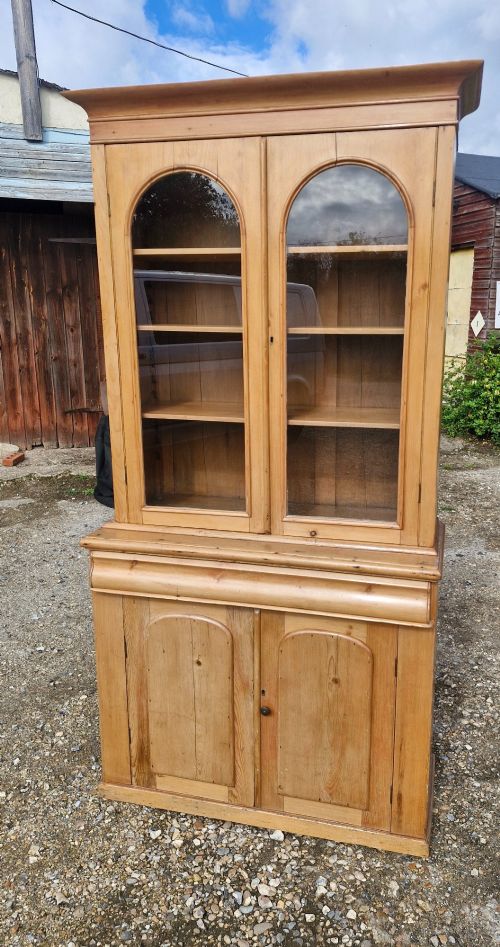
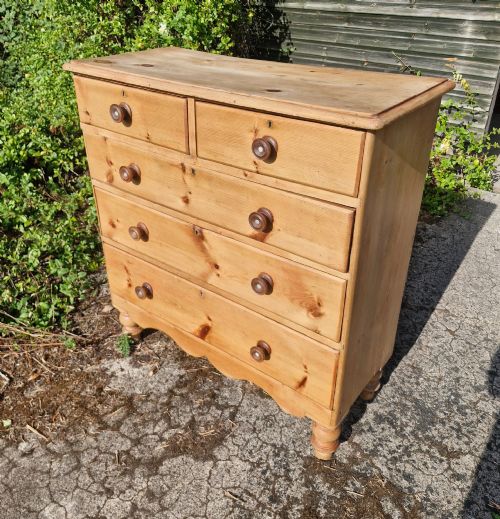
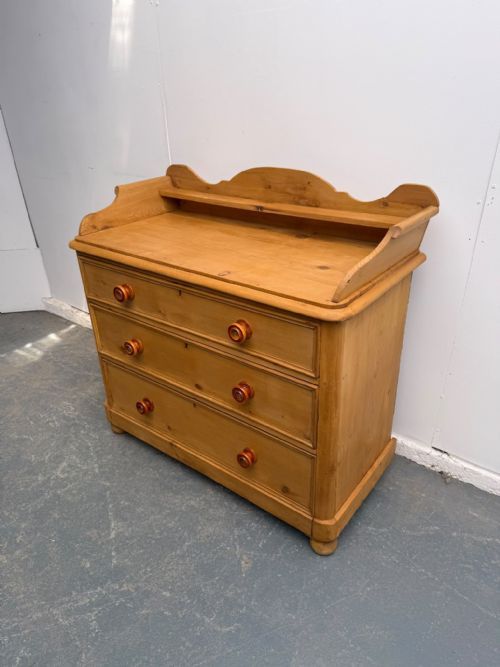
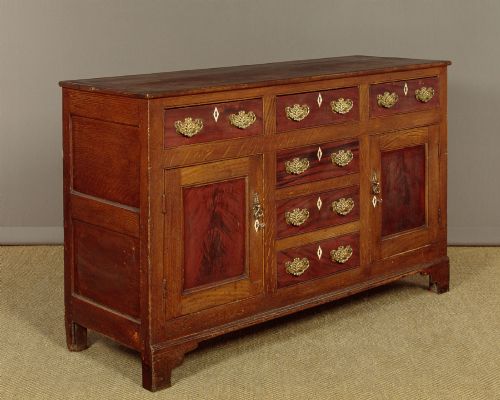
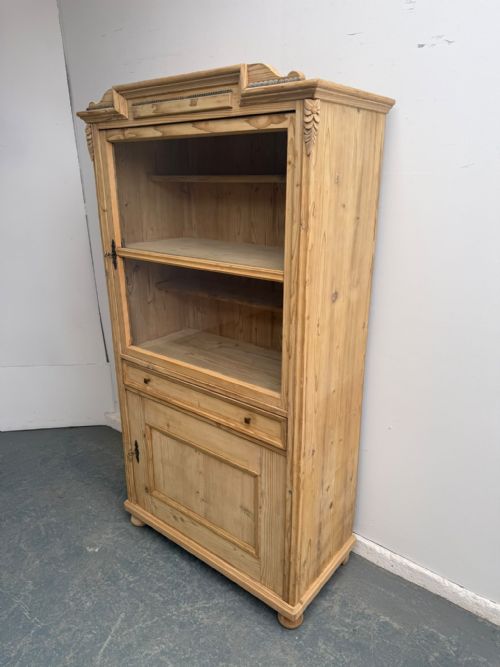
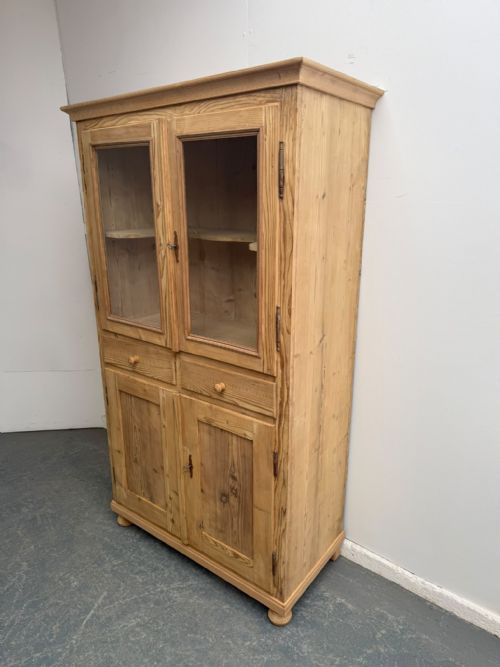
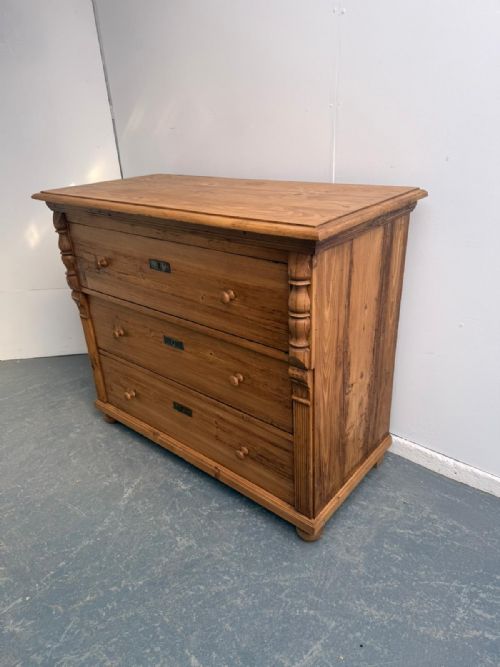


Early Victorian Pine Dresser
An early victorian pine dresser brings practical utility and honest rural character into a modern home.
Early Victorian Pine Dresser
When you search for an early victorian pine dresser, you are looking at substantial storage furniture built during the mid-nineteenth century, mostly associated with country houses and farmhouses. These pieces range from open-top kitchen dressers and shallow dresser bases to expansive housekeeper cupboards and chiffonier sideboards.
The versions you are most likely to meet on this page include waxed dresser bases with panelled sides, kitchen cupboards with glazed display doors, and multi-drawer chests that served functional domestic roles. Their forms reflect a period of sturdy craftsmanship where everyday timber was shaped for heavy household use.
Construction and materials
These items are constructed primarily from solid pine, often augmented with iron, brass, or wooden hardware and occasionally glass panes for display doors. Carpenters utilised simple joining techniques suited to softwood, relying on pegged joints and hand-cut dovetails for drawers.
Surfaces were traditionally left bare, painted, or finished with wax to protect the timber while maintaining a matte appearance. Over decades of use, this timber developed a distinct patina through repeated waxing and daily wear.
Several cupboards still carry the faint aroma of nineteenth-century beeswax and old farmhouse kitchens.
Assessing quality and proportion
Quality in these pieces is determined by the crispness of the carpentry and the retention of original proportions rather than ornate decoration. Better examples exhibit tight dovetail joints, well-balanced door panels, and balanced heights that suit domestic rooms.
The condition of the timber surface also dictates value, where untouched waxed finishes or honest traces of early paint outrank stripped and overly sanded wood. Structural integrity in the legs and drawer runners separates daily workhorses from finer surviving specimens.
The Early Victorian Pine Dresser Glossary
- Pine
- A soft timber sourced from coniferous trees, widely utilised in nineteenth-century domestic furniture for its accessibility and workability. It takes wax and paint finishes readily.
- Dresser base
- The lower section of a kitchen dresser, featuring cupboards and drawers without the upper plate rack. These served as independent sideboards or preparation surfaces.
- Housekeeper cupboard
- A large storage cabinet designed for linen, provisions, and household goods. They typically feature multiple panelled doors and internal shelving.
- Chiffonier
- A low sideboard cabinet developed during the Regency and Victorian periods, often equipped with drawers and enclosed lower shelves. It functioned primarily in dining rooms and parlours.
- Patina
- The surface sheen and colour depth developed by wood and metal over decades of handling, exposure, and polishing. It serves as an indicator of age and authenticity.
Early Victorian Pine Dresser: Frequently Asked Questions
What is an early victorian pine dresser?
An early victorian pine dresser is a nineteenth-century storage piece built from softwood, typically featuring drawers, cupboards, or open shelving for domestic use.
These items were constructed for hardworking household environments, combining utility with straightforward regional carpentry styles.
How were these dressers originally used?
They were utilised in kitchens, pantries, and halls to store crockery, dry goods, linens, and domestic provisions.
The surface tops also provided extra workspace for food preparation and household organisation.
Are these pieces painted or waxed?
Many examples survive with traditional wax finishes that highlight the grain, while others retain early layers of paint.
Owners often chose to wax or paint the softwood depending on whether the furniture resided in a formal room or a working kitchen.
How do I date an early victorian pine piece?
Dating relies on observing construction methods such as hand-cut dovetails, iron or brass fixings, and the overall proportions typical of the mid-nineteenth century.
Comparing the secondary timbers and backboards also helps confirm the period of manufacture.