

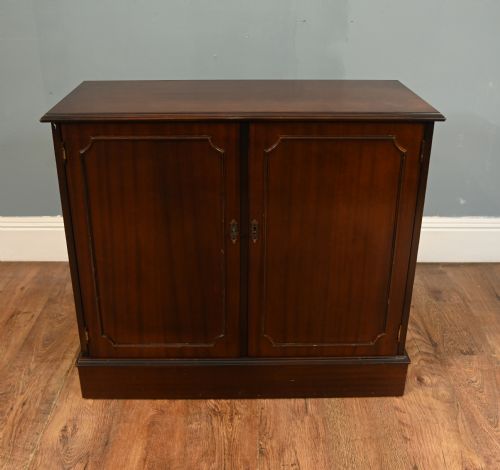


Early Victorian Mahogany Cabinet
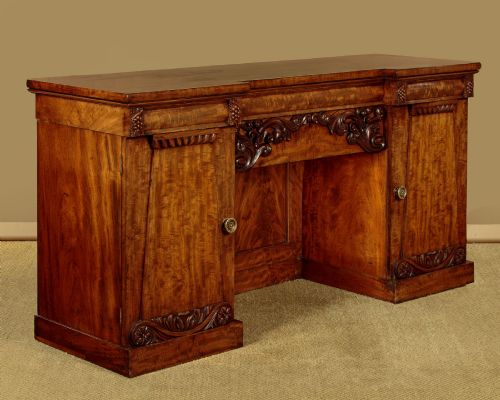
An early victorian mahogany cabinet brings rich timber tones and solid nineteenth-century proportions to a room.
Early Victorian Mahogany Cabinet
When you search for an early victorian mahogany cabinet, you encounter a wide variety of domestic furniture designed for storage and display. The selection ranges from tall library bookcases and breakfront cabinets to compact bedside tables and specialised collectors chests.
Most pieces date from the nineteenth century, with strong representation from the early Victorian period and surrounding decades such as the William IV and Regency eras. Forms include chiffoniers, side cabinets, and secretaires alongside smaller tabletop and apprentice pieces.
Materials and Technique
Cabinet makers relied heavily on solid mahogany and flame mahogany veneers over secondary timbers, selecting boards for depth of grain and warm natural colour. Surfaces were frequently polished to a high lustre that highlights the figuring of the wood.
Construction details often incorporate brass hardware, glass panels for display doors, and internal fittings lined with leather or baize. Drawer linings and carcase construction display traditional joinery methods suited to heavy domestic use.
Early Victorian Mahogany Cabinet Retail Price Guide 2026
Typical asking prices for early victorian mahogany cabinet among the pieces listed under this phrase on Sellingantiques today, from the lower quarter to the upper quarter. They describe what is for sale here now, not the wider market.
Several miniature and apprentice cabinets survive, built small enough for a journeyman to carry as proof of his trade.
Assessment of Quality
The distinction between standard pieces and the finest work lies in the choice of timber and the precision of the cabinet work. Superior examples display carefully matched flame mahogany veneers and crisp, well-defined carving rather than plain surfaces.
Proportion and internal arrangement also dictate worth, with fitted desks, numerous drawers, and balanced architectural detailing setting apart pieces produced by accomplished workshops.
Gillows·Standish
The Early Victorian Mahogany Cabinet Glossary
- Flame mahogany
- A veneer cut from timber where the branches join the trunk, producing a distinctive, fiery grain pattern. This figure is prized for decorative drawer fronts and cabinet doors.
- Secretaire
- A cabinet or desk featuring a pull-down writing flap that conceals small drawers and pigeonholes. It combines storage with a compact writing surface.
- Chiffonier
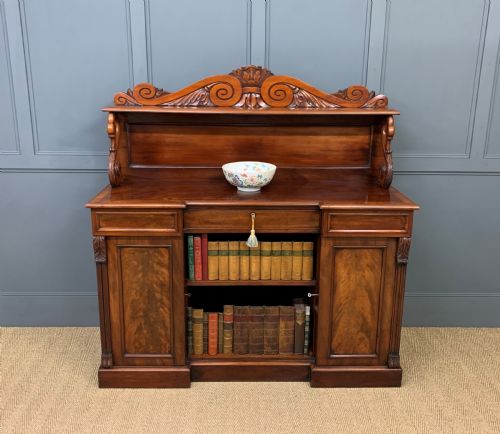
- A low sideboard or cabinet developed in the early nineteenth century, usually fitted with doors enclosing shelves and sometimes a raised tier at the back.
- Breakfront
- A large cabinet design where the central section projects forward from the flanking wings. This architectural arrangement creates depth and visual interest in large bookcases.
- Glazed
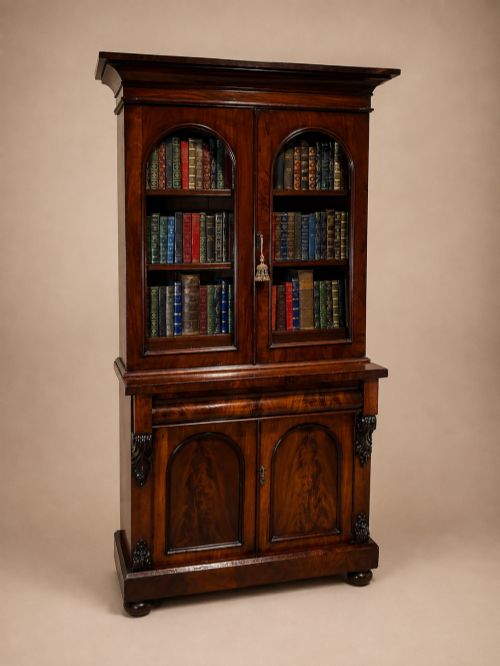
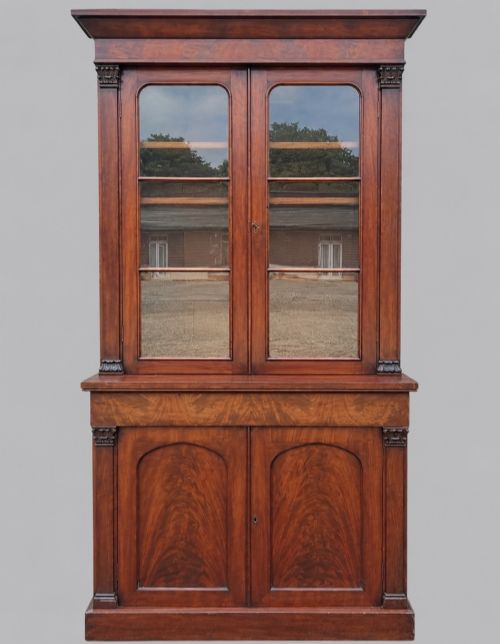
- Fitted with glass panels in the doors to allow the display of books or porcelain. Early examples often feature individual glass panes held within wooden astragals.
Early Victorian Mahogany Cabinet: Frequently Asked Questions
How do I clean an antique mahogany cabinet?
Dust regularly with a soft, dry cloth to prevent dirt accumulation on the polished surface.
Apply a traditional beeswax polish sparingly every few months to nourish the wood and maintain its sheen.
Where should I place a cabinet in my home?
Position your cabinet away from direct sunlight and heat sources to prevent the mahogany timber from drying out or warping.
Ensure the floor is level so the doors and drawers align correctly within the frame.
How do I date an early Victorian piece?
Examine the secondary timbers used inside the drawers, such as oak or pine, alongside the style of the brass hardware.
Construction methods like hand-cut dovetails and the absence of modern machine marks help confirm a mid-nineteenth-century origin.
What is the difference between a chiffonier and a sideboard?
A chiffonier is typically smaller and more enclosed, often featuring a low shelf superstructure on top.
Sideboards are generally larger dining room pieces designed primarily for serving and storing heavy tableware.