

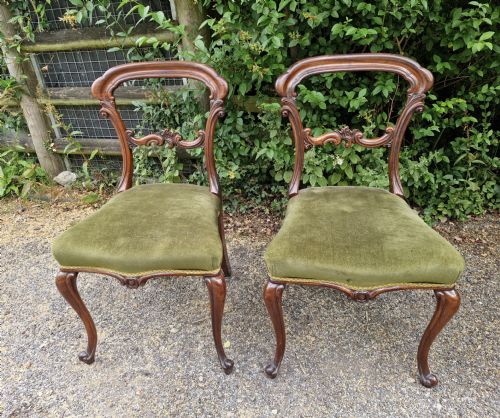


Early Victorian Bedroom Chairs
Early victorian bedroom chairs are compact nineteenth century seats designed for private chambers, offering low profiles and comfortable upholstery that collectors prize for intimate spaces.
Early Victorian Bedroom Chairs
The forms span several distinct variations including nursing chairs, slipper chairs, and low occasional seats. Most examples rely on domestic woods like rosewood and walnut, frequently paired with button back upholstery or tapestry coverings.
Makers of the period adapted earlier Regency and William IV shapes into softer, more enveloping designs suitable for bedrooms and boudoirs. These pieces often ride on castors, reflecting the practical mobility required in Victorian dressing rooms.
How they were made
Cabinetmakers shaped the frames of early victorian bedroom chairs from dense hardwoods such as rosewood, mahogany, and walnut. Carved details on the crest rails and cabriole legs display the manual dexterity of nineteenth century workshops.
Upholstery formed a central part of the construction, utilising traditional stuff-over techniques with horsehair or wool stuffing. Finishers secured the padding beneath rich textiles like velvet, damask fabric, leather, and tapestry using rows of brass tacks.
Early Victorian Bedroom Chairs Retail Price Guide 2026
Typical asking prices for early victorian bedroom chairs among the pieces listed under this phrase on Sellingantiques today, from the lower quarter to the upper quarter. They describe what is for sale here now, not the wider market.
Victorian nursery chairs sat purposefully low so ladies could nurse infants without tripping over their voluminous crinolines.
What varies in quality
The distinction between ordinary and exceptional chairs rests in the crispness of the timber carving and the integrity of the underlying frame construction. Finer examples retain their original rosewood or walnut grain without extensive replacement of structural components.
Proportion and comfort dictate value among these lower bedroom seats, with superior pieces offering balanced scroll backs and well-sprung buttoned upholstery. Original castors and untouched period textiles elevate an individual chair above later restored alternatives.
Howard and Sons
The Early Victorian Bedroom Chairs Glossary
- Nursing chair
- A low-seated chair historically used by women for feeding infants or attending to personal grooming. These items sit closer to the floor than standard dining seats.
- Slipper chair
- An upholstered chair featuring a low seat and no arms, originally designed for bedrooms to assist with putting on footwear. The compact design suits confined spaces.
- Spoon back
- A padded chair back shaped in a concave oval resembling the bowl of a spoon. This distinctive Victorian contour fits the curve of the human spine.
- Button back
- An upholstery method where deep depressions are created across the fabric using tufted buttons. This technique secures the internal stuffing while adding decorative texture.
- Scroll back
- A chair back featuring an outward curving top rail that rolls backward. Cabinetmakers used this graceful sweep to soften the silhouette of parlour and bedroom seating.
Early Victorian Bedroom Chairs: Frequently Asked Questions
What distinguishes a bedroom chair from a salon chair?
Bedroom chairs generally feature lower seats and more compact dimensions to fit comfortably beside dressing tables and washstands.
Salon chairs were built slightly taller and wider for formal entertaining in public reception rooms.
Why are so many of these chairs low to the ground?
The low profile suited the domestic activities performed in private chambers, such as resting or tending to children.
This shorter stature also prevented the heavy fabrics from dominating smaller nineteenth-century bedchambers.
How do I identify the early Victorian period?
Look for a transitional style that merges the heavier proportions of William IV furniture with the lighter, curvaceous elements of the mid-nineteenth century.
Rosewood and walnut frames with spoon backs or scroll carving point directly to this era.
Can I use these antique chairs in a modern home?
Their compact scale makes these chairs ideal as accent pieces in contemporary living rooms, studies, or hallways.
They pair easily with modern upholstery while retaining nineteenth-century character.