



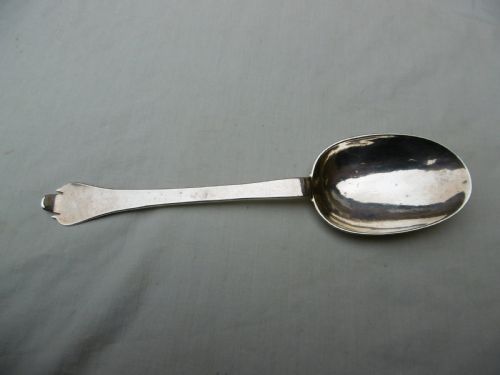


Early Silver Cutlery
Early silver cutlery comprises spoons, flatware, and pocket knives spanning the seventeenth to the twentieth centuries, prized for historic hallmarks and early forms.
Early Silver Cutlery
Early silver cutlery encompasses items such as seventeenth-century seal top spoons, slip top spoons, and trefid tablespoons alongside eighteenth-century dognose spoons, table forks, and marrow scoops. Buyers seeking early silver cutlery will encounter various regional and period forms originating from the seventeenth, eighteenth, nineteenth, and early twentieth centuries.
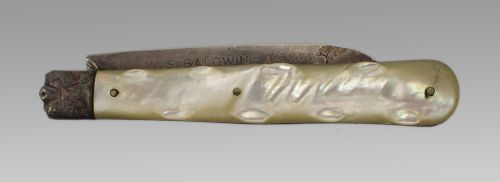
Object types span individual spoons, paired tablespoons, cased sets, fruit knives with mother of pearl handles, and grape scissors. These implements represent centuries of dining traditions and domestic silver production.
How they were made
Makers utilised sterling silver, Britannia silver, and silver gilt to shape these implements, frequently incorporating steel components for blades and mechanisms. Handles occasionally employ supplementary materials such as mother of pearl, horn, and enamel.
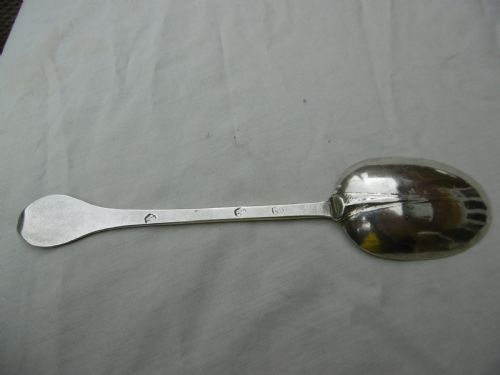
Early smiths fashioned spoons and flatware by hand, striking them with town marks, date letters, and makers' punch marks to record standard and origin. Detail work involved engraving crests, armorials, and lace patterns directly onto the silver surface.
Early Silver Cutlery Retail Price Guide 2026
Typical asking prices for early silver cutlery among the pieces listed under this phrase on Sellingantiques today, from the lower quarter to the upper quarter. They describe what is for sale here now, not the wider market.
Materials appearing across the current inventory include sterling silver, Britannia silver, silver gilt, steel, mother of pearl, enamel, and horn.
What varies in quality
Quality rests upon the clarity of the hallmarks, the legibility of maker's marks, and the preservation of the original form without excessive wear to the bowl or tines. Crispness in engraved armorial crests and decorative motifs elevates the standing of individual items.
The survival of maker stamps from provincial towns or known makers adds distinction to early spoons and forks. The integrity of secondary materials like mother of pearl handles or enamel detailing similarly influences overall execution.
Jerimiah Johnson·James Tait·Benjamin Prosser·David Andersen·Stephen Coleman·Daniel Cary·J Ladyman·Peter Webb·Reilly and Storer
The Early Silver Cutlery Glossary
- Trefid spoon
- An early form of spoon featuring a flat, three-lobed terminal handle popular during the late seventeenth century. This style often displays intricate lace pattern engraving on the stem and terminal.
- Seal top spoon
- A sixteenth or seventeenth-century spoon type finished with a small circular seal or bust at the end of the handle. These early implements frequently exhibit clear maker stamps and town marks.
- Dognose spoon
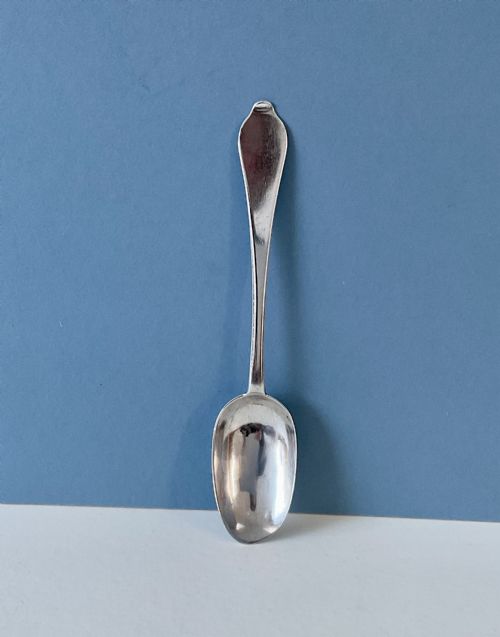
- An eighteenth-century spoon style characterised by a notched, upturned terminal that evolved from the earlier trefid form. It serves as a direct precursor to the modern table spoon design.
- Slip top spoon
- An early spoon style terminating in a slanted, cut-off stem end without a distinct knob or finial. Examples date from the early seventeenth century onwards.
- Britannia silver
- A higher standard of silver alloy introduced by statute to discourage the melting of coinage for plate. It contains a greater proportion of pure silver than standard sterling.
Early Silver Cutlery: Frequently Asked Questions
What defines early silver cutlery?
Early silver cutlery includes historical spoons, flatware, knives, and forks produced before the modern era. These pieces showcase hand-wrought construction and traditional forms like seal tops and trefids.
Items span from the seventeenth century through the Georgian period and into twentieth-century iterations. Each piece reflects the domestic dining habits and metallurgical standards of its era.
How do I identify a trefid spoon?
A trefid spoon is recognised by its flat handle terminal split into three distinct lobes. This distinctive silhouette dominated late seventeenth-century dining implements.
They frequently feature rat-tail reinforcement on the reverse of the bowl and delicate engraving along the stem. These elements help distinguish them from later Georgian tableware.
How should I care for antique silver?
Antique silver requires gentle handling to preserve centuries-old surfaces and maker's marks. Avoid aggressive cleaning agents that might wear away thin silver layers or engraved details.
Store pieces in dry conditions away from corrosive environments to maintain their historical finish. Regular soft dusting keeps dust from settling into engraved crevices.