
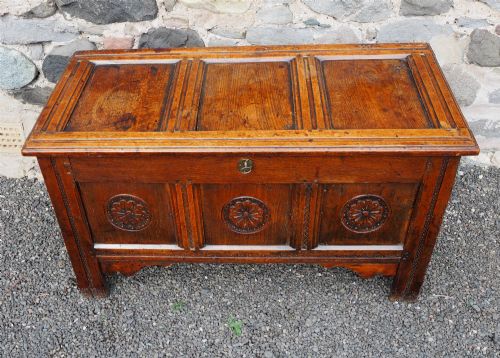


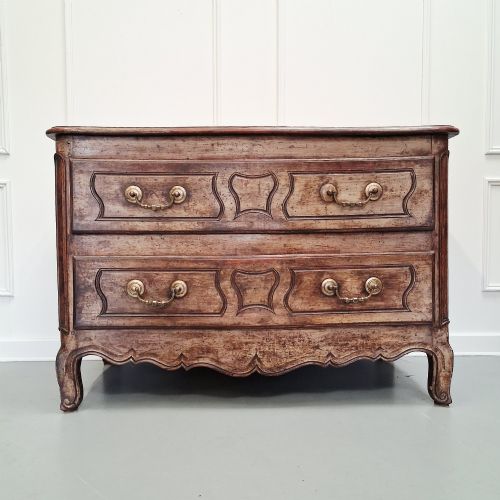
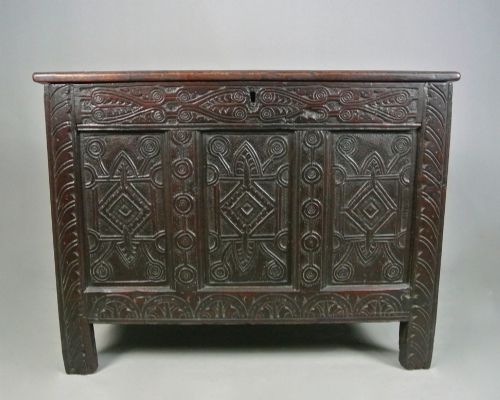
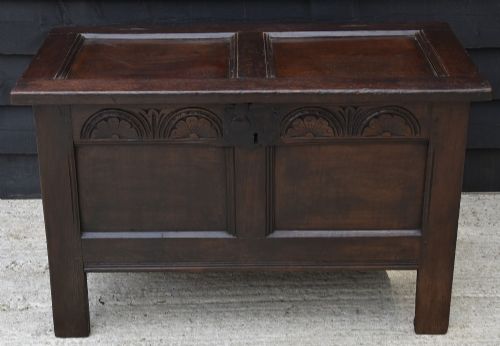


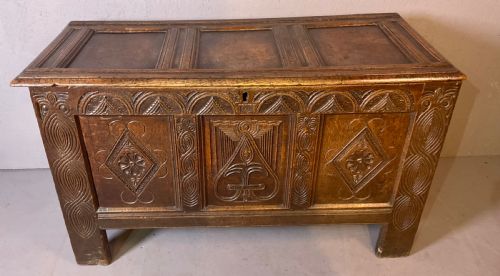


Early Oak Panel Chest
An early oak panel chest is a heavy storage trunk built with stile and rail framing that grounds a room with centuries of tactile grain.

Early Oak Panel Chest
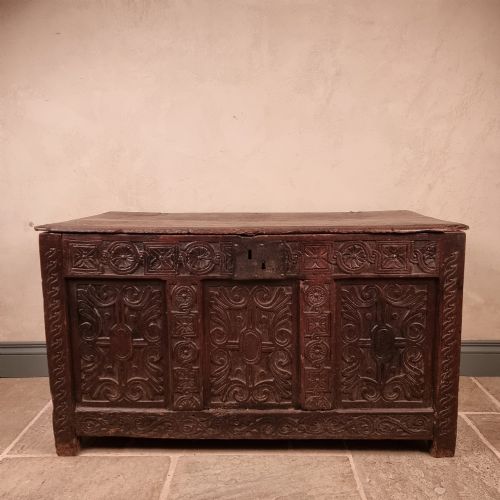
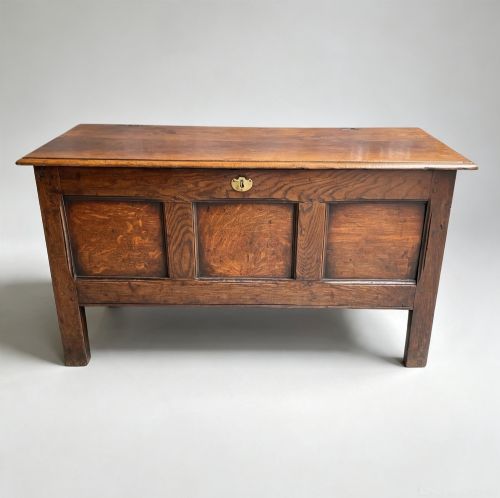
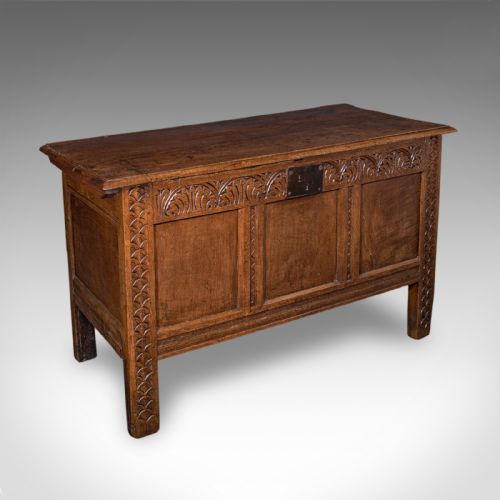
An early oak panel chest provides deep storage within a sturdy timber box constructed during the sixteenth, seventeenth, or eighteenth centuries. These pieces appear frequently as coffers, blanket chests, or mule chests featuring hinged lids and panelled fronts.
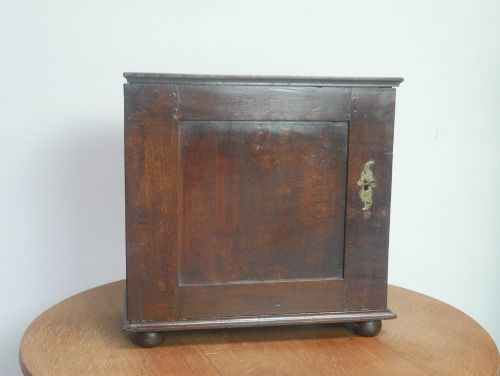
The domestic forms range from small proportioned boxes and spice cupboards to large Welsh coffers and joined chests. Surviving examples carry the marks of centuries of household use, from dry timber patination to worn iron hinges.
How They Were Made
Joiners built these chests using solid oak timbers connected by mortise and tenon joints held together with wooden pins. Panels floated inside grooved frames to allow the timber to expand and contract with seasonal humidity changes.
Iron and wrought iron provided structural reinforcement through strap hinges, lock plates, and corner brackets. Occasional use of fruitwood or walnut appears in specific panels or decorative elements alongside iron hardware.
Listed pieces span the sixteenth to nineteenth centuries, dominated by seventeenth and eighteenth century oak coffers, mule chests, and joined storage boxes.
What Varies in Quality
The clarity and depth of carved decoration separate standard storage boxes from master joinery. Crisp execution in geometric arcading, linenfold patterns, or figurative motifs reflects the skill of the original workshop.
Proportion and surface integrity dictate the character of each piece. Intact original boards, minimal timber replacement, and a deep wax finish distinguish pieces that retain their historical coherence.
The Early Oak Panel Chest Glossary
- Coffer
- A heavy wooden chest traditionally used for storing valuables, textiles, or documents. These storage boxes form the core of early boarded and panelled furniture.
- Mule chest
- A storage chest fitted with one or more drawers at the base beneath the main compartment. This form bridges the traditional coffer and the later chest of drawers.
- Joined chest
- Furniture constructed using frame and panel joinery rather than simple board-to-board nailing. This technique created lighter and far more stable containers.
- Linenfold
- A style of carved wooden panelling that resembles folded fabric or linen. It is frequently found on Tudor and sixteenth century panels.
- Arcading
- A decorative sequence of arches supported by columns carved into wood or stone. This classic motif appears across seventeenth century panels.
Early Oak Panel Chest: Frequently Asked Questions
What is an early oak panel chest?
An early oak panel chest is a storage box made from solid timber using frame and panel construction during the Tudor, Stuart, or Georgian periods.
These heavy trunks served multiple household functions, including seating, linen storage, and document safekeeping.
How were these chests used historically?
Households utilised these wooden containers to store valuable textiles, winter blankets, parish records, and dry goods securely.
Their flat lids also allowed them to function as tables, benches, or window seats in domestic interiors.
How do I identify a seventeenth century oak coffer?
Seventeenth century coffers display mortise and tenon joinery, pegged frames, and characteristic period motifs such as geometric punchwork or strapwork.
They often feature hand-wrought iron strap hinges and substantial oak boards that show deep patination from age.
What is the difference between a coffer and a mule chest?
A traditional coffer consists of a simple chest box with a hinged lid opening from the top.
A mule chest incorporates one or more drawers built into the base beneath the main storage compartment.
How do I care for an antique oak chest?
Keep wooden furniture away from direct heat sources and sudden humidity fluctuations to prevent timber splitting.
Apply a traditional beeswax polish occasionally to nourish the dry grain and maintain the surface sheen.