

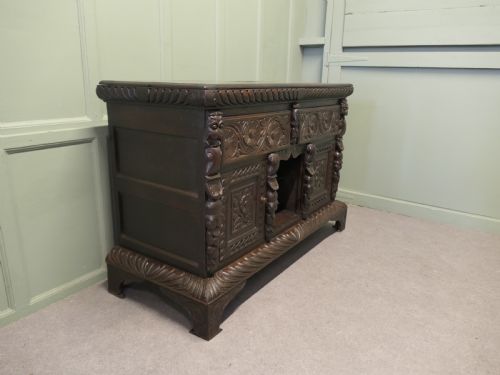


Early Oak Dresser
An early oak dresser is a heavy, utilitarian storage piece built to hold kitchen wares, appearing most frequently in Georgian and nineteenth-century forms.
Early Oak Dresser
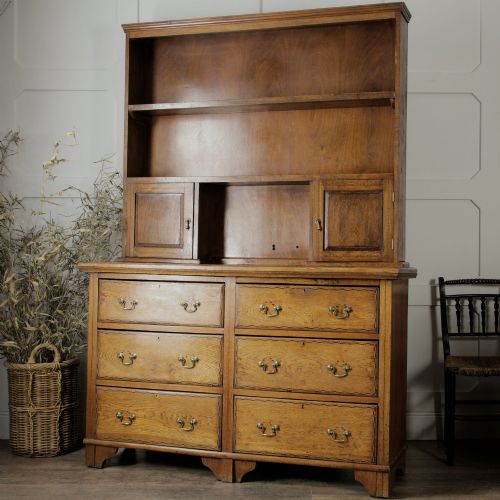
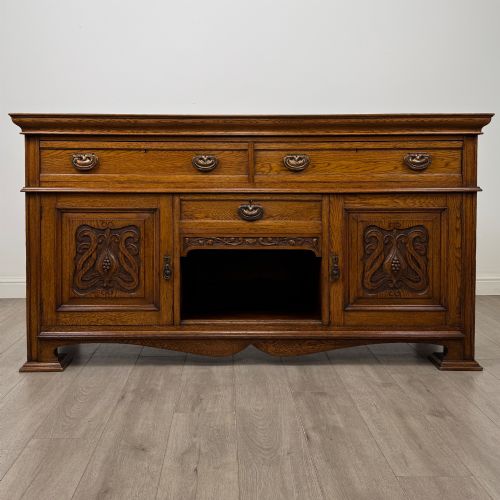
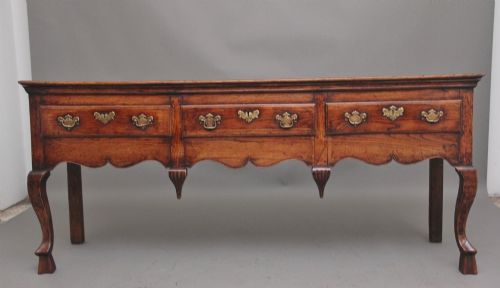
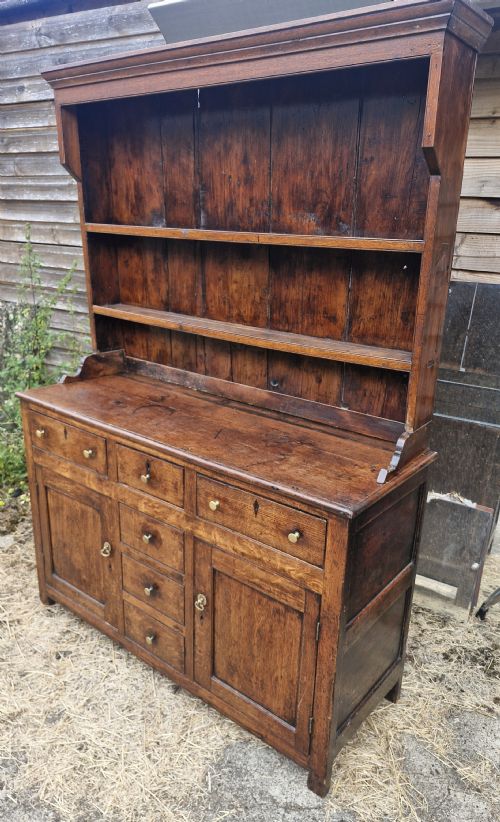
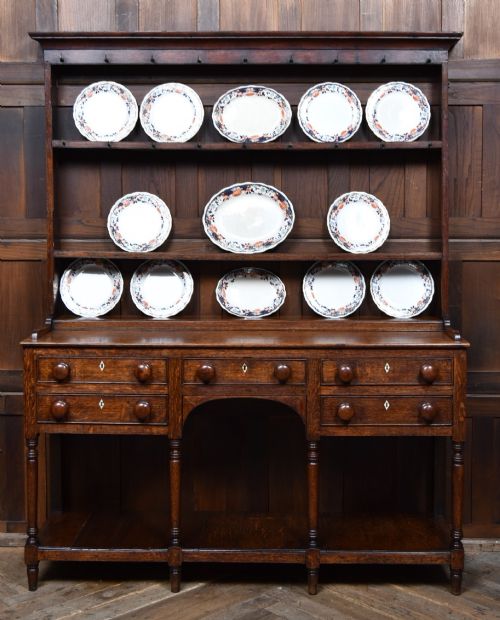
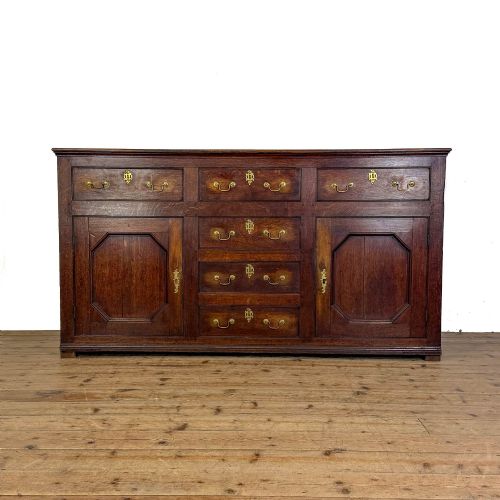
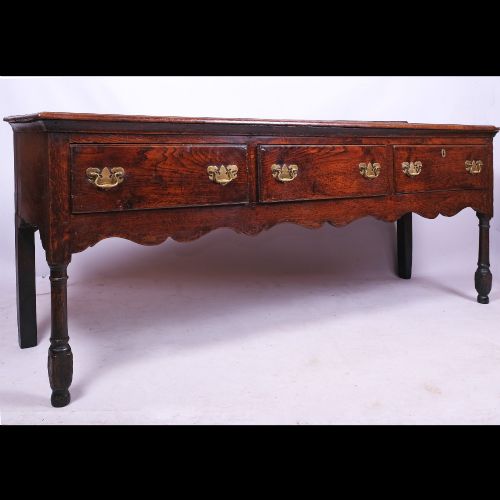
An early oak dresser combines base storage cupboards or banks of drawers with upper plate racks or open shelves, serving as the traditional heart of domestic country dining rooms and kitchens. These items span from the seventeenth century through to the early twentieth century, taking regional forms such as Welsh vernacular styles, Shropshire designs, and low dresser bases without shelving. Buyers frequently encounter nineteenth-century examples featuring two-part construction or open potboards underneath.
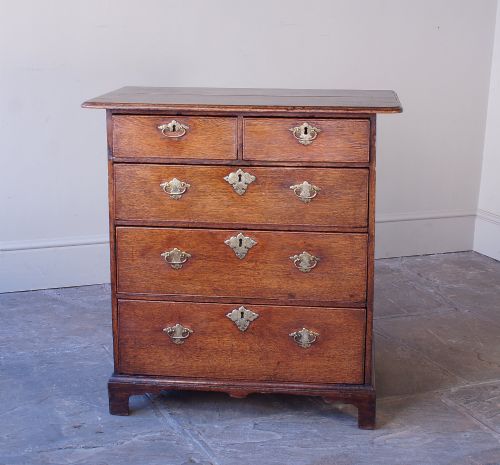
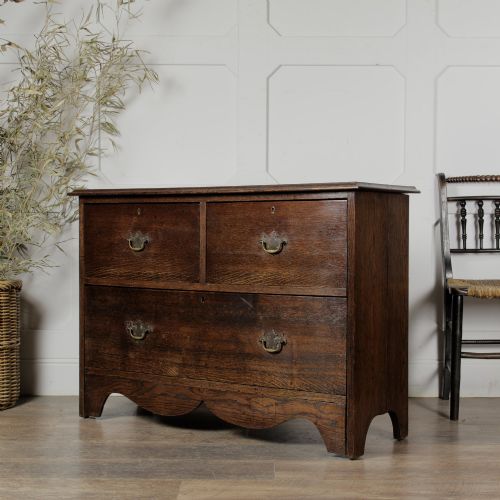
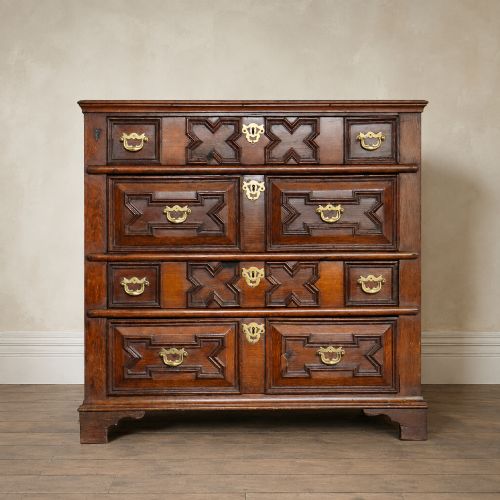
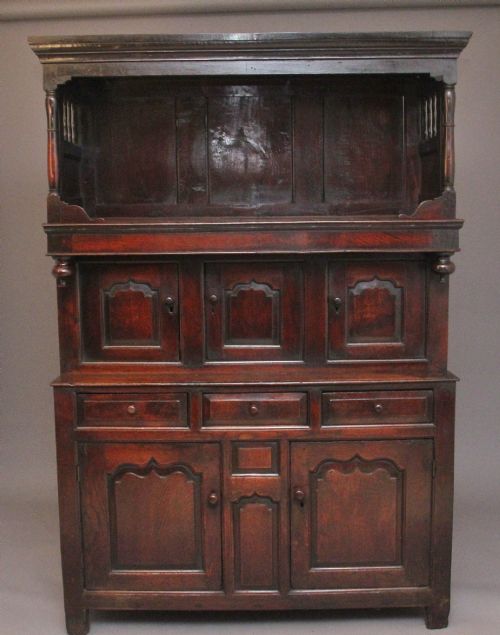
Beyond the standard kitchen formats, related case furniture appears under this search, including court cupboards, tridarns, and geometric moulded chests of drawers. The proportions shift from low, long bases intended for serving food to tall architectural cupboards designed for linen and provisions. Regional variations introduce distinct characteristics, from South Wales potboards to French provincial commodes.
Materials and construction
Carpenters constructed these pieces primarily from solid oak, sometimes supplemented with fruitwood, burr elm, or brass and iron hardware for drawer pulls and hinges. Boards were joined using traditional framing techniques, dovetails for drawer construction, and pegged mortise and tenon joints.
Surfaces often show the marks of historical scrubbed finishes, geometric raised mouldings, or inlaid marquetry details. Structural elements rely on heavy timber framing to support the dense weight of the wood and the heavy ceramic or pewter plates displayed upon the racks.
Listings feature oak combined with secondary materials like fruitwood, brass, iron, and copper across eighteenth and nineteenth-century forms.
Judging construction and condition
Quality rests in the integrity of the timber, the crispness of any geometric mouldings, and the original pairing of the base with its plate rack. Pieces retaining their initial patination, original brass hardware, and unblemished structural framing sit at the higher end of the scale.
Intervention by later hands, such as replaced table tops, mismatched racks, or heavy modern stripping, alters the historical character of the object. The depth of the colour in the timber and the tightness of the drawer dovetails signal superior cabinetmaking.
Heals of London·Gordon Russell
The Early Oak Dresser Glossary
- Dresser base
- A low cabinet featuring drawers and cupboards without the upper plate rack attached. These were commonly used for food preparation and storage.
- Potboard
- An open slatted lower shelf built into a dresser base. Historically, this platform held heavy pots, pans, and ceramic kitchenware off the damp floor.
- Tridarn
- A large three-tier Welsh cupboard used for storage and display. It represents a more complex architectural form than the standard two-part dresser.
- Geometric moulding
- Raised decorative wooden mouldings applied in geometric patterns to drawer fronts and door panels. This technique is particularly associated with seventeenth-century pieces.
Early Oak Dresser: Frequently Asked Questions
How do I spot a marriage between a base and a rack?
Examine the timber species, the colour of the patination, and the mounting points where the rack joins the back of the base. Discrepancies in wear patterns or wood grain usually indicate the top and bottom were made separately and joined at a later date.
Look closely at the peg holes and joint alignments to see if the elements share an origin. A matched pair will display consistent ageing across both upper and lower sections.
What is the difference between a Welsh dresser and an English dresser?
Welsh dressers frequently incorporate open potboards beneath the main base and tend to display regional vernacular characteristics unique to South or North Wales workshops. English versions more commonly feature enclosed cupboards or banks of drawers in the lower section.
Proportions and cornice details also shift between regions, reflecting local cabinetmaking traditions. The choice of secondary woods like fruitwood can further point to specific rural workshops.
How should I care for a scrubbed oak surface?
Scrubbed oak surfaces require minimal moisture and should be dusted regularly with a dry, soft cloth. Avoid modern silicone polishes, which can sink into the open grain of the unsealed timber.
If cleaning is necessary, use a damp cloth with mild soap and dry the area immediately. Maintaining a stable room temperature prevents the old oak from splitting or warping.
Can I use an antique dresser in a modern kitchen?
These pieces function well in contemporary spaces, offering deep drawers for tableware and sturdy surfaces for daily use. Ensure the floor is level, as heavy oak furniture requires stable placement to prevent door frames from binding.
Consider the ceiling height before purchasing tall two-part dressers or tridarns. The open shelves provide practical storage for everyday ceramics alongside decorative items.