


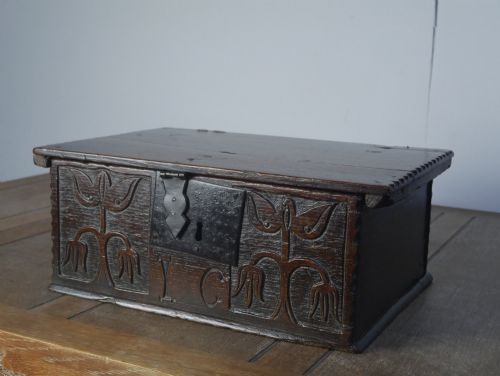

Early Oak Coffer Chest
An early oak coffer chest offers solid utilitarian history, storing blankets and valuables while anchoring a room with centuries of grained character.

Early Oak Coffer Chest
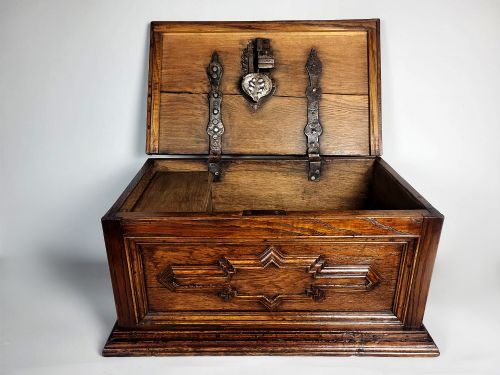
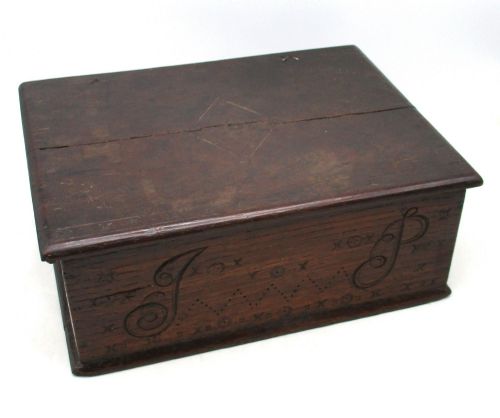
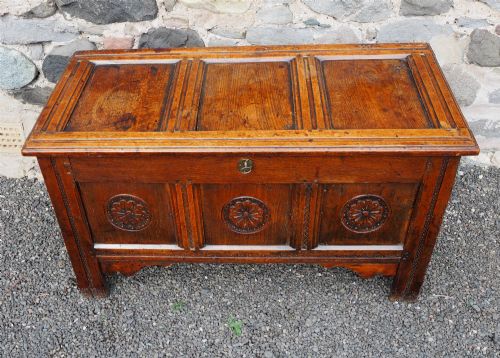
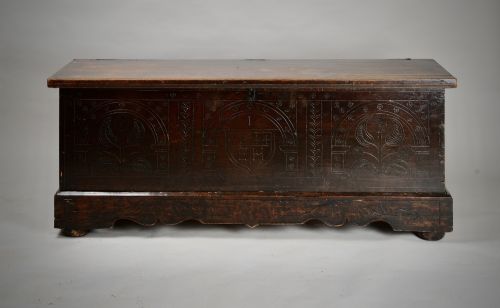
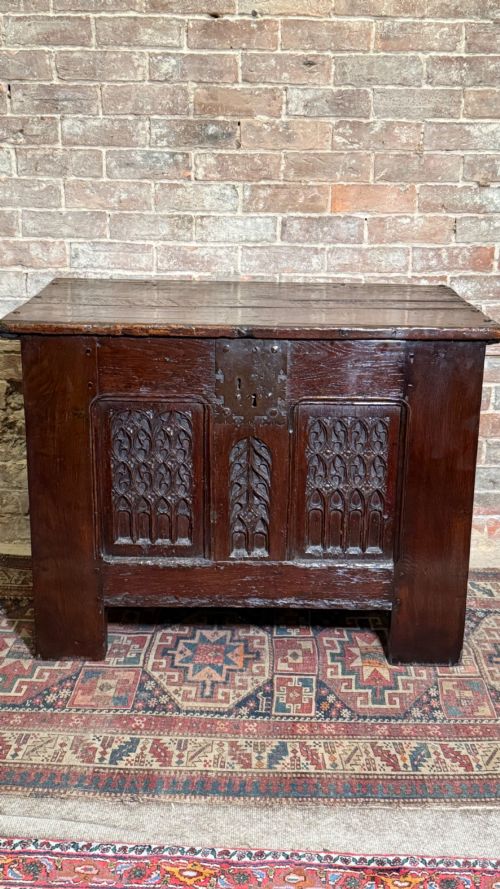
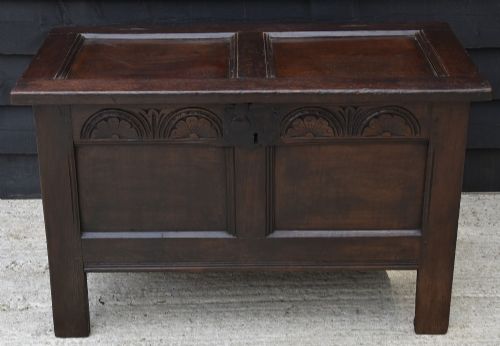
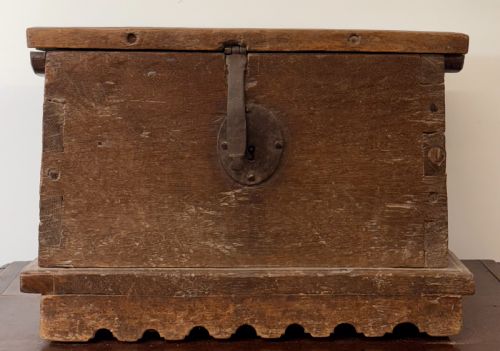
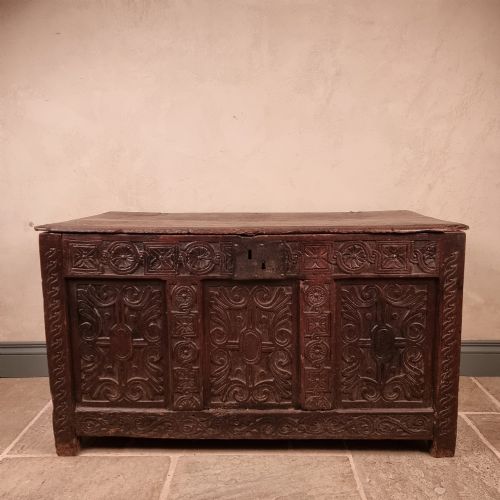
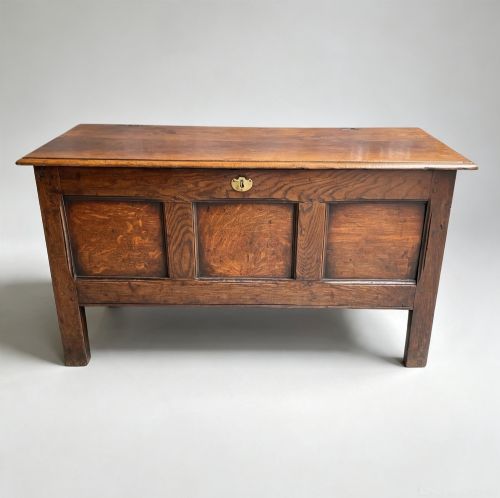
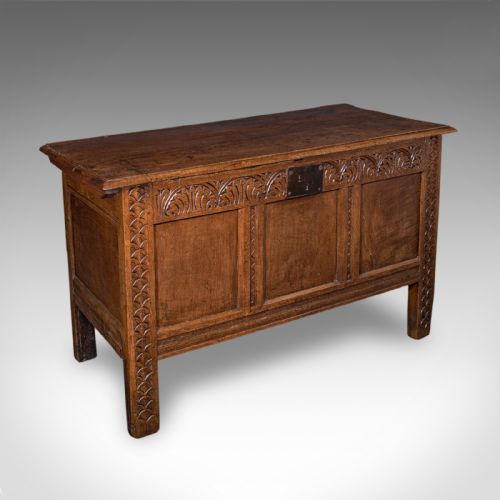
An early oak coffer chest serves as a sturdy storage box originating primarily from the sixteenth, seventeenth, and early eighteenth centuries. These robust pieces functioned historically for domestic storage, holding textiles, church documents, or valuables securely within households.
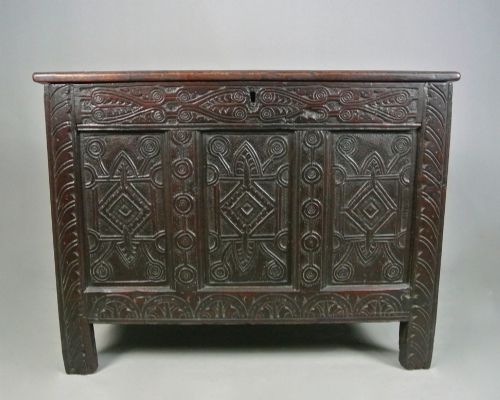
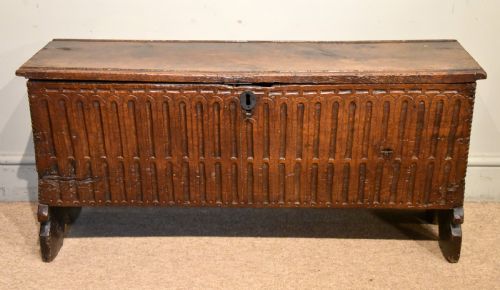
The selections found here span simple boarded construction to richly panelled and carved examples reflecting Tudor, Jacobean, and early Georgian aesthetics. Common domestic formats include blanket boxes, mule chests fitted with lower drawers, and compact deed boxes.
Makers utilised native timber to build functional furniture that survived generations of daily use, often displaying regional British or European joinery characteristics. Buyers encounter everything from rough six-plank trunks to sophisticated geometric panel designs.
What Varies in Quality
The integrity of the original construction and timber thickness dictates the standard of a piece, separating straightforward utilitarian trunks from high-status joined furniture. Untouched surfaces retaining original patination, peg joints, and complex working steel locks elevate the standing of a coffer.
Depth and crispness of hand-carved detailing distinguish master joinery from simpler village carpentry, though provincial charm remains desirable. The survival of original boarded lids, hinges, and bases without extensive timber replacement determines historical authenticity.
Several trunks double as sword chests, built long and narrow to keep family blades ready for sudden sixteenth-century neighborhood disagreements.
The Early Oak Coffer Chest Glossary
- Coffer
- A heavy wooden chest used historically for storing valuables, plate, or textiles. These sturdy boxes often feature flat lids suitable for occasional seating.
- Mule chest
- A storage chest featuring one or more drawers built into the base beneath the main compartment. This form evolved by combining the traditional coffer with drawer storage.
- Linenfold
- A style of wood carving depicting folded parchment or linen, popular on sixteenth-century panels. Craftsmen carved this motif to simulate draped cloth on solid oak.
- Six plank
- A simple chest construction method utilising single boards for the front, back, sides, top, and bottom. Carpenters joined these heavy planks directly at the edges using pegs or nails.
- Peg joint
- A wooden dowel used to secure mortise and tenon connections without relying on metal fasteners. Traditional joiners utilised these pins to lock frame members tightly together.
- Arcading
- A decorative row of arches carved in relief along the wooden panels of early furniture. This architectural motif reflects Renaissance influence on seventeenth-century joinery.
Early Oak Coffer Chest: Frequently Asked Questions
What were early oak coffers used for?
Households utilised these heavy chests to store valuable textiles, winter blankets, family silver, and important legal documents securely away from damp floors. Their flat lids also allowed them to function as makeshift benches or tables in early domestic interiors.
Wealth institutions and churches likewise employed large parish chests to safeguard parish records, chalices, and coin collections under multiple locks.
How do I date an antique oak chest?
Examine the construction methods, tool marks, and joinery style visible across the piece. Sixteenth and seventeenth-century examples typically feature hand- split oak boards, pegged mortise and tenon frames, and iron hardware secured by hand-forged nails.
Stylistic motifs like linenfold carving, arcading, or geometric raised panels align with specific periods such as the Tudor, Jacobean, or early Georgian eras.
Where should I place a coffer in my home?
These versatile storage trunks suit entryways or hallways as practical furniture for shoes, boots, and seasonal accessories. Placing one at the foot of a bed provides convenient storage for extra bedding and cushions.
Smaller deed boxes and safe boxes sit comfortably on top of tables or desks, serving as secure containers for modern documents and collections.
What is the difference between a coffer and a mule chest?
A standard coffer consists of a simple chest box with a top-opening lid and an interior cavity for storage. A mule chest incorporates one or more external drawers beneath the main lift-top compartment.
This hybrid form bridges the traditional chest and the modern chest of drawers, appearing frequently in seventeenth and eighteenth-century country houses.