


Antique Oak Blanket Trunk
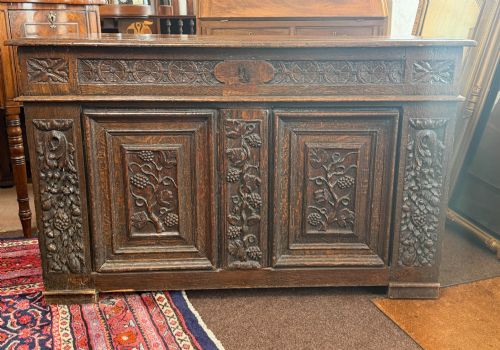
When you search for an antique oak blanket trunk, you are looking at substantial historic storage pieces built to hold linens and woollens.
Antique Oak Blanket Trunk
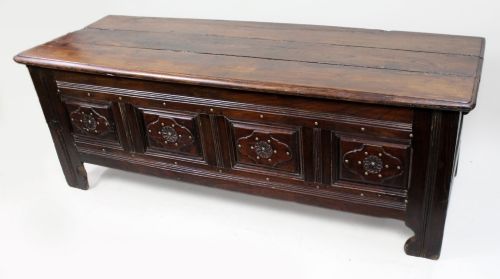
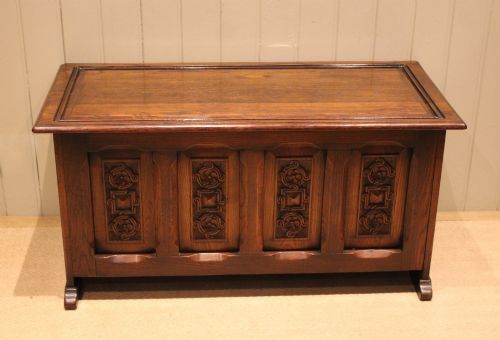
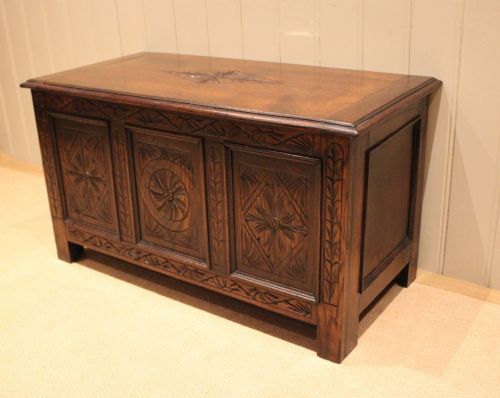
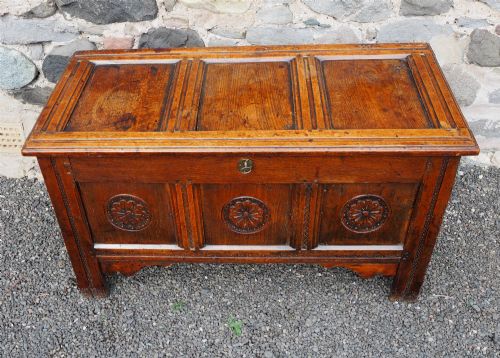
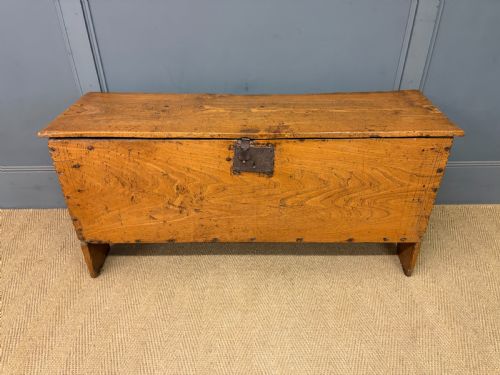
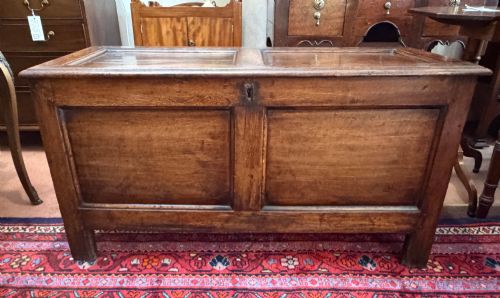
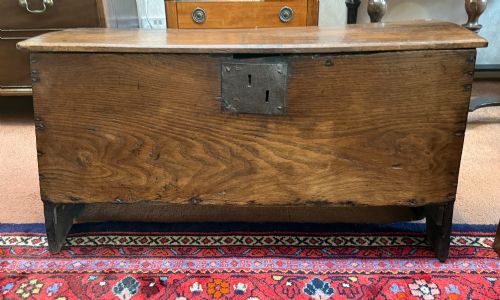
An antique oak blanket trunk is a heavy domestic storage receptacle designed to secure household textiles and valuables.
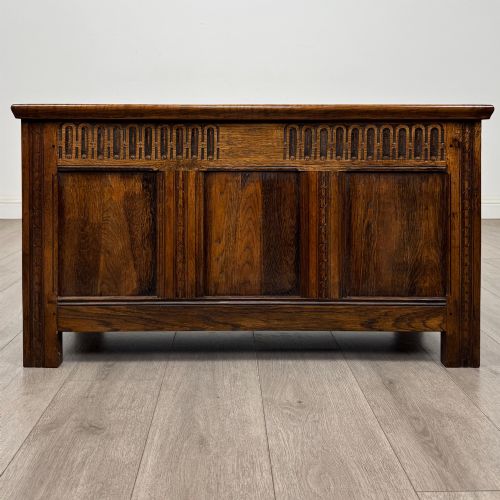
The selections available here span from robust sixteenth and seventeenth century joined panel examples to eighteenth century Georgian pieces and later revival iterations.
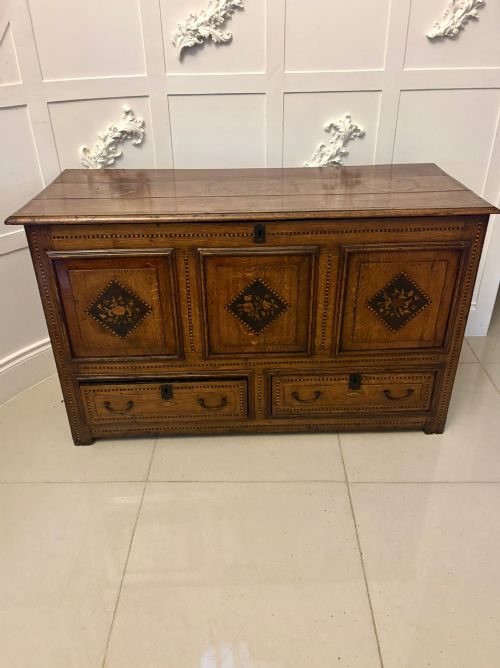
Many variants take the form of mule chests fitted with lower storage drawers or compact coffer bach designs originating from Wales.
How They Were Made
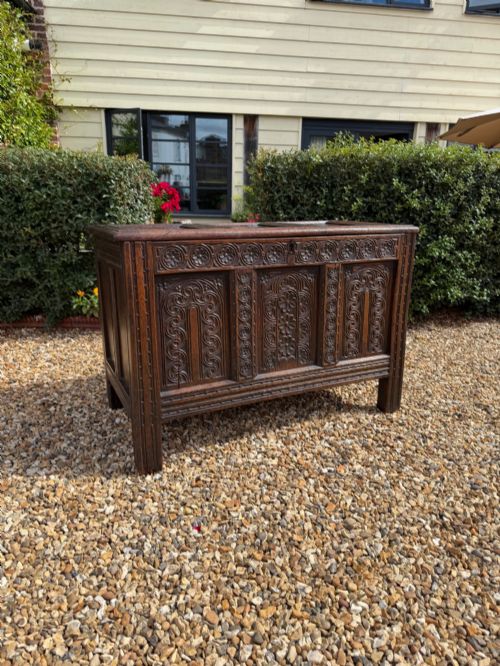
Construction relies heavily on solid timber framing, utilising mortise and tenon joints to assemble panelled lids, fronts, and sides.
Cabinet makers incorporated secondary materials such as iron hinges, brass fittings, and occasionally elm or marquetry inlay to embellish the primary oak structure.
The inventory records pieces spanning from the sixteenth century through the Edwardian era, constructed primarily in solid oak with occasional elm and iron elements.
What Varies in Quality
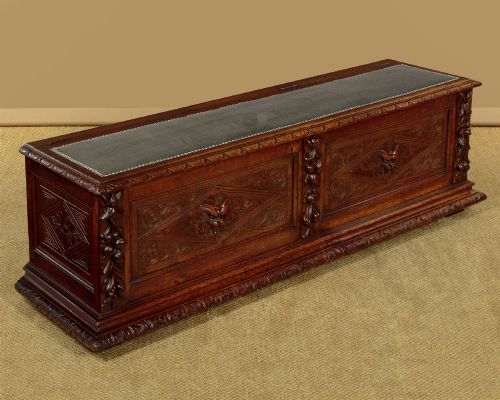
The standard of craftsmanship shows in the crispness of carved detailing, the integrity of the original joined panels, and the depth of the natural patina accumulated over centuries.
Pieces featuring integrated drawers, complex geometric mouldings, or well-preserved historical hardware generally represent the finer end of the surviving range.
The Antique Oak Blanket Trunk Glossary
- Coffer
- A heavy wooden chest traditionally used for storing valuables, documents, or garments. These sturdy receptacles often feature hinged lids and boarded or panelled construction.
- Mule Chest
- A traditional storage chest featuring one or more drawers built into the base beneath the main compartment. This form evolved in the seventeenth and eighteenth centuries to provide easier access to stored linens.
- Coffer Bach
- A Welsh term for a small chest or box, often fitted with a drawer. These miniature versions served domestic storage needs in regional households.
- Marquetry Inlay
- The art of applying decorative pieces of veneer to a structure to form intricate geometric or floral patterns. Master craftspeople used contrasting timbers to achieve visual depth.
- Panelling
- A method of construction where frame members enclose thinner central boards to accommodate timber shrinkage. This technique prevents warping in large wooden surfaces.
Antique Oak Blanket Trunk: Frequently Asked Questions
How old is my oak chest?
Dating relies on examining construction techniques, joinery methods, and the style of any carved ornamentation. Hand-riven boards and pegged mortise and tenon joints typically point towards earlier centuries.
Later revival pieces from the nineteenth and twentieth centuries often display machine-cut elements or different fastener types that distinguish them from genuinely early examples.
What is a mule chest?
A mule chest combines a traditional top-opening trunk with one or more lower pull-out drawers. This hybrid form allowed users to retrieve items without disturbing objects stacked on top.
Mule chests became popular during the seventeenth and eighteenth centuries in English and Welsh households for linen storage.
Where were these trunks made?
Surviving examples originate from various European workshops, with strong representations from English, Welsh, French, and Flemish makers. Regional preferences often dictated specific carving motifs and proportions.
Local timber availability ensured that oak remained the dominant structural medium across these regions.
How should I clean antique oak?
Maintenance requires preserving the accumulated patina rather than stripping the surface down to bare timber. Gentle dusting and occasional application of traditional beeswax help nourish the dry wood.
Harsh chemical cleaners or modern silicone polishes will damage the historic finish and should be strictly avoided.