





Early Needlework Sampler
An early needlework sampler is a historic textile record of skill, bearing alphabets, motifs, and dates stitched by hand.
Early Needlework Sampler
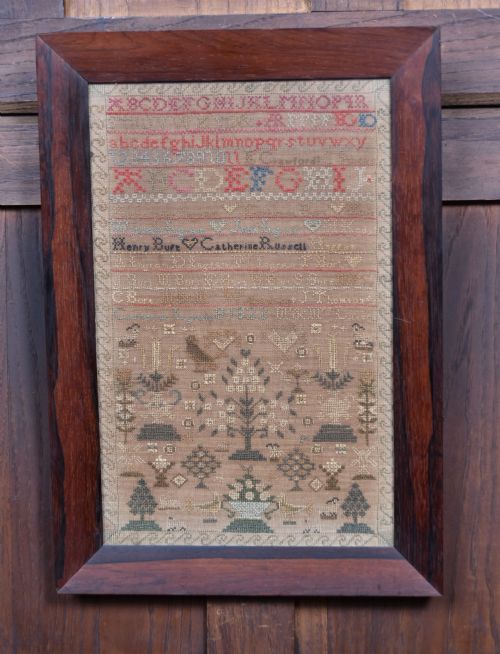
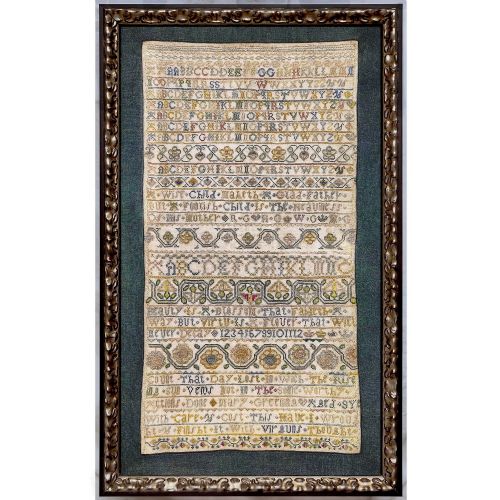
An early needlework sampler represents a historic piece of textile art created to practice stitches, alphabets, and decorative motifs. These works span from the 17th century through the 19th century, reflecting the domestic education of women and girls across different regions.
The versions most commonly met on this page include English, Scottish, and French examples, often preserved in original wooden frames behind glass. Pieces range from band samplers and Lord's Prayer texts to pictorial embroidered scenes and maps.
Makers such as Mary Greening, Jane Wettmore, Sarah Reading, Susan Mary Williams, and Mary Pinfold left their names and dates stitched directly into the linen ground. Such signed examples provide a direct personal link to the hands that worked them centuries ago.
How they were made
Makers worked using linen as the primary ground fabric, stitching with silk, wool, cotton, and metallic thread. These materials were chosen for their durability and fineness, allowing for precise execution of intricate stitches.
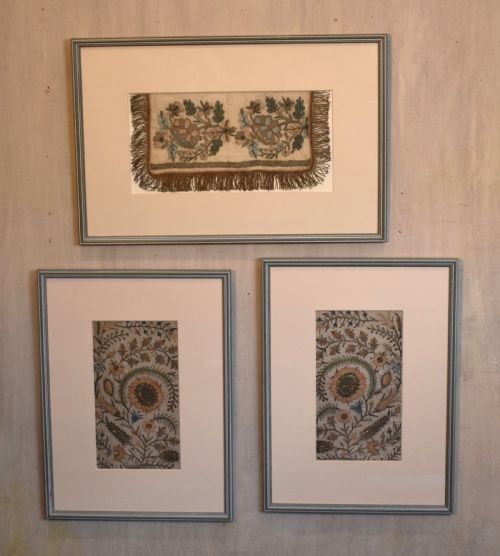
Many surviving examples incorporate specialised techniques such as early Italian embroidery and lace work alongside standard cross stitch and satin stitch. Framing often involves period wood mouldings, occasionally finished with gold leaf.
Early Needlework Sampler Retail Price Guide 2026
Typical asking prices for early needlework sampler among the pieces listed under this phrase on Sellingantiques today, from the lower quarter to the upper quarter. They describe what is for sale here now, not the wider market.
Jane Wettmore stitched her name in 1847, inadvertently creating a permanent time capsule from a quiet nineteenth-century afternoon.
What varies in quality
The distinction between ordinary and exceptional works lies in the complexity of the design, the variety of stitches employed, and the preservation of the ground linen. Samplers featuring pictorial narratives, maps, or intricate religious texts demonstrate greater technical ambition than simple alphabet rows.
Condition and legibility heavily influence the character of each piece. Surviving textiles that retain their original thread colours and remain free from heavy staining offer a clearer window into the historical practice of needlework.
Mary Greening·Jane Wettmore·Sarah Reading·Susan Mary Williams·Mary Pinfold
The Early Needlework Sampler Glossary
- Band sampler
- A long, narrow format featuring horizontal bands of different stitch patterns and motifs. This style was popular in the 17th century for recording and referencing various embroidery techniques.
- Linen
- A strong textile woven from flax fibres that serves as the foundation ground for most historic needlework. Its uniform weave allowed makers to count threads precisely for symmetrical designs.
- Embroidered picture
- A pictorial textile artwork depicting figures, landscapes, or stories rather than standard alphabets and numbers. Examples include scenes from traditional tales and geographical maps.
- Frame
- A protective border of wood, sometimes highlighted with gold leaf, that houses the textile behind glass. Original frames help preserve the sampler from dust and environmental damage.
Early Needlework Sampler: Frequently Asked Questions
How old is an early needlework sampler?
These textiles date from the 17th century through the 19th century, encompassing periods such as the Stuart, Georgian, and Regency eras.
Specific dates are frequently stitched directly onto the linen by the maker, often accompanied by a signature or familial detail.
What materials were used in historic samplers?
The primary foundation is woven linen, stitched using threads of silk, wool, cotton, and metallic elements like gold leaf.
Frames are constructed from wood and frequently retain their original glass protection.
How do I care for a framed textile?
Keep the piece away from direct sunlight to prevent the silk and wool threads from fading over time. Maintain a stable indoor environment with minimal humidity fluctuations to protect the fragile historic fibres.
How can I tell different periods apart?
Seventeenth-century works often appear as narrow band samplers with symmetrical geometric motifs and restrained colour palettes. Later 18th and 19th-century examples frequently feature pictorial scenes, alphabets, family trees, and maps executed in broader thread varieties.