





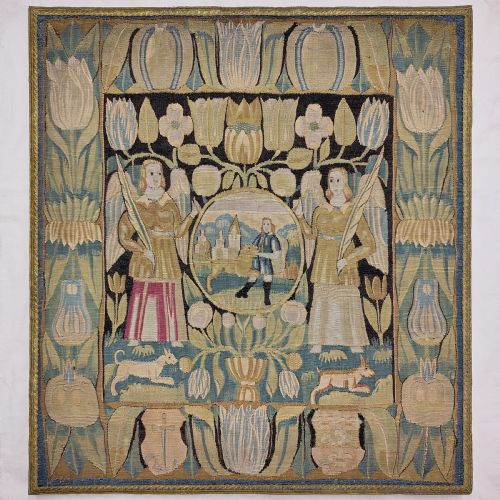
Early Needlework Panel
An early needlework panel brings centuries of hand-stitched narrative and domestic craft directly to your walls.
Early Needlework Panel
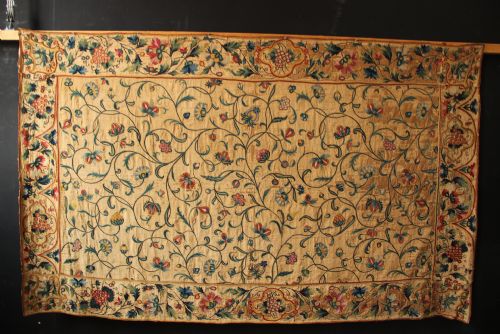
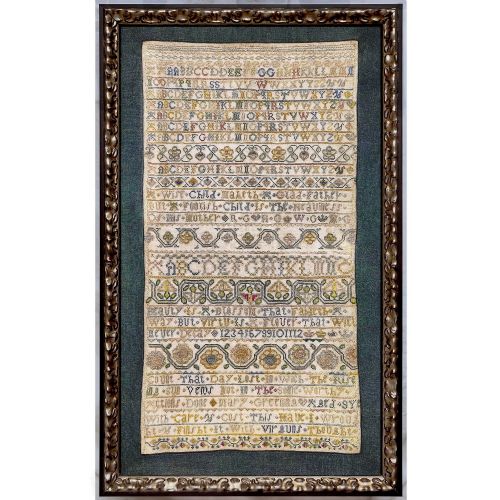
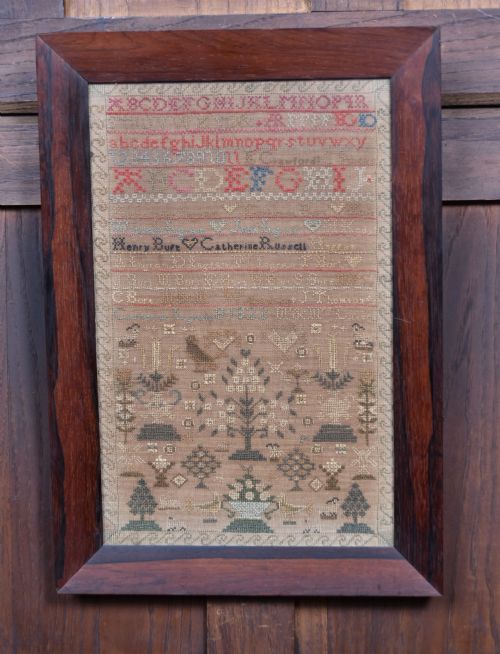
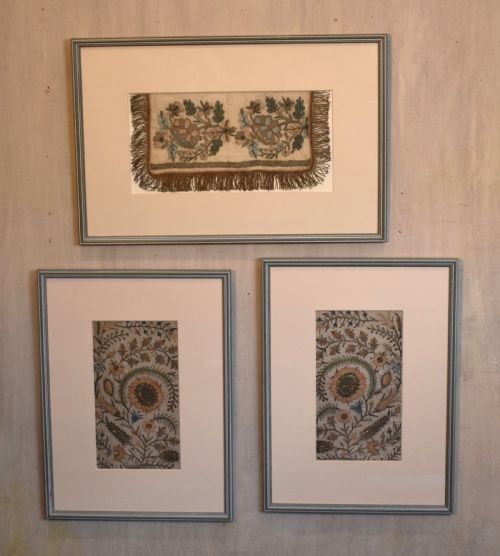
When you search for an early needlework panel, you encounter framed textile art, wall hangings, and embroidered pictures spanning from the seventeenth century through to the Victorian era. These pieces capture historical needlecraft, ranging from English crewelwork and band samplers to continental tapestry cushions and silkwork pictures.
The version you are most likely to meet on this page is an English or European framed textile from the seventeenth, eighteenth, or nineteenth century. Alongside these, the selection includes specialised works such as Scottish and French lace samplers, German tapestry fragments, and Central Asian tribal embroideries.
Makers recorded in the listings include historical needlewomen such as Mary Greening, Jane Wettmore, Sarah Reading, and Susan Mary Williams. Their signed works anchor the pieces in specific dates and domestic traditions.
Materials and construction
Makers stitched using silk thread, wool, and cotton onto foundational grounds of linen and silk. These organic fibres were handled with varied stitches to build pictorial depth and texture.
Many surviving examples are mounted within wooden frames, sometimes backed by mahogany or paired with glass protection. Pole screens and fire panels incorporate embroidery as functional household reflectors.
Early Needlework Panel Retail Price Guide 2026
Typical asking prices for early needlework panel among the pieces listed under this phrase on Sellingantiques today, from the lower quarter to the upper quarter. They describe what is for sale here now, not the wider market.
One early nineteenth-century English picture captures the domestic drama of Jack and the Beanstalk rendered entirely in thread.
Distinctions in quality
The execution of the stitching separates fine pictorial works from standard examples, with density and variety of threadwork defining the better pieces. Finer panels display intricate command over crewelwork, silkwork, or tapestry weave.
The survival of the textile ground and the clarity of the original colours determine the visual impact. Pieces retaining their early wooden frames or documented provenance hold a distinct place.
Mary Greening·Jane Wettmore·Sarah Reading·Susan Mary Williams
The Early Needlework Panel Glossary
- Crewelwork
- Embroidery executed in wool onto a linen or cotton twill ground. This technique often produces textured foliage and animal motifs seen in seventeenth-century pieces.
- Band sampler
- A long, narrow cloth displaying rows of varied stitches and patterns used by makers to practice and record designs. They frequently include the maker's name and a date.
- Tapestry
- A form of textile art woven by hand on a loom rather than embroidered with a needle. Cushion covers and wall panels utilise this dense weaving method.
- Silkwork picture
- An embroidered artwork created primarily with silk threads to depict figurative scenes, landscapes, or pictorial narratives. These are commonly found framed behind glass from the nineteenth century.
Early Needlework Panel: Frequently Asked Questions
How do I hang a textile panel?
Most framed textile art mounts directly to a wall using standard picture hooks suited to the weight of the wood and glass. Ensure the piece hangs away from direct sunlight to protect the aged silk and wool threads.
Unframed panels or tapestries require specialised mounting, such as conservation-grade Velcro systems or stitched sleeves supporting a slim wooden baton.
How are samplers dated?
Makers frequently stitched their names, dates, and sometimes locations directly into the textile composition. These signed inscriptions provide a reliable point of origin for nineteenth and eighteenth-century works.
When dates are absent, dating relies on the style of the script, the framing materials, the fabric ground, and comparative motifs found in dated historical pieces.
What is the difference between crewelwork and tapestry?
Crewelwork involves surface embroidery stitched by hand using wool yarn onto a woven linen foundation. The stitches sit on top of the fabric base.
Tapestry is woven entirely on a loom, where the design forms part of the structural weave itself rather than being added afterwards with a needle.