

Early Maritime Art
Early maritime art captures the enduring pull of the sea through historical paintings, watercolours, and scratch-built models.
Early Maritime Art
When you search for early maritime art, you encounter a varied selection of works documenting vessels, coastal settlements, and open waters from the eighteenth century through to the early decades of the twentieth century. The inventory on this page spans traditional paintings, watercolours, and decorative objects that reflect changing attitudes towards the sea across different European and international schools.
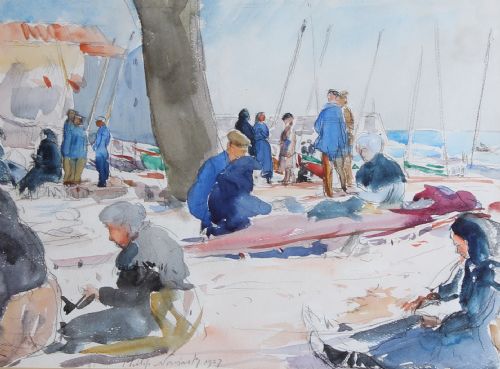
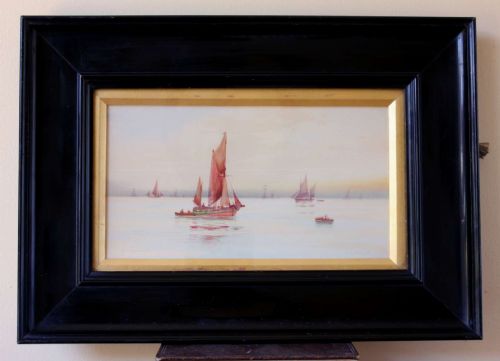
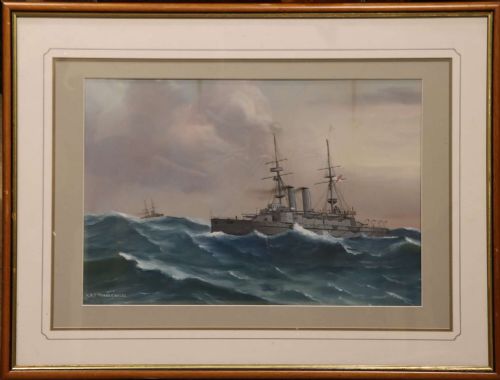
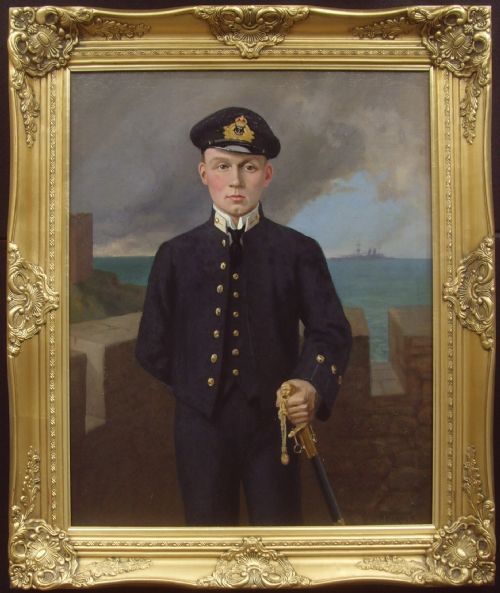
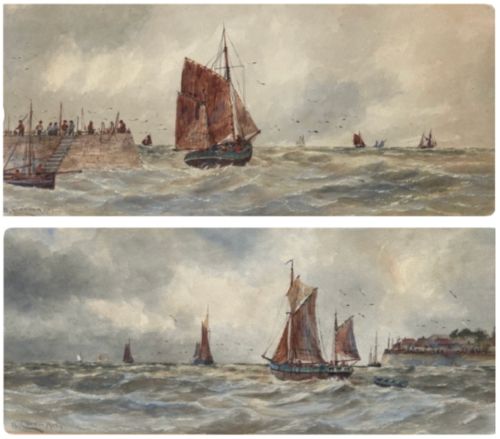
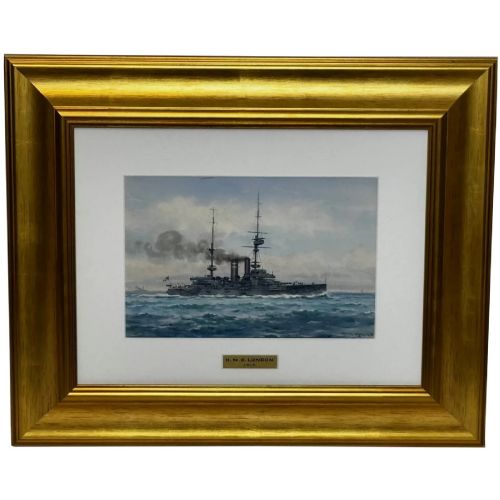
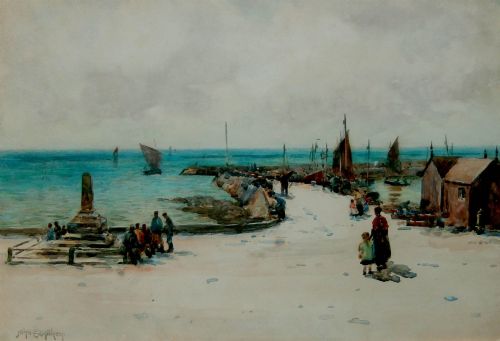
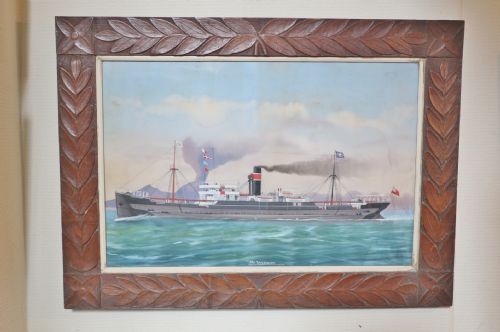
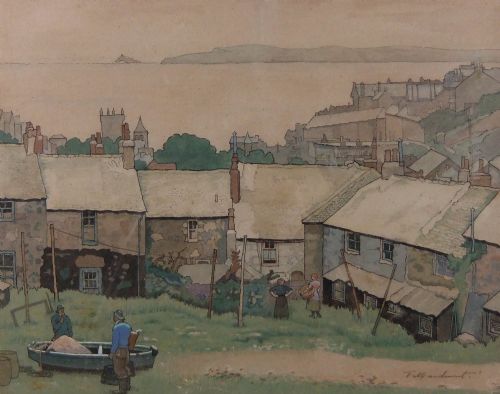
Most pieces you will meet date from the Edwardian era and the early twentieth century, capturing both commercial shipping and local fishing fleets. These works range from detailed depictions of specific vessels like steamships and tall ships to atmospheric watercolours of Cornish harbours and foreign ports.
Alongside framed canvases and works on paper, the selection includes decorative marine objects such as dioramas, ship models in bottles, and nautical presentations. Each format offers a distinct perspective on seafaring life, whether through the precision of an oil study or the direct craftsmanship of maritime folk art.
Materials and techniques
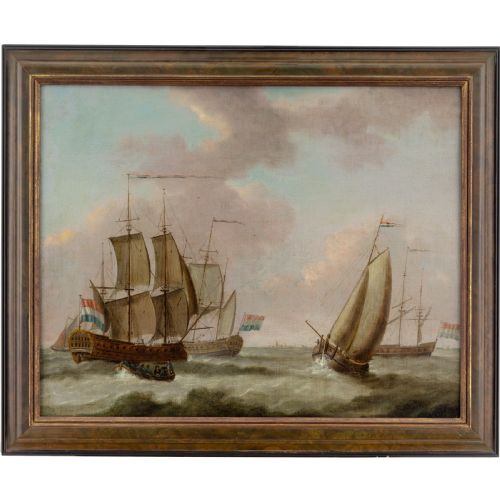
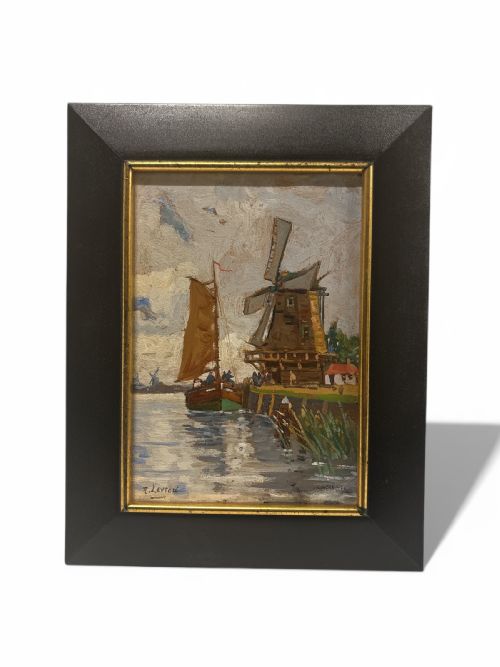
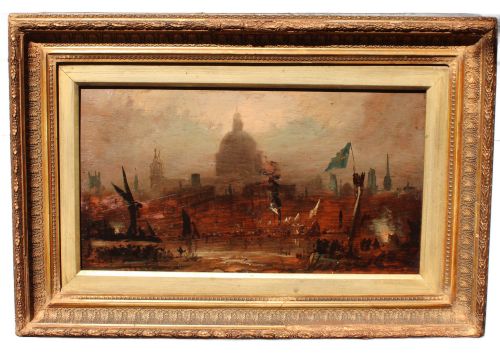
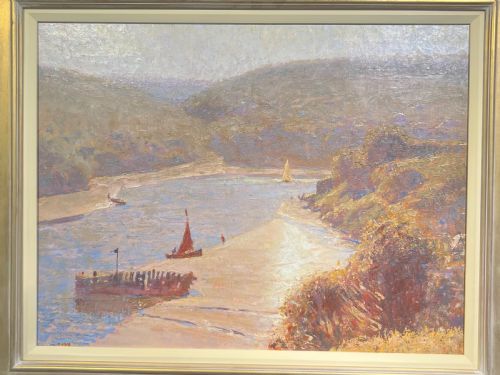
Artists working within this field relied primarily on oil paint on canvas or board, and watercolour applied to paper, capturing the variable tones of sky and water. Oil paintings allowed for rich textures and deep layering to depict heavy seas and coastal light, while watercolours provided a swift, transparent medium suited to atmospheric harbour scenes.
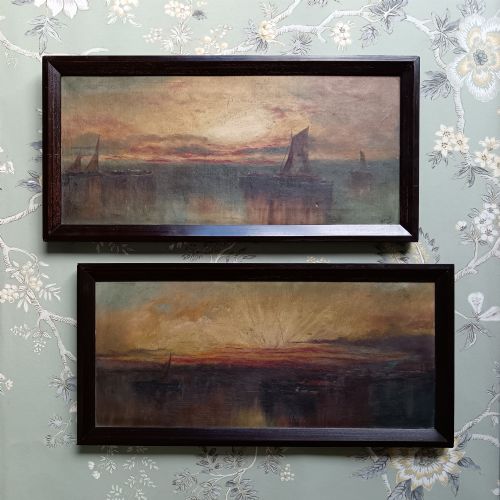
Support materials reflect the standards of their respective periods, utilising stretched canvas, heavy paper stock, and occasionally wood panels or card. Frames often consist of period wood or ebonised mouldings that complement the palette of the artwork within.
Three-dimensional pieces incorporate mixed media, combining carved wood, paper, glass, and rigging materials to construct detailed miniature vessels and bottled dioramas. Folk art examples demonstrate resourceful use of available materials to achieve convincing scale and maritime accuracy.
Early Maritime Art Retail Price Guide 2026
Typical asking prices for early maritime art among the pieces listed under this phrase on Sellingantiques today, from the lower quarter to the upper quarter. They describe what is for sale here now, not the wider market.
Several miniature ships spent decades quietly sealed inside glass bottles by patient hands.
Distinctions in quality
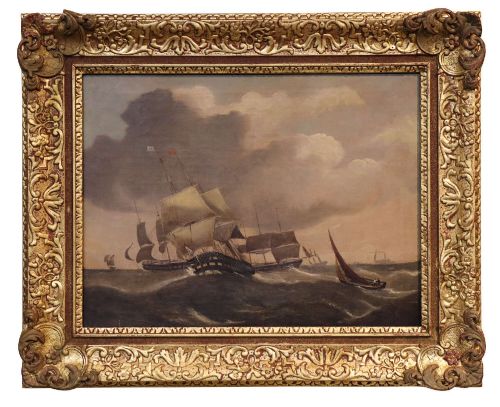
The distinction between standard works and finer examples lies in the artist's command of atmospheric perspective and maritime architecture. Superior paintings demonstrate an accurate understanding of rigging, hull forms, and water movement under varying weather conditions, rather than relying on generalised formulas.
Compositional balance and handling of light separate routine topographical records from compelling artistic statements. Works that successfully convey the weight of a rolling sea or the specific glare of a coastal sunrise reveal a deeper observational skill on the part of the painter.
In three-dimensional and folk art objects, quality is evident in the precision of the construction and the preservation of original components. Clean joinery, restrained use of scale, and intact original framing contribute significantly to the standing of a piece.
Samuel Harry Hancock·Frank Watson Wood·Thomas Maidment·Cecil Allan Mould·Owen Bowen·Leslie Rackham·Ernest F. Hill·William Lambert Bell
The Early Maritime Art Glossary
- Seascape
- A work of art depicting the sea, ships, or coastal views. These subjects range from calm harbour inlets to dramatic storms in open waters.
- Diorama
- A three-dimensional scene built inside a casing or bottle. Maritime examples typically recreate sailing ships using carved wood and threaded rigging.
- Watercolour
- A painting method where fine pigment is suspended in a water-based solution on paper. This technique yields translucent washes that capture coastal light.
- Gouache
- An opaque water-based paint often used to achieve solid areas of colour and sharp highlights in maritime illustrations.
- Maritime Folk Art
- Self-taught or utilitarian craft created by sailors or local makers. These items include scratch-built ship models and whimsical coastal scenes.
Early Maritime Art: Frequently Asked Questions
What subjects appear most often in early maritime art?
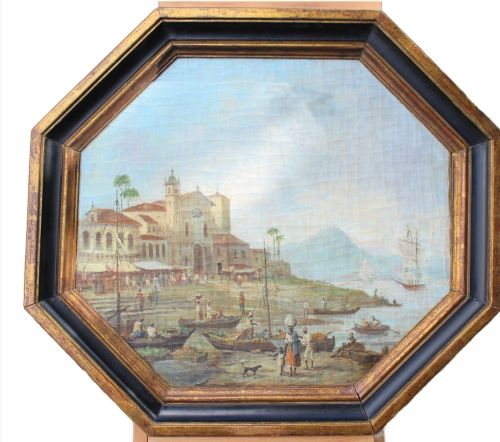
The works predominantly feature coastal harbours, working fishing vessels, steamships, and naval vessels under various weather conditions. Scenes range from local British ports like St Ives and Mevagissey to international locations including the Venetian lagoon and Chinese ports.
Artists frequently documented specific historical vessels and contemporary shipping traffic, providing a visual record of maritime commerce and naval presence during the nineteenth and early twentieth centuries.
How should I care for watercolours and oil paintings?
Works on paper require protection from direct sunlight to prevent fading of the pigments and discolouration of the paper support. Framing behind conservation glass helps shield watercolours from atmospheric moisture.
Oil paintings on canvas benefit from stable indoor humidity and temperature levels to avoid cracking of the paint surface. Dusting should be done gently with a soft, dry brush without applying pressure to the canvas.
How can I distinguish between different periods?
Stylistic shifts and framing materials offer reliable clues to a piece's era, moving from nineteenth-century academic realism towards Impressionist and Post-Impressionist brushwork in the early twentieth century. Edwardian works often feature brighter palettes and looser handling compared to earlier Regency or Victorian studies.
Inscriptions, signatures, and artist biographical dates recorded on the reverse or within titles help narrow down the exact period of execution.
Where were ship models in bottles displayed?
These decorative objects were traditionally created by sailors during long voyages and subsequently displayed in homes, maritime pubs, or local shops. They served as personal mementoes of seafaring life and demonstrations of intricate handiwork.
Today, they function as self-contained sculptural pieces that fit easily onto shelves or mantelpieces.