
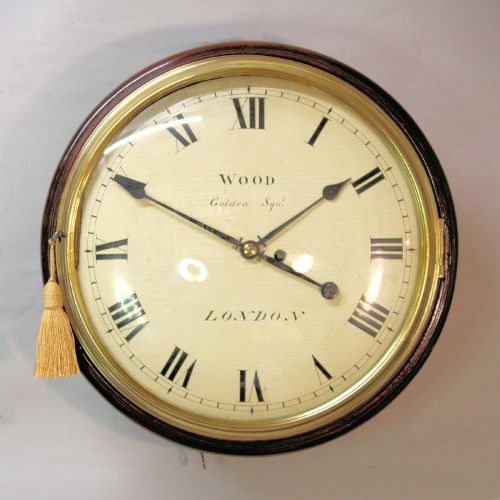


Early Mahogany Clock
An early mahogany clock brings dense grain and reliable timekeeping to a room, spanning wall dials, bracket forms and tall grandfather cases.
Early Mahogany Clock
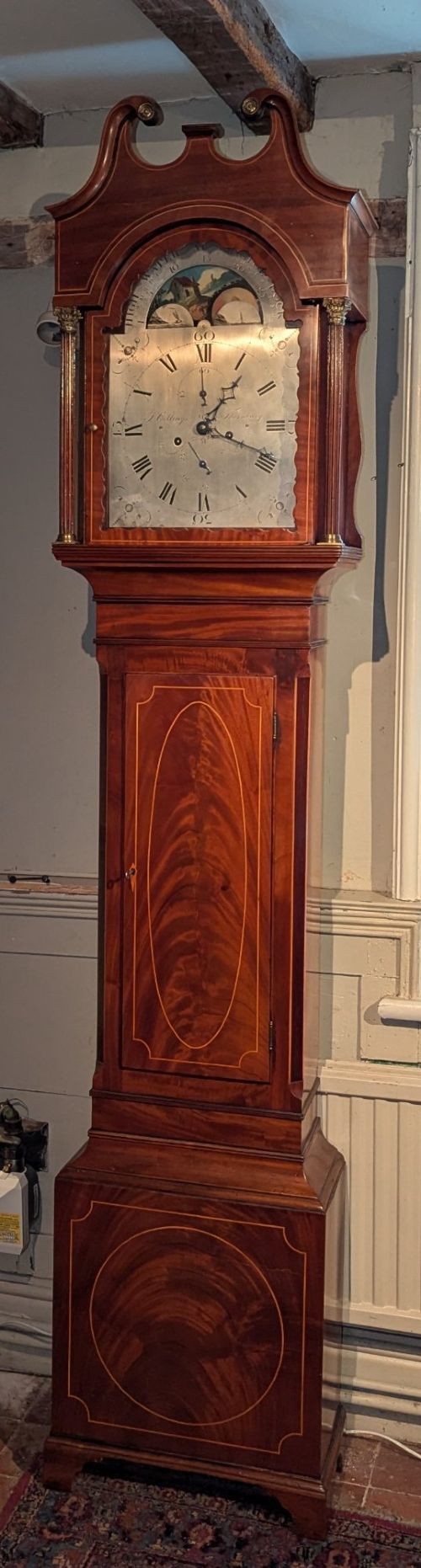
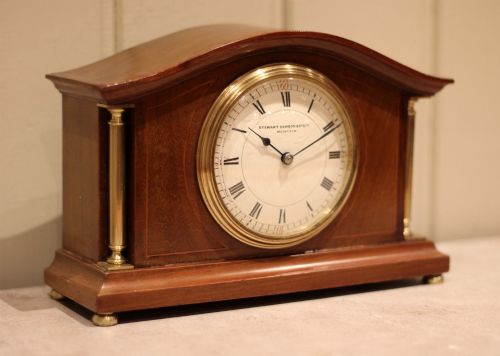
Collectors seeking an early mahogany clock encounter several distinct domestic forms, ranging from tall longcase clocks standing on the floor to compact wall dials and mantel pieces. The selection includes tall grandfathers, drop-dial wall clocks, and smaller bracket versions originating from Georgian, Victorian, and Edwardian periods.
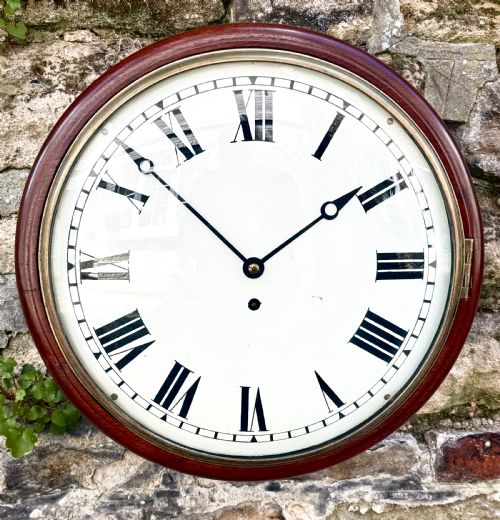
Longcase clocks dominate the taller formats, often featuring painted or moon-dial faces housed in slender wooden trunks. Wall-mounted alternatives utilise fusee movements behind brass bezels and glass panels, designed originally for offices, stations, and domestic halls.
Makers across England and Scotland constructed these pieces using dense tropical timber, sometimes adding boxwood or satinwood inlay for decorative contrast. The scale varies from petite eight-inch library dials to tall floor-standing musical regulators.
Materials and construction
Cabinetmakers built the foundational cases from solid mahogany and flame mahogany veneers, frequently pairing the dark timber with contrasting boxwood, walnut, or satinwood stringing. Internal movements rely on brass gears, steel pinions, and wooden components assembled by regional clockmakers.
Dial construction required specialist skills, combining hand-painted iron, silvered brass, or convex wood with protective glass covers and cast brass bezels. Fusee movements deployed chains or cords linked to conical pulleys, ensuring even tension across the power reserve.
Some station clocks retain railway company lettering, hinting at past lives managing train departures.
Assessing craftsmanship
Quality reveals itself in the crispness of the timber carving, the depth of the flame mahogany figuring, and the precision of the dial markings. Superior longcase and wall examples display finely engraved brass dials or meticulously executed painted scenes.
The sophistication of the internal movement dictates distinction, with twin-fusee or chime-equipped mechanisms representing higher workshop output than standard timepieces. Original components, unblemished glass bezels, and signed movements by recorded makers elevate a piece above standard utility items.
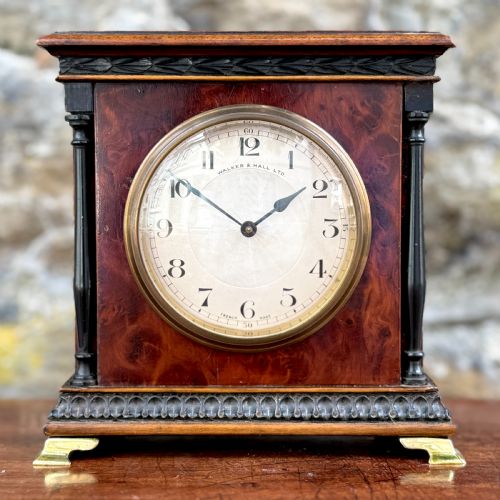
Walker and Hall·John Walker·David Morice·William Smith·Osborn of Kingsbridge·James McCabe·Bulle·Ganthony Of London·Camerer Cuss·J. Beckett·Hampston Prince and Cattles·Maples and Co·John Cross·Joseph Hinds·John Douglass·Summerhayes·John Hancock·John Wilson·Pat Cock
The Early Mahogany Clock Glossary
- Fusee
- A conical pulley connected to the mainspring by a chain or cord, designed to equalise the torque as the spring unwinds. This mechanism improves timekeeping accuracy throughout the running cycle.
- Drop dial
- A wall clock configuration where the circular dial sits above an extended wooden box that houses the pendulum. This format gained popularity in offices, stations, and domestic hallways during the nineteenth century.
- Bracket clock
- A portable spring-driven clock designed to sit on a bracket or table. Early versions frequently incorporate striking or chiming mechanisms.
- Portico clock
- A distinct architectural style featuring columns supporting a central housing. These French-derived designs display visible pendulum suspensions.
Early Mahogany Clock: Frequently Asked Questions
What is a fusee movement?
A fusee movement uses a conical pulley and chain to regulate the power delivered from the mainspring to the gear train. This clever device ensures the clock maintains steady tension as the spring runs down.
You find this mechanical arrangement in higher-quality English wall clocks, bracket clocks, and marine chronometers from the eighteenth and nineteenth centuries.
How do I wind an antique clock?
Winding requires inserting the appropriate key into the winding holes on the dial and turning it gently until resistance stops the motion. Care must be taken not to overwind the mainspring.
Most eight-day movements require attention once a week, while simpler timepiece versions without striking trains follow similar weekly schedules.
Where were wall clocks used?
Wall-mounted dial clocks served practical timekeeping roles in railway stations, offices, public institutions, and domestic kitchens or hallways. Railway examples often carry specific company lettering on the dial.
Their clear wooden bezels and bold painted numerals ensured visibility from a distance in busy working environments.
What is a grandmother clock?
A grandmother clock is simply a scaled-down version of the traditional tall floor-standing grandfather clock. These slim instruments occupy less floor space while retaining full chiming or timekeeping functions.
They emerged primarily during the early twentieth century alongside the revival of older furniture styles.