


Early Georgian Wardrobe
An early georgian wardrobe offers substantial storage rooted in the craftsmanship of the eighteenth century, combining timber construction with period character.
Early Georgian Wardrobe
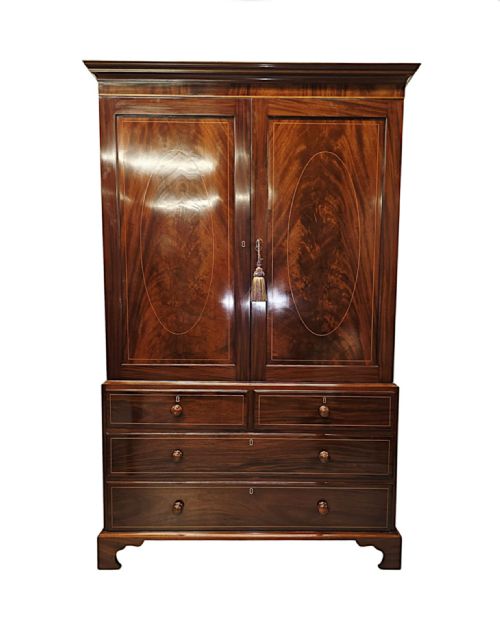
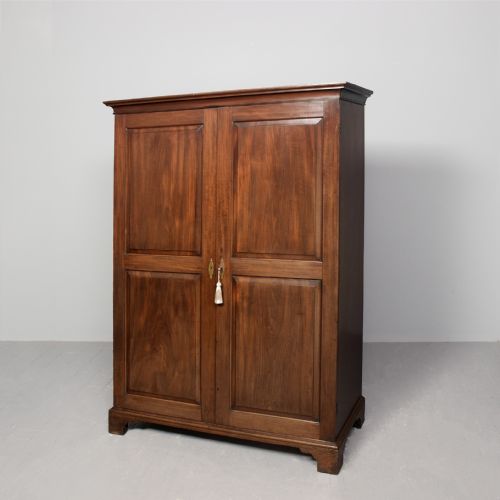
An early georgian wardrobe encompasses robust press cupboards and linen presses originating from the eighteenth century. These substantial pieces provide deep internal storage through panelled doors and lower drawer sections.
The versions most commonly met on this page include country oak press wardrobes alongside walnut and mahogany cabinets. Many examples feature knockdown construction designed for practical movement within historic homes.
Makers of the period utilised durable native timbers like oak alongside fashionable imported hardwoods such as mahogany and walnut. These furnishings reflect the transition from vernacular joinery to refined cabinet making.
Materials and construction
Joiners constructed these pieces using solid oak, walnut, and pine, often employing pegged joints to secure the heavy framework. Panel and frame construction allowed the timber to move naturally with seasonal humidity changes.
Finer examples utilise mahogany and flame mahogany veneer, complemented by boxwood stringing and brass hardware. Iron hinges and locks secure the heavy doors while interior shelves and hanging spaces organise linens and garments.
The listings on this site span the eighteenth and nineteenth centuries, featuring materials from native oak and pine to imported mahogany and walnut.
Markers of quality
Quality rests upon the selection of timber figures, such as flame mahogany veneer or well-figured walnut, balanced against structural integrity. The crispness of panel moulding and the retention of original brass hardware elevate certain examples.
Simpler vernacular pieces rely on the honesty of solid oak and pegged construction rather than decorative veneers. The survival of original surfaces, whether waxed pine or polished hardwood, defines the desirability of each piece.
The Early Georgian Wardrobe Glossary
- Press cupboard
- A large storage furniture piece featuring upper doors enclosing shelves and lower sections typically fitted with drawers. They serve to store household linens and garments.
- Knockdown
- A piece of furniture engineered to be dismantled into manageable panels and sections for transportation. This method allowed large wardrobes to move between rooms and properties.
- Flame mahogany veneer
- A thin slice of mahogany timber cut from the point where a branch joins the trunk, displaying a distinctive flickering flame pattern. Cabinet makers applied this to primary visual surfaces.
- Pegged construction
- A traditional joinery method using wooden pins rather than modern metal fasteners to secure mortise and tenon joints. This technique accommodates natural timber movement.
- Stringing
- A narrow inlay of contrasting wood, such as boxwood, set into the surface of furniture to create decorative borders. It outlines panels and drawers on refined cabinet work.
Early Georgian Wardrobe: Frequently Asked Questions
How do I tell an 18th century wardrobe apart from later copies?
Examination of the timber, construction methods, and hardware reveals the true age of a piece. Eighteenth-century examples feature hand-cut joints, pegged construction, and vernacular tool marks rather than modern fixings.
Secondary woods used inside drawers and back panels should match the period of origin. Original brass handles and iron locks provide further chronological clues.
Were these wardrobes built to be taken apart?
Many early pieces feature knockdown construction designed specifically to allow disassembly into flat panels and sections. This engineering was essential for moving large wooden furniture through narrow historic doorways.
Pegs and slot joints hold the heavy carcase together without requiring permanent glue bonds. This practicality defines numerous country oak and pine examples.
How do I care for antique timber furniture?
Maintenance involves keeping pieces away from direct heat sources and sudden humidity fluctuations to prevent timber splitting. Regular gentle waxing preserves the finish and nourishes dry wood.
Avoiding harsh chemical polishes ensures the historic surface and patina remain undisturbed over decades of use.