


Early Georgian Linen Press
An early georgian linen press brings architectural presence and deep storage to a room through solid timbers and panelled doors.
Early Georgian Linen Press
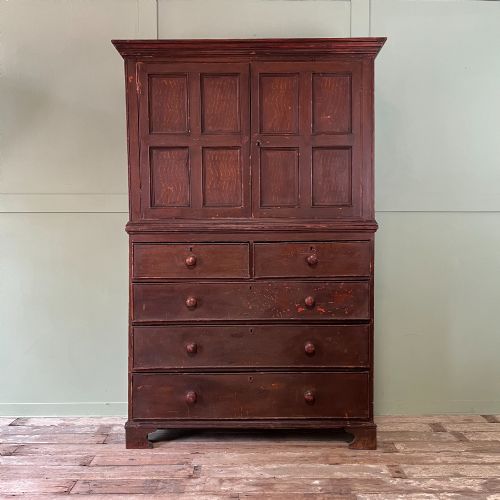
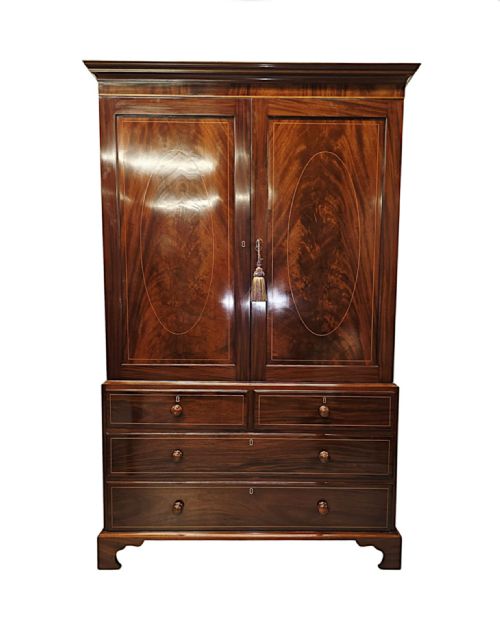
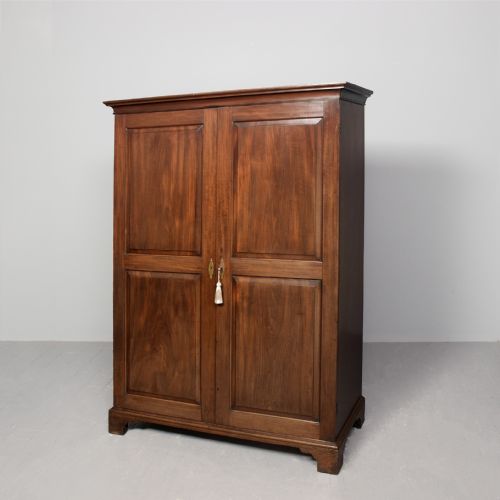
When you search for an early georgian linen press, you are looking at substantial case furniture designed to store household linen and garments. The form typically pairs an upper section of panelled doors hiding sliding trays with a lower chest of drawers.
The versions you are most likely to meet on this page span the georgian and eighteenth century periods, alongside nineteenth century interpretations and vernacular pieces in oak, mahogany, walnut, and pine. Regional variations include irish vernacular and welsh examples, as well as low press cupboards and miniature furniture.
Makers built these pieces to anchor large chambers or utility rooms, employing sturdy carcases that often separated into sections for transport. Today they serve equally well as wardrobes or general storage cabinets in domestic interiors.
Materials and construction
Cabinet makers utilised dense native and imported timbers, primarily working with oak, walnut, and mahogany, alongside pine for secondary carcase parts and painted finishes. Flame mahogany veneer added decorative grain figures to drawer fronts and panel surrounds on higher status examples.
Joinery techniques relied on panel and frame construction to accommodate timber movement across wide doors and sides. Brass hardware, including drop handles, escutcheons, and hinges, secured the functional elements, while iron fittings reinforced internal structures.
Listings feature pieces spanning the seventeenth century, eighteenth century, nineteenth century, georgian, and regency periods.
Distinguishing quality
Quality in an early georgian linen press rests on the proportion of the carcase and the selection of timber veneers. Timber choice ranges from plain local pine and oak up to figured walnut and flame mahogany, which dictates the visual weight of the piece.
Construction details such as the thickness of drawer linings, the retention of original brass hardware, and the crispness of mouldings separate standard vernacular items from fine cabinet work. Untouched surfaces retain patination that heavy restoration or stripping tends to diminish.
The Early Georgian Linen Press Glossary
- Linen press
- A tall storage cabinet featuring an upper cupboard with sliding trays for folded textiles and a lower chest of drawers for garments.
- Cabinet on chest
- A two-part form consisting of an upper display or storage cabinet resting upon a lower base fitted with drawers.
- Vernacular
- Regional furniture built by local joiners using available native timbers rather than following metropolitan stylistic conventions.
- Flame mahogany veneer
- A thinly sliced decorative wood layer cut from timber fork sections to create a distinctive flickering flame pattern.
- Press cupboard
- A heavy storage carcase with internal compartments, historically used to press and store linens flat.
Early Georgian Linen Press: Frequently Asked Questions
What is inside an early georgian linen press?
Inside the upper doors you typically find sliding timber trays, historically used for stacking linen flat without deep creases. The lower section contains a bank of graduated drawers for smaller garments.
Many examples have had these internal trays removed to allow hanging space, converting the piece into a standard wardrobe for modern clothing.
How do I care for antique pine and oak?
Solid wood furniture responds best to stable room temperatures and protection from direct sunlight, which can dry out timber and crack panel glue lines. Regular dusting with a dry cloth keeps the surface clean.
Applying traditional wax polish periodically nourishes the wood and maintains a soft sheen without building up synthetic residues.
Are these pieces difficult to move?
Most early georgian linen presses were constructed in two distinct sections, separating the upper cupboard from the lower base to ease transport. Some regional or vernacular examples feature knockdown carcases held together by pegged joints.
Enlisting professional handlers is recommended due to the dense weight of solid oak and mahogany carcases.