
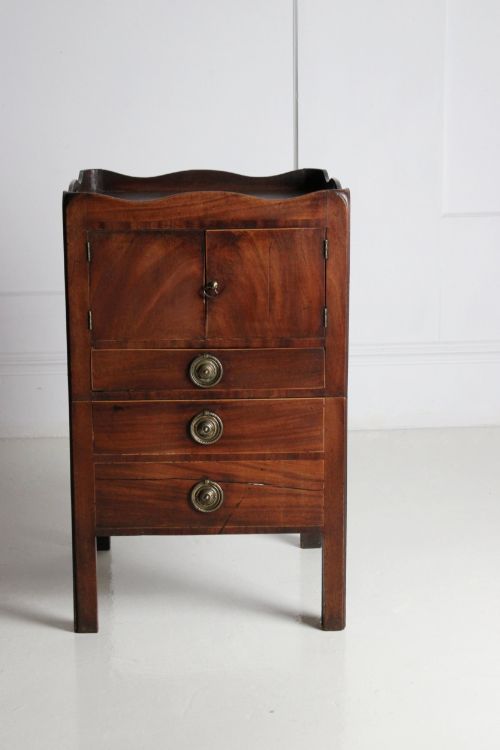
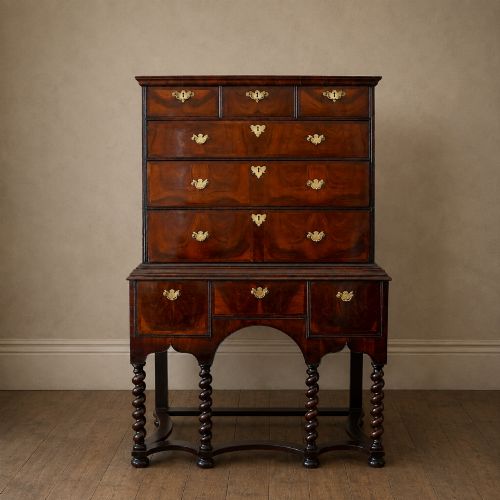
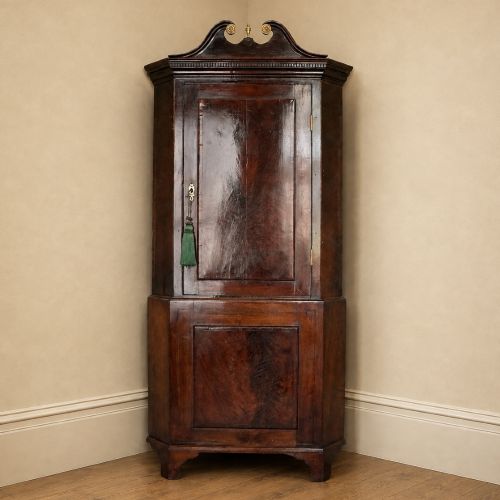
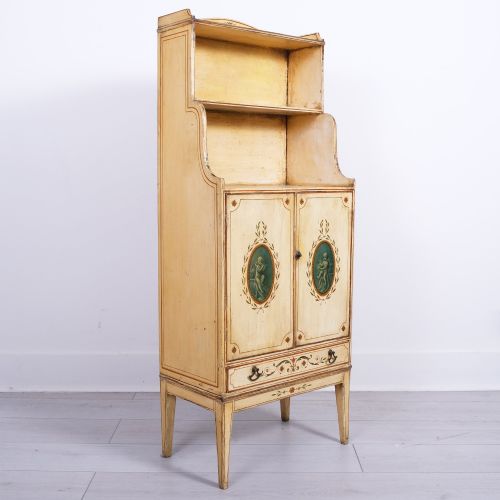



George I Cabinet Stand
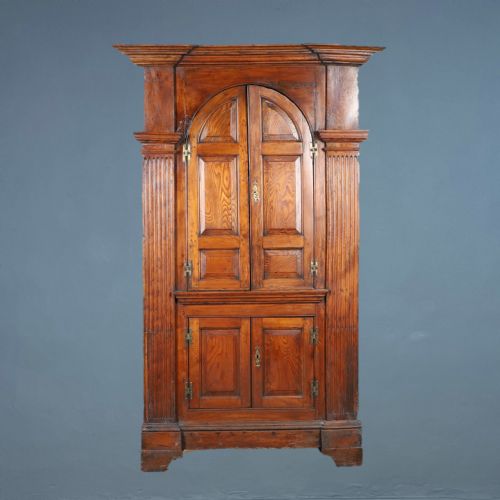
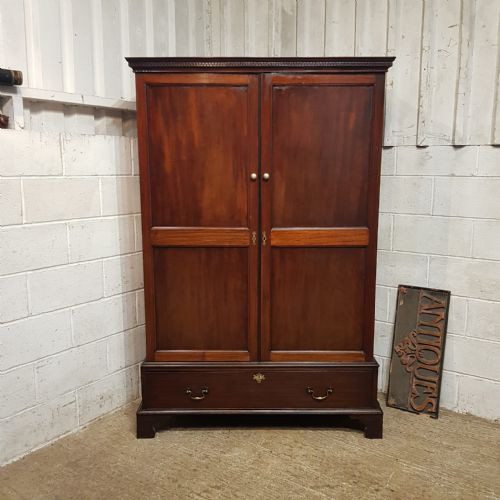
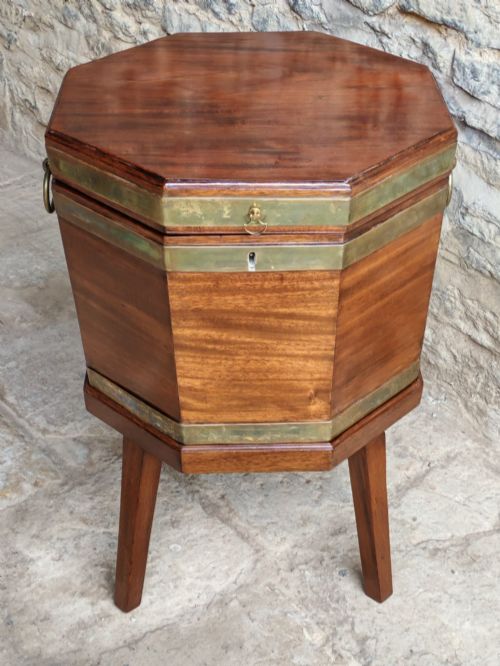
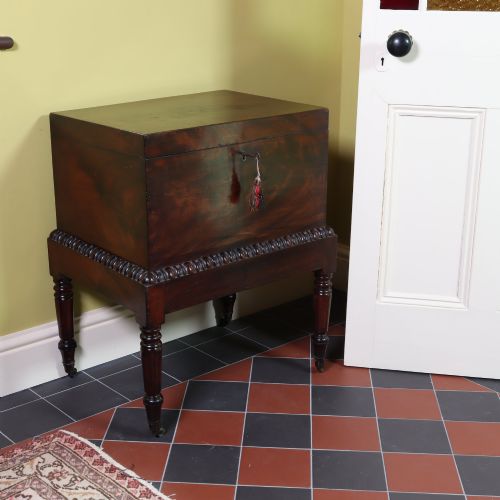
These pieces for george i cabinet stand bring raised storage and display into rooms through walnut, mahogany, and lacquered surfaces.
George I Cabinet Stand
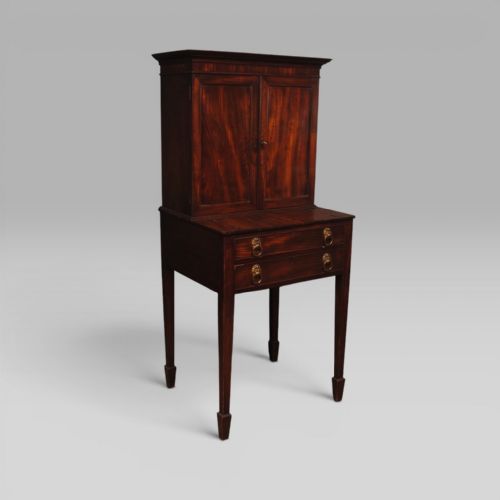
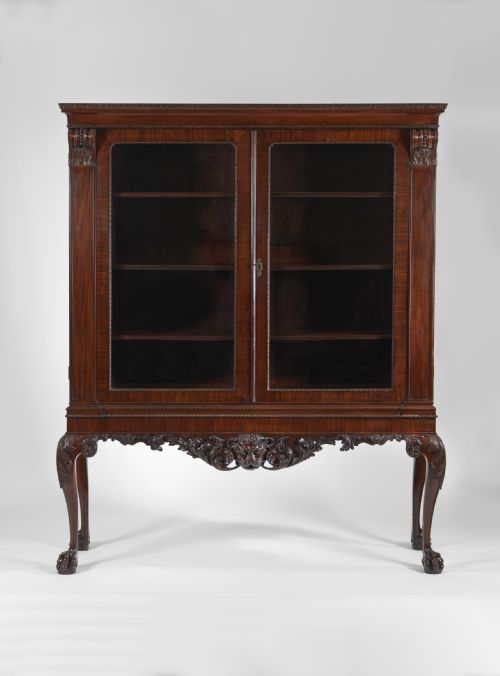
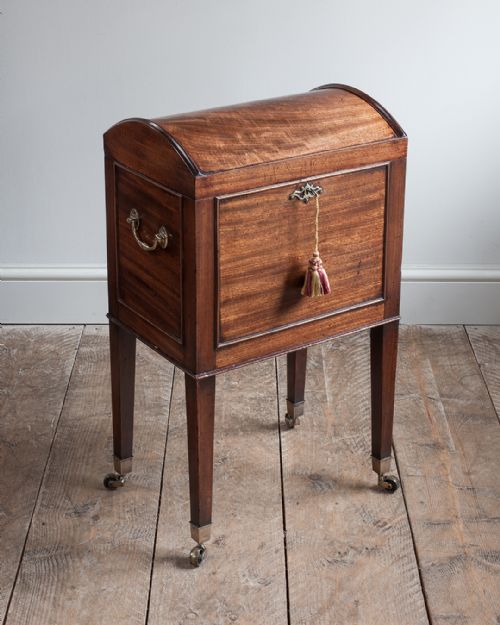
When you search for george i cabinet stand, you look at elevated storage pieces that combine an upper cabinet or chest with a dedicated supporting base. The versions you are most likely to meet on this page date from the Georgian period and the eighteenth century, alongside later George style revivals from the twentieth century.
The surviving examples range from early walnut chests on stands with feather banding to later mahogany and lacquered cabinets resting on sturdy legs. These forms serve various uses, functioning as writing cabinets, collectors' cabinets, and cocktail cabinets lifted clear of the floor.
Materials and Technique
Cabinetmakers built these pieces using primary timbers such as walnut, mahogany, and oak, frequently applying figured veneers and boxwood inlay to the exterior surfaces. Early examples employ feather banding around drawer edges, while later iterations incorporate painted wood, satinwood, and elaborate lacquering.
The upper sections join securely to the lower stands through traditional mortise and tenon joinery, supported by brass hardware, locks, and hinges. Carved details and giltwood accents appear on specific George II and later revival pieces, matching the structural timber of the base to the body.
Listings feature walnut, mahogany, oak, and satinwood, spanning the Georgian period, the eighteenth century, and twentieth-century revival styles.
Quality and Construction
The distinction between tiers rests upon the choice of timber veneer, such as figured walnut or flame mahogany, and the precision of the cabinetwork. Grain matching across drawer fronts and doors indicates greater care by the maker.
Surface finishing and decorative elements dictate the standing of a piece. Hand-painted decoration, crisp carving on the stand, and original brass fittings separate standard examples from finer works.
The George I Cabinet Stand Glossary
- Cabinet on stand
- A freestanding storage compartment raised upon a separate supporting frame with legs. This configuration lifts the main body for easier access and display.
- Feather banding
- A decorative inlay technique using veneer strips arranged in a herringbone pattern around the perimeter of drawer fronts or panels. It frames the wood grain with contrasting lines.
- Walnut
- A dense timber utilised extensively during the early eighteenth century for cabinetwork. It provides rich brown tones and distinct figuring.
- Mahogany
- A durable hardwood introduced widely during the Georgian era for furniture construction. Its stability allowed for fine carving and smooth drawer operation.
George I Cabinet Stand: Frequently Asked Questions
How do you date a cabinet on stand?
Dating relies on examining the timber species, construction methods, hardware, and stylistic details present in both the upper cabinet and the supporting base. Early eighteenth-century pieces typically feature walnut with feather banding, while later Georgian examples favour mahogany.
Secondary woods used in drawer linings and the style of the leg supports provide further clues. Later twentieth-century revivals often display machine-cut elements or differing internal construction.
Where should I place this in a room?
These elevated cabinets suit entrance halls, living rooms, and studies where floor space is balanced by vertical display. Their raised legs keep the silhouette light, preventing the piece from overwhelming smaller spaces.
Position them against interior walls away from direct sunlight and heat sources to protect sensitive wood veneers and lacquer finishes from drying out.
Are these pieces stable on their stands?
Original cabinets on stands are constructed with integral framing designed to bear the weight of the upper compartment securely. The legs connect to the base rails using traditional joinery to ensure structural rigidity.
Placement on level flooring maintains this stability, though tall or heavy top sections benefit from wall-fastening brackets if placed in high-traffic areas.