






Early English Glass Goblet
These early english glass goblet pieces are substantial drinking vessels defined by weight and hand-blown character, offering a tangible link to Georgian tavern and dining tables.
Early English Glass Goblet
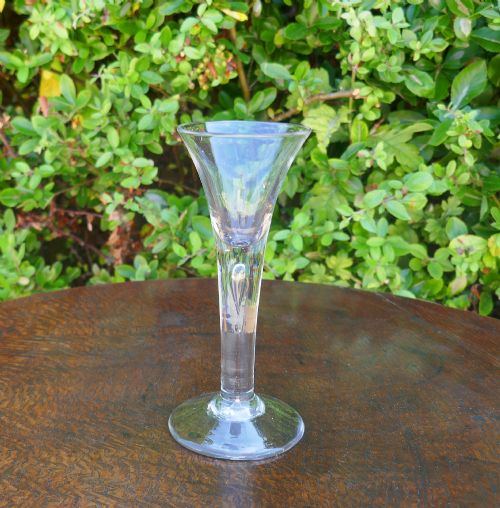
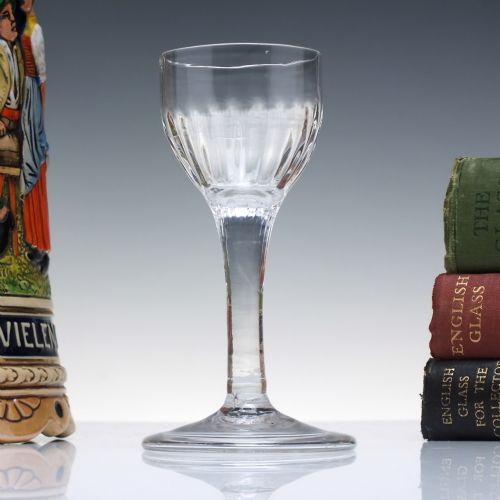
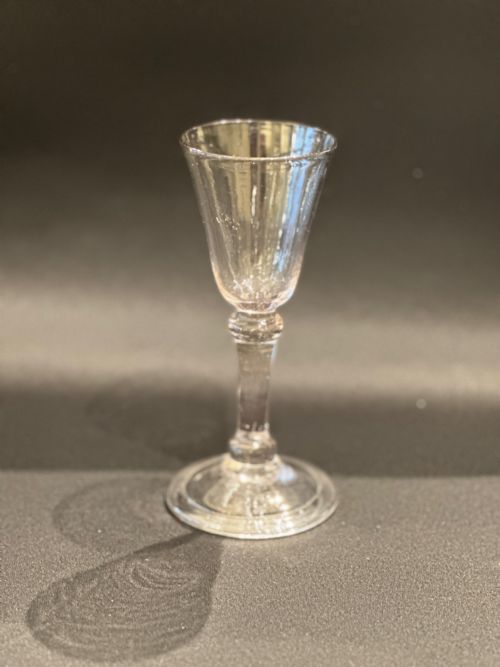
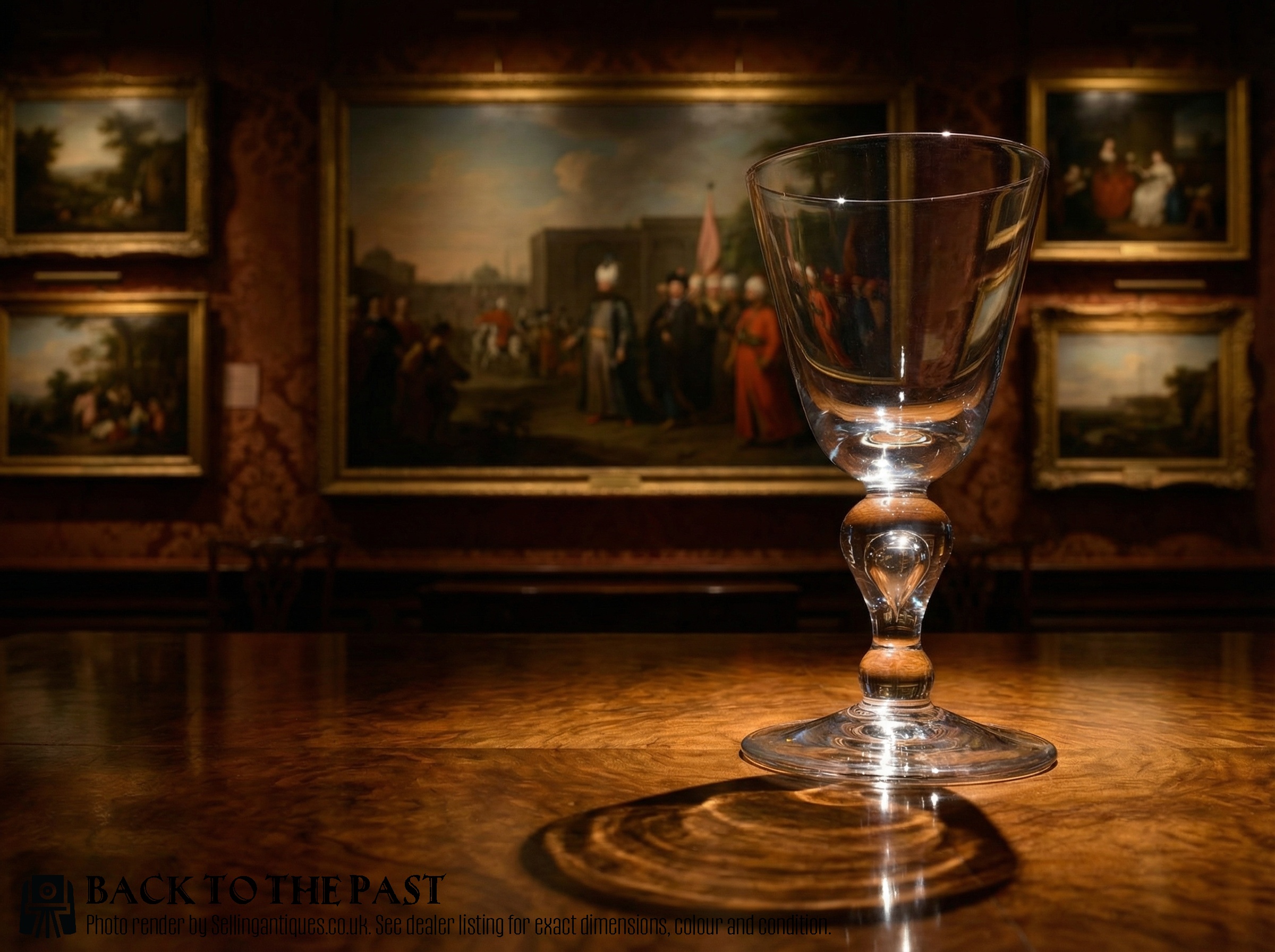
An early english glass goblet encompasses heavy drinking vessels and stems produced across the Georgian, Regency, and Queen Anne periods. Buyers searching this phrase encounter forms ranging from large baluster goblets and rummers to trumpet-bowl wine glasses and gin glasses.
The pieces appearing on this page span the early eighteenth century up to the nineteenth century, reflecting stylistic transitions from plain stems and ribbed bowls to cut glass and engraved decoration. Collectors meet variations including folded feet, domed feet, and basal bubbles within the stem formations.
How they were made
These vessels utilise lead glass, flint glass, and lead crystal, shaped by hand-blowing techniques that often left characteristic air bubbles trapped within the thick stems and bowls. Molten metal was manipulated to form heavy baluster profiles, ribbing, and wrythen twists.
Finishing touches involved optical or mould blowing to create ribbed surfaces, alongside hand engraving such as ships and initials on later rummers. Feet were frequently formed with folded rims to provide extra strength to the base of the drinking vessel.
Early English Glass Goblet Retail Price Guide 2026
Typical asking prices for early english glass goblet among the pieces listed under this phrase on Sellingantiques today, from the lower quarter to the upper quarter. They describe what is for sale here now, not the wider market.
Listings feature lead glass and flint glass forms spanning the Georgian, Regency, and Queen Anne periods, incorporating stem variations from baluster to plain.
What varies in quality
The crispness of hand-cut facets and the precision of contemporary engraving elevate specific pieces above plain utilitarian glassware. Foot formation also plays a role, with domed or folded feet representing more demanding manufacturing effort.
The Early English Glass Goblet Glossary
- Lead glass
- A heavy glass composition containing lead oxide, which increases brilliance, weight, and workability for cutting and blowing. This material defines the substantial feel of eighteenth-century English drinking vessels.
- Baluster stem
- A thick, swelling stem shape reminiscent of architectural balusters, popular in early eighteenth-century glassware. It adds significant weight and decorative presence below the bowl.
- Folded foot
- A base edge turned under during manufacture to create a smooth, thickened rim for extra durability. This technique is frequently found on eighteenth-century wine and ale glasses.
- Wrythen
- A spiral optical ribbing pattern twisted into the glass body during blowing. It creates a subtle texture that catches the light across the bowl or stem.
- Rummer
- A large, sturdy drinking glass introduced in the late eighteenth and early nineteenth centuries, often used for ale, spirits, or wine. These vessels frequently feature engraved decoration or bucket bowls.
Early English Glass Goblet: Frequently Asked Questions
What is an early english glass goblet?
An early english glass goblet is a heavy, hand-blown drinking vessel dating primarily from the eighteenth and early nineteenth centuries. These pieces encompass baluster wine glasses, rummers, and ale glasses made from lead glass.
They reflect historical manufacturing methods and styles spanning the Queen Anne, Georgian, and Regency periods.
How can I tell the age of a glass goblet?
Dating relies on observing the form of the stem, the weight of the metal, and the construction of the foot. Early eighteenth-century examples often feature baluster stems and folded feet, while nineteenth-century pieces lean towards rummers and cut glass.
Material composition, such as the use of heavy lead crystal, also guides period attribution.
Were these goblets used for everyday dining?
In their original periods, substantial glasses and rummers served both domestic dining and tavern life. Their heavy lead glass construction was intended for regular use rather than pure display.
Today, collectors appreciate them both as historical artefacts and as usable vessels for special occasions.