

Antique Stemware Goblet
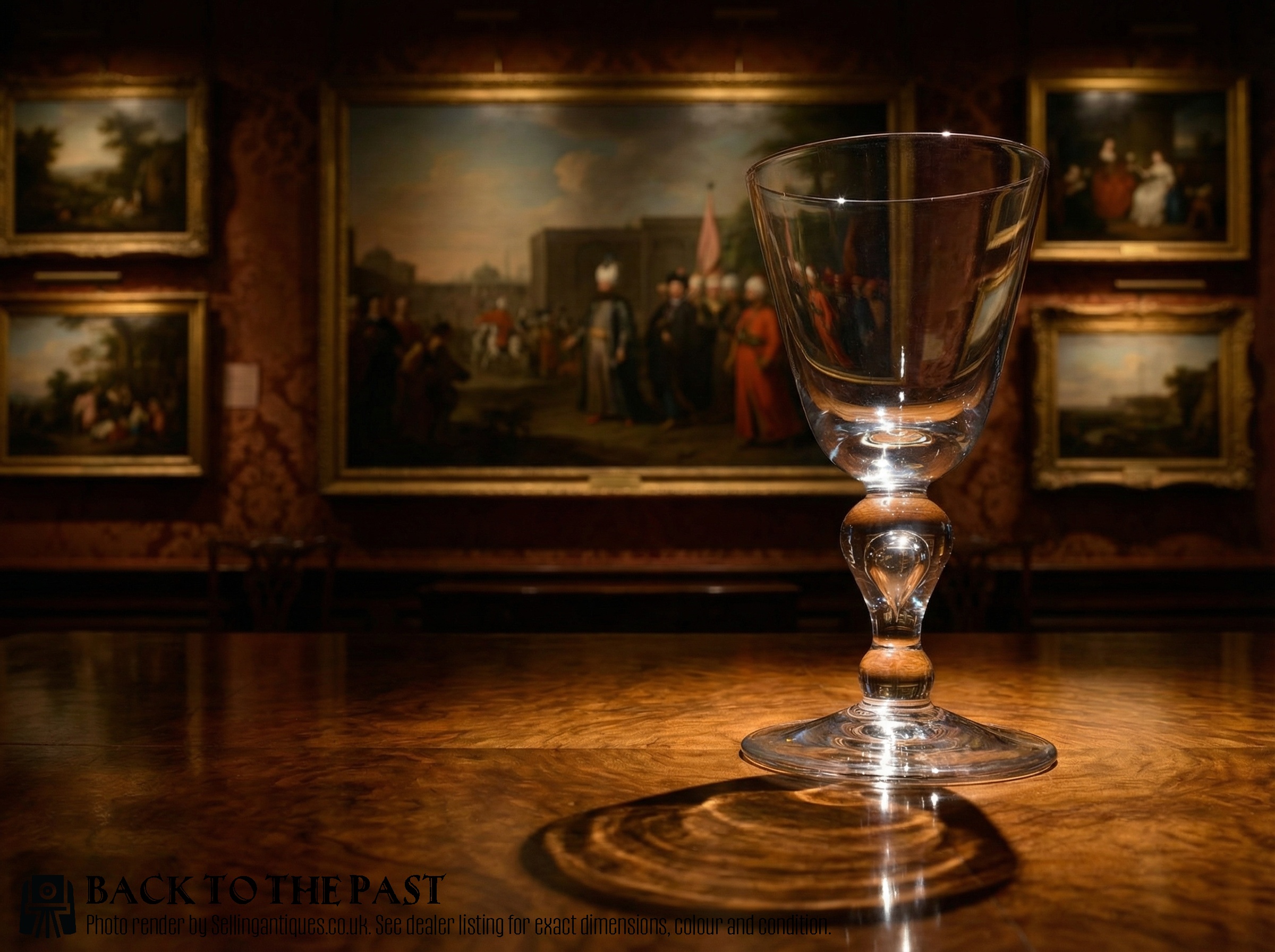
An antique stemware goblet brings centuries of craftsmanship to the table, offering drinking vessels shaped from lead glass, flint glass, and treen across Georgian, Victorian, and later periods.
Antique Stemware Goblet
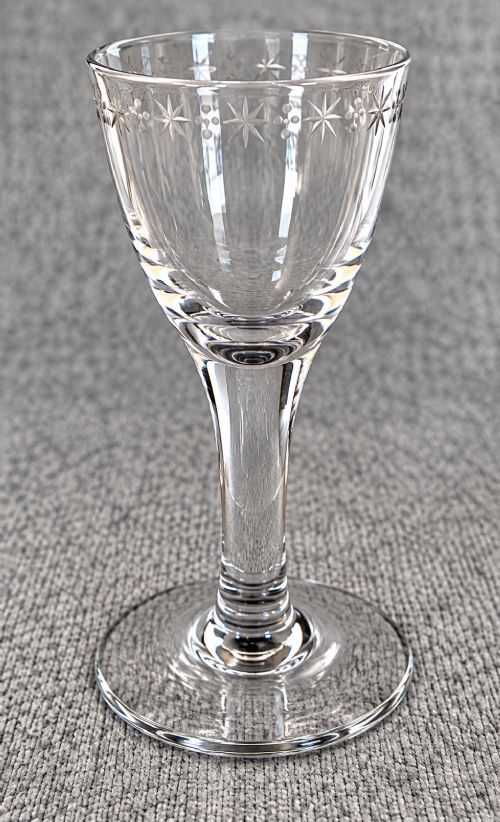
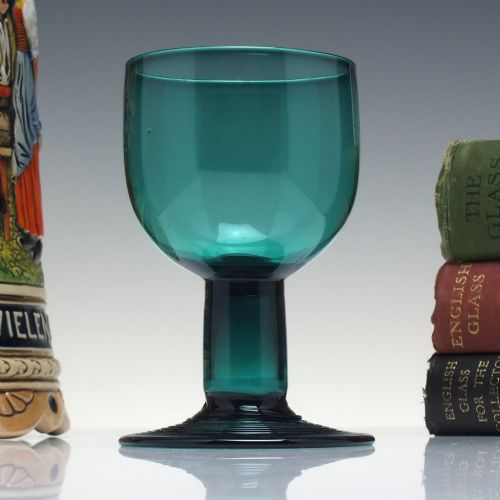
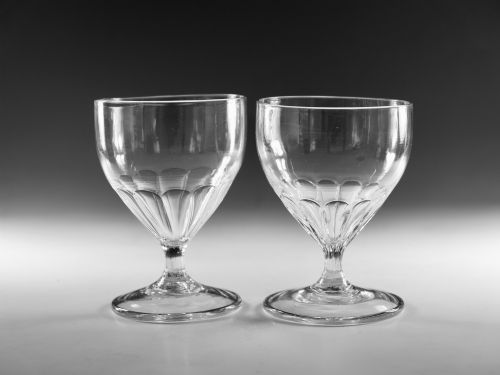
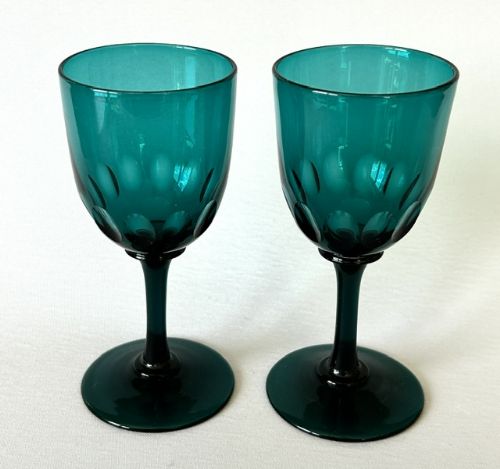
When you search for an antique stemware goblet, you encounter drinking vessels and chalices originating predominantly from the eighteenth and nineteenth centuries. The selection spans Georgian balustroids, opaque twists, rummers, and Victorian coloured glassware.
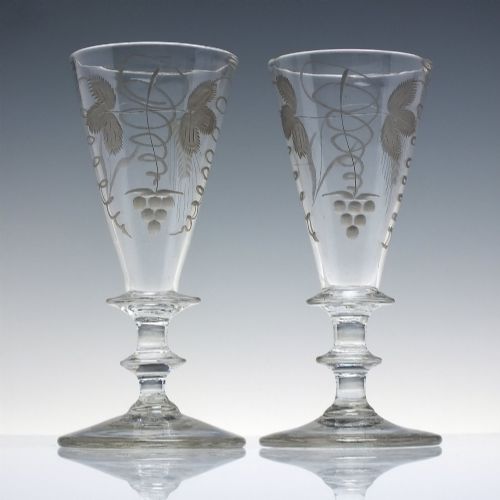
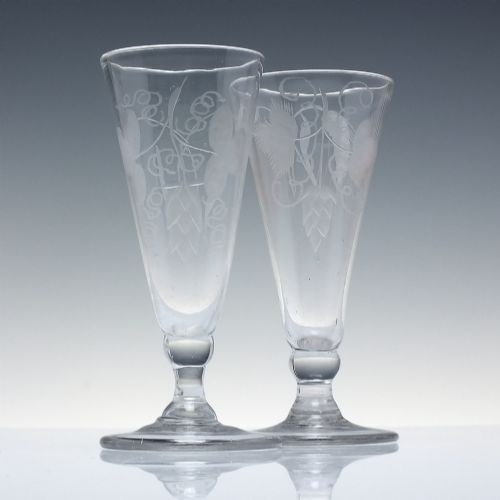
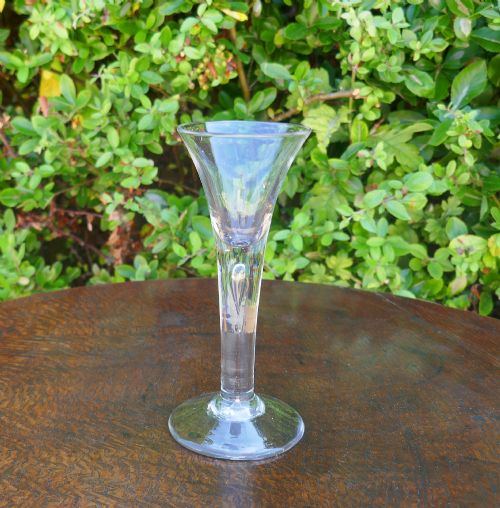
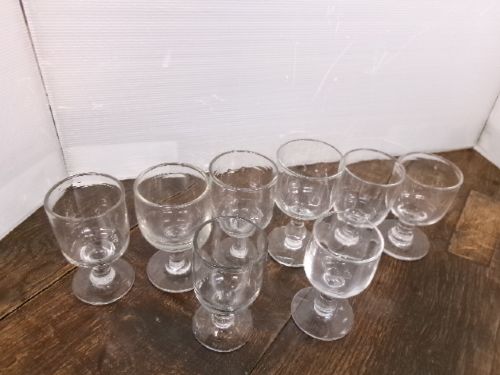
Most pieces date to the Georgian and Victorian eras, taking forms such as wine glasses, ale glasses, hock glasses, and heavy baluster goblets. These items reflect the domestic drinking habits and glass-manufacturing traditions of their respective periods.
How they were made
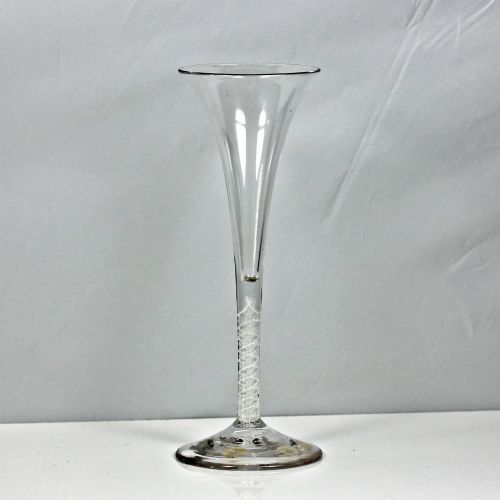
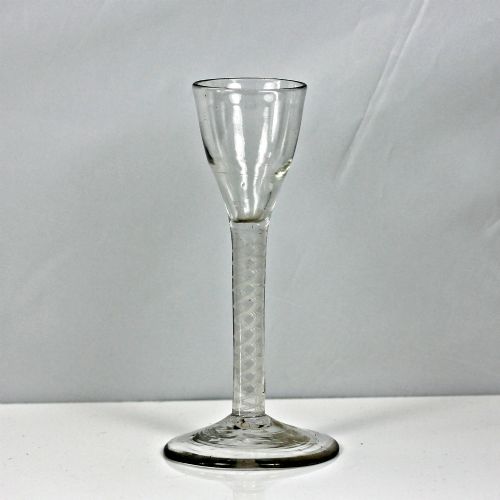
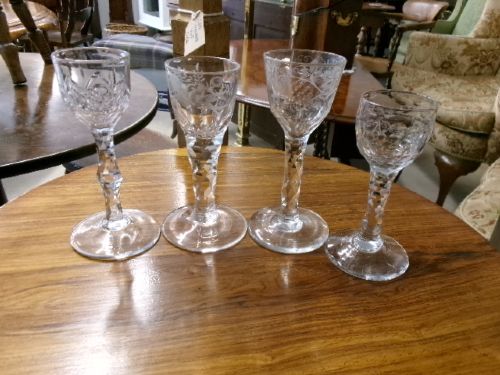
The objects are formed primarily from lead glass, clear lead glass, and flint glass, shaped into bowls, stems, and folded feet. Artisans utilised techniques such as air twists, opaque twists, facet cutting, and surface engraving to decorate the material.
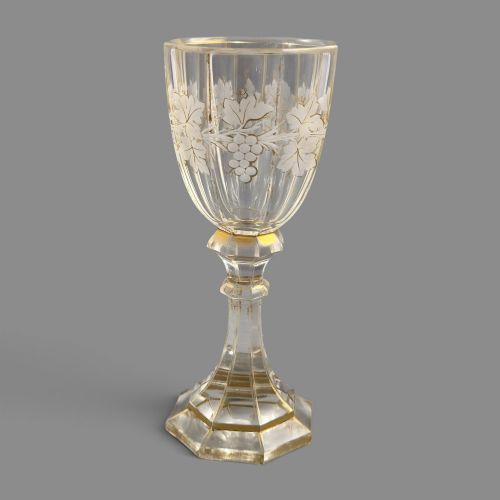
Decoration also includes white enamel, coloured glass overlays, and gilding, particularly on Bohemian and continental crystal pieces. Treen examples introduce turned wood construction to the pedestal goblet form.
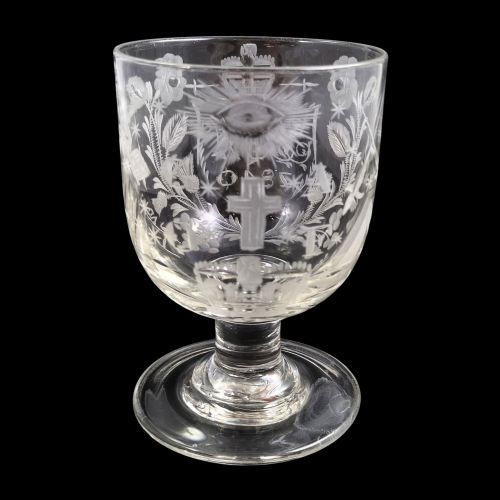
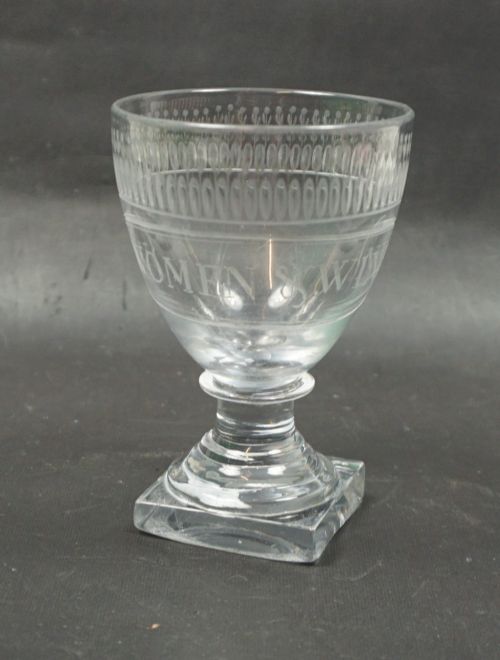
An eighteenth-century rummer carries the specific social sentiment engraved directly onto its bowl: Women and Wine.
What varies in quality
Quality rests upon the clarity of the lead glass or crystal, the precision of the stem formation such as air and opaque twists, and the crispness of any engraved details on the bowl. Heavier baluster and balustroid examples demonstrate technical skill in proportion and weight distribution.
Moser Bohemian·Baccarat Harcourt·Nathan and Hayes·Theresienthal
The Antique Stemware Goblet Glossary
- Baluster
- A heavy, swelling stem form resembling an architectural column, common in mid-eighteenth-century English drinking glasses. It provides substantial weight and a solid feel in the hand.
- Opaque Twist
- A stem containing white or coloured enamel threads twisted through the glass rod during formation. This technique gained popularity in mid-eighteenth-century English glasshouses.
- Air Twist
- A stem enclosing elongated spiral air bubbles trapped within the clear glass. Artisans created these by drawing and twisting heated metal rods.
- Rummer
- A large, sturdy drinking glass introduced in the late eighteenth century, used primarily for ale, wine, or punch. They typically feature short, thick stems and capacious bowls.
- Wrythen
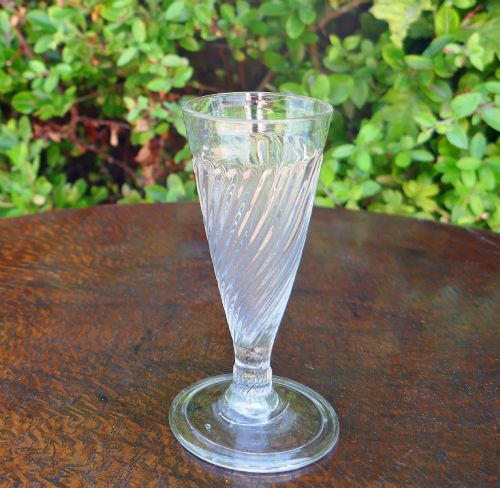
- A decorative spiral pattern moulded into the body or bowl of glassware. This optical effect creates a subtle rippling movement across the surface.
Antique Stemware Goblet: Frequently Asked Questions
Can I use these goblets for drinking?
Many collectors use eighteenth and nineteenth-century glassware for special occasions, provided the pieces are handled with appropriate care. Lead glass from earlier centuries should be evaluated for general use.
To preserve historical integrity, some buyers prefer to display fragile baluster wine glasses or enamelled hock glasses rather than use them regularly. The decision depends on the structural condition and personal preference of the owner.
How do I distinguish air twist from opaque twist stems?
Air twist stems enclose transparent spiral channels formed by trapped air inside the clear glass rod. They appear subtle and catch the light through refraction.
Opaque twist stems incorporate solid white or coloured enamel threads that stand out clearly against the clear glass background. Both styles require considerable skill from the glassblower during the forming process.
What is a rummer used for?
Rummers served as robust drinking vessels for ale, wine, and punch during the Georgian and Regency periods. Their generous bowl capacities and sturdy feet suited communal or tavern drinking.
Over time, they transitioned into household dining use, valued for their stout proportions and capacity for detailed bowl engraving.