

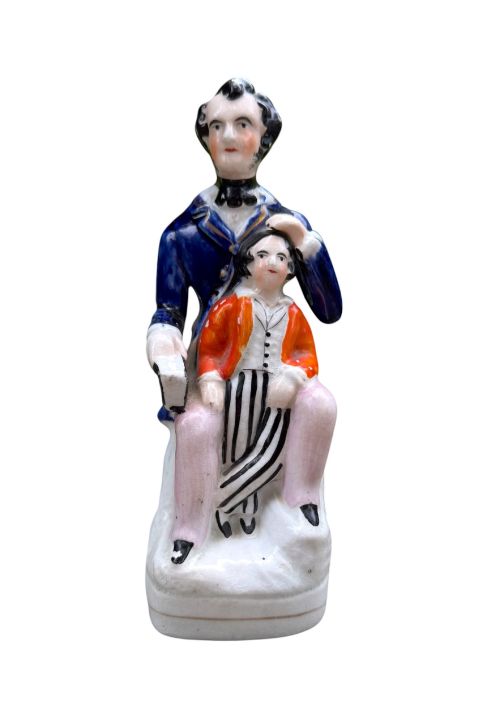
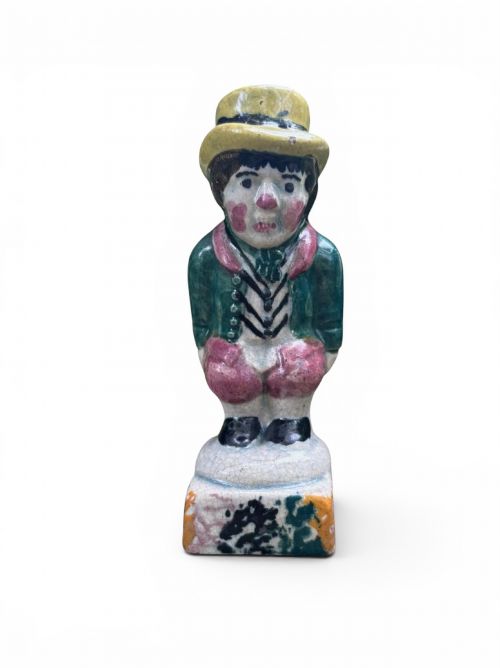


Early Ceramic Figurine
An early ceramic figurine brings the character of past centuries directly to a room, offering the charm of hand-modelled clay and porcelain.
Early Ceramic Figurine
An early ceramic figurine encompasses a broad sweep of decorative figures and sculptural pieces spanning from the eighteenth century through to the early twentieth century. These works originate from prominent English factories, continental European kilns, and Asian kilns, capturing subjects from mythological deities to domestic animals.
The selections most commonly met on this page include Staffordshire earthenware and pearlware figures, alongside eighteenth-century Derby porcelain groups and early twentieth-century earthenware pieces. Collectors encounter everything from practical pepper pots and chambersticks to large monumental figures and spill vases.
Makers ranged from historic English potteries like Staffordshire and Bow to continental firms such as Meissen, Royal Dux, and Friedrich Goldscheider. Asian works from the Dehua and Mikawachi kilns also appear, demonstrating the diverse global reach of early ceramic sculpture.
Materials and methods of construction
Makers utilised various ceramic bodies including soft-paste porcelain, earthenware, pearlware, and terracotta. Figures were frequently slip cast or hand-modelled, then finished with enamel paints, gold leaf highlights, or polychrome glazes.
Specialised techniques defined specific traditions, such as the patch mark periods seen in early Derby factory pieces or the distinctive turquoise glazes applied to Qing dynasty and twentieth-century animal studies. Firing processes varied from high-temperature kiln work to lower-temperature earthenware production.
Early Ceramic Figurine Retail Price Guide 2026
Typical asking prices for early ceramic figurine among the pieces listed under this phrase on Sellingantiques today, from the lower quarter to the upper quarter. They describe what is for sale here now, not the wider market.
Materials documented across the inventory include porcelain, earthenware, pearlware, terracotta, enamel, and gold leaf.
Distinctions in quality
Quality rests upon the crispness of the modelling and the precision of the hand painting, where finer pieces display delicate facial expressions and careful application of enamel hues and gold leaf. Early examples from established periods retain sharper details in the mould and more deliberate brushwork.
The integrity of the ceramic body and glaze also separates standard items from superior works, with well-preserved surfaces showing minimal wear to the original glaze and pigments. Model rarity and documented factory attribution further elevate the standing of individual sculptures.
Paul Scheurich·Friedrich Goldscheider·Enoch Wood factory·Ernst Wahliss·William Duesbury Co
The Early Ceramic Figurine Glossary
- Pearlware
- A refined earthenware developed in the late eighteenth century featuring a subtle blue-tinted glaze over a white body. This material formed the basis for many nineteenth-century Staffordshire animals and figures.
- Soft-paste porcelain
- An artificial ceramic composition fired at lower temperatures than hard-paste porcelain, used extensively by eighteenth-century English factories such as Derby and Bow. It yields a warm, slightly translucent body.
- Blanc de Chine
- A French term for white porcelains produced in Dehua, China, known for a milky glaze that melts smoothly into the clay body. Figures in this style often depict deities and mythological subjects.
- Spill vase
- A hollow cylindrical container incorporated into a ceramic figure, designed to hold taper matches used for lighting candles or pipes. These dual-purpose objects were popular in nineteenth-century earthenware.
- Biscuit figure
- An unglazed ceramic sculpture fired once to a porous state, favoured by factories like Derby for rendering matte surfaces with sculptural detail. It mimics the texture of carved marble.
Early Ceramic Figurine: Frequently Asked Questions
What materials are these figures made from?
These sculptures utilise various ceramic compositions including earthenware, pearlware, terracotta, and soft-paste or hard-paste porcelain. Surfaces are frequently enhanced with enamel colours, polychrome glazes, and gold leaf highlights.
Makers selected materials based on regional traditions and the desired finish, ranging from the bright glazes of Staffordshire potteries to the refined white bodies of continental porcelain works.
How can I identify an eighteenth-century piece?
Eighteenth-century examples often display the characteristic body traits and mark styles of historic factories like Derby or Bow, including patch marks from kiln furniture. The modelling tends to reflect Rococo or Neoclassical styles with hand-painted pastel palettes.
Examining the underside and base provides clues to the period, as unglazed areas and early factory marks reveal the manufacturing methods of the era.
Where were Staffordshire figures displayed?
Staffordshire pottery figures and pearlware animals typically decorated nineteenth-century mantelpieces, sideboards, and domestic parlours. Their robust earthenware construction made them accessible decorative ornaments for everyday homes.
Owners arranged pairs of dogs, lions, or rustic figures symmetrically to enliven domestic interiors during the Georgian and Victorian periods.
What is the difference between porcelain and earthenware figures?
Porcelain figures are fired at higher temperatures using fine clay materials like kaolin and petuntse, resulting in a vitrified, sometimes translucent body associated with factories like Meissen, Derby, and Minton. Earthenware figures, such as those from Staffordshire, use more porous clay bodies covered in opaque or tinted glazes.
Porcelain allowed for finer, crisper details in modelling and delicate painting, whereas earthenware offered sturdier forms suited to broader domestic production.