



Early 20th Century Tallboy
An early 20th century tallboy is a commanding piece of vertical storage built to bring timber grain and proportion into a bedroom.
Early 20th Century Tallboy
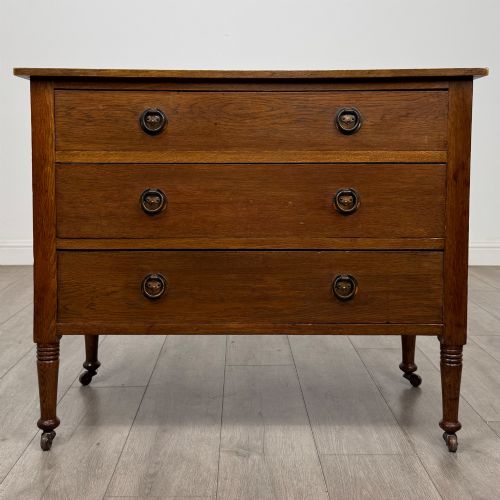
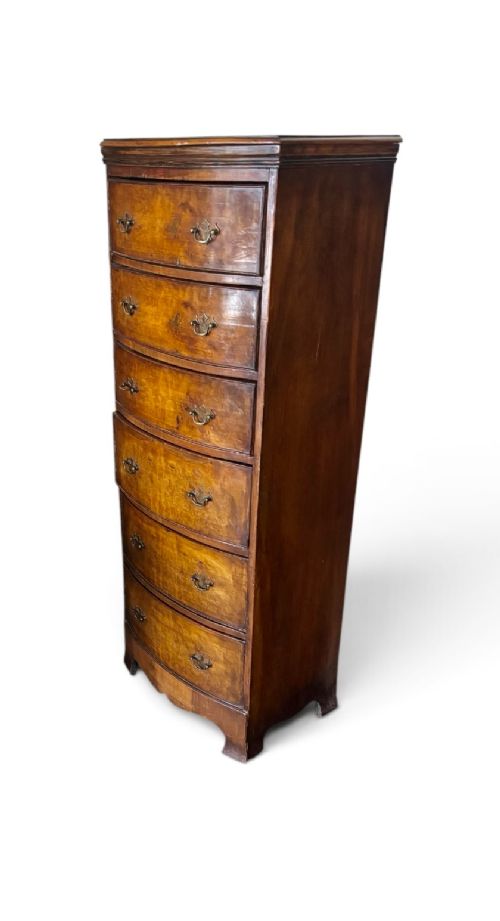
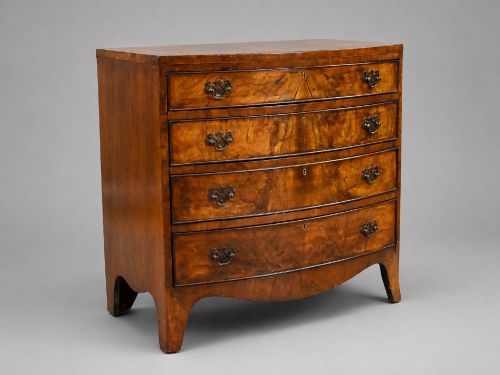
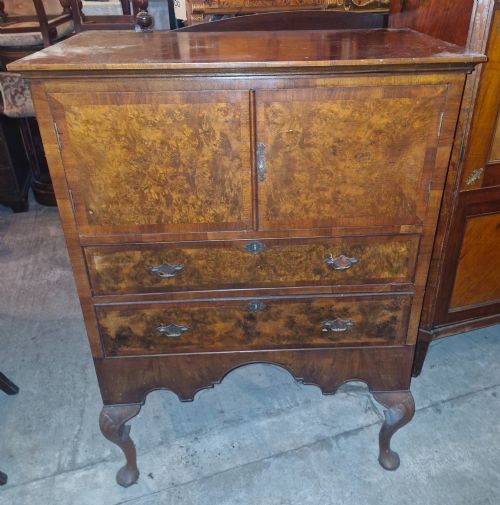
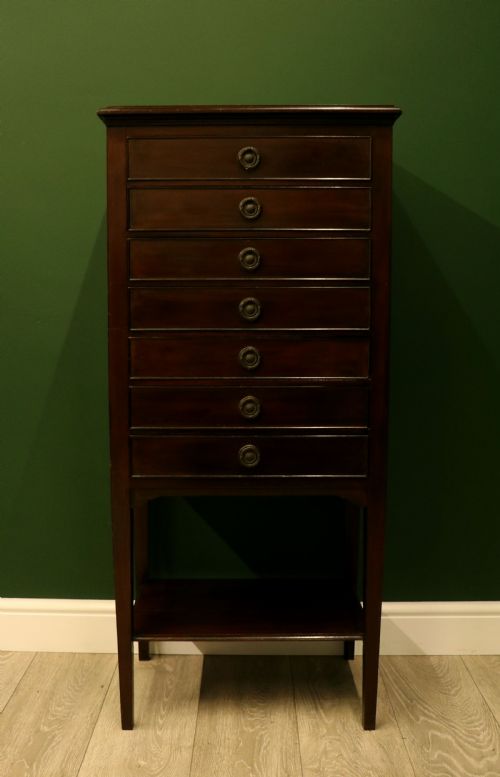
An early 20th century tallboy combines the capacity of a chest of drawers with a compact footprint by stacking storage upwards. You will encounter tallboys in mahogany and walnut, alongside related forms such as chests on stand and bow front chests.
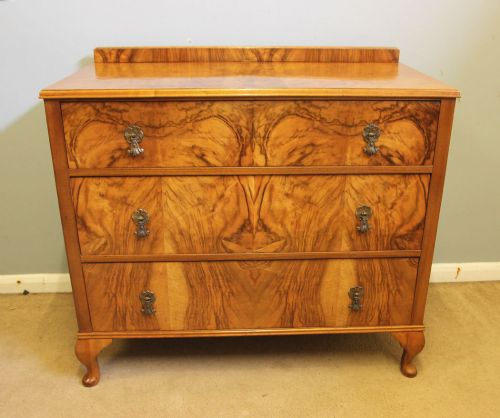
The pieces on this page span the Edwardian period through to the nineteen thirties, drawing on Georgian and Queen Anne revival styles. Makers of this era favoured figured walnut and laburnum veneers, creating tall silhouettes with considerable presence.
How they were made
Cabinet makers of this period relied on solid oak and mahogany for carcases, often applying rich veneers of walnut, figured walnut, and burr walnut to the drawer fronts. Selected pieces feature decorative laburnum oyster veneers arranged in geometric patterns across the surface.
Brass handles and escutcheons punctuate the timber surfaces, fixed securely to drawer fronts built with traditional dovetail joints. Polished finishes highlight the natural grain figures of the walnut and mahogany without obscuring the material.
Revival designs strongly influence these pieces, drawing particularly on Queen Anne, Georgian, and William and Mary styles translated into early twentieth-century forms.
What varies in quality
The distinction between ordinary and exceptional pieces lies in the choice and matching of timber veneers. Figured and burr walnut surfaces require careful bookmatching to create symmetrical patterns across the front of the tallboy.
Proportion and revival detailing also separate the grades, with finer examples displaying restrained Queen Anne or Georgian revival carving and well-chosen brass hardware. The crispness of the drawer construction and the stability of the tall carcase determine the lasting utility of the piece.
The Early 20th Century Tallboy Glossary
- Tallboy
- A tall chest of drawers, often constructed as a chest on chest or a single tall carcase, designed to maximise vertical storage. It provides substantial drawer space while occupying minimal floor area.
- Bow front
- A cabinet front that curves outwards in the centre, softening the geometric lines of the piece. This shape demands precise joinery to ensure the drawers operate smoothly within the curved carcase.
- Oyster veneer
- Circular slices cut across small branches of timber, such as laburnum, and arranged to resemble oyster shells. This decorative technique creates intricate repeating patterns across drawer fronts.
- Figured walnut
- Walnut timber possessing an attractive, irregular grain pattern caused by growth distortions. Cabinet makers select these boards for prominent display on drawer fronts and top panels.
- Chest on stand
- A chest of drawers elevated on a separate frame with legs, lightening the visual weight of tall storage. This form often looks back to earlier seventeenth century styles.
Early 20th Century Tallboy: Frequently Asked Questions
How do I style a tallboy in a modern bedroom?
A tallboy provides strong vertical lines that balance lower modern furniture like beds and low benches. Keep the top surface uncluttered with perhaps a single lamp or a small tray to let the timber grain speak for itself.
Because the footprint is small, you can place a tallboy in tighter alcoves where a wider chest would block movement. Allow the natural warmth of the walnut or mahogany to anchor the colour scheme of the room.
What is the difference between a tallboy and a chest of drawers?
A tallboy is built significantly higher than a standard chest of drawers, often stacking more than four or five drawers in a vertical column. This design trades floor space for height, making it ideal for smaller rooms.
Traditional tallboys may also take the form of a chest on chest, where a smaller upper section sits upon a deeper base. Standard chests of drawers are lower and wider, frequently featuring a dressing mirror attached to the top.
Are these pieces Edwardian or from the 1930s?
The pieces span a broader period from the Edwardian era through the nineteen twenties and nineteen thirties. Edwardian pieces often utilise oak or mahogany, while later nineteen thirties examples frequently showcase figured walnut veneers.
Revival styles from the early twentieth century often borrowed heavily from Queen Anne and Georgian aesthetics. Examining the interior construction timbers and handle styles helps narrow down the exact decade of manufacture.