

Early 19th Century Writing Desk
An early 19th century writing desk offers tactile historical presence and practical workspace through traditional cabinetmaking.
Early 19th Century Writing Desk
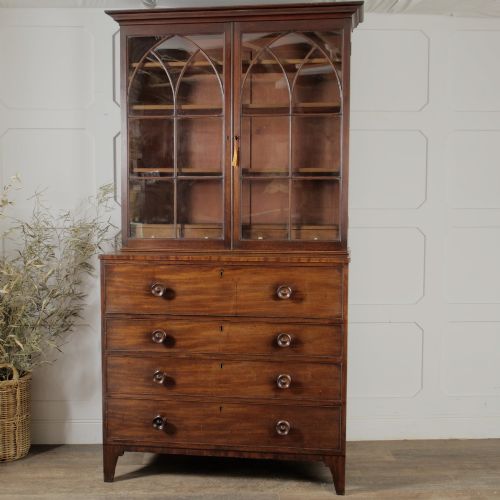
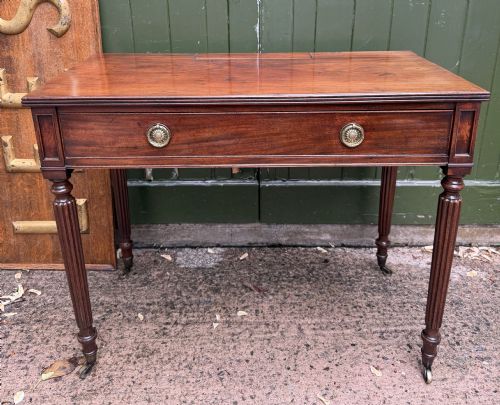
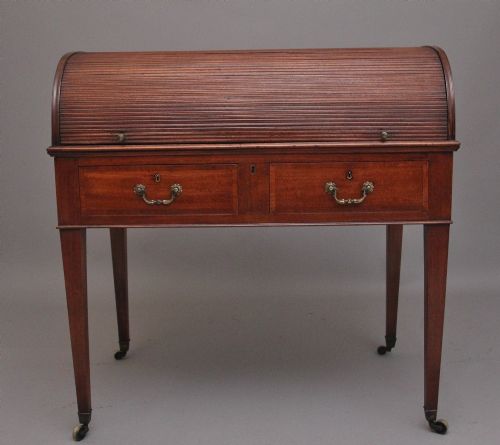
An early 19th century writing desk encompasses diverse forms including library tables, Davenport desks, tambour desks, and secretaire bookcases spanning Georgian, Regency, and Early Victorian periods.
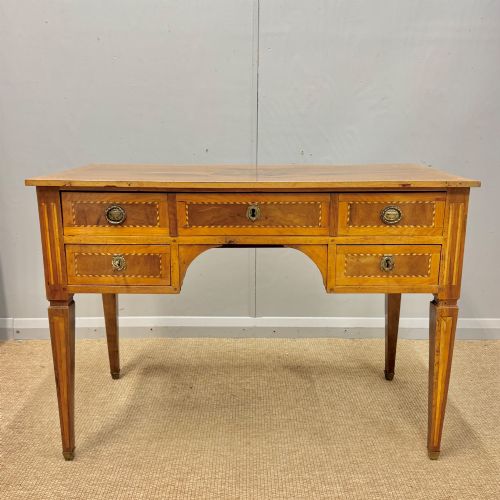
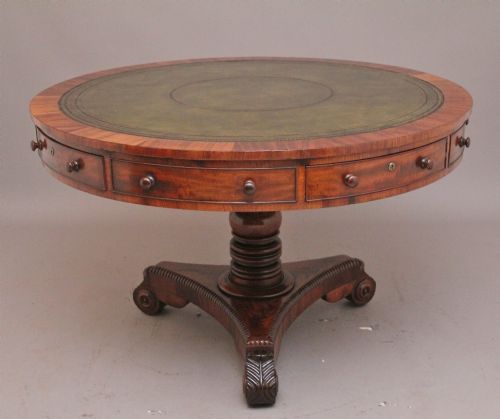
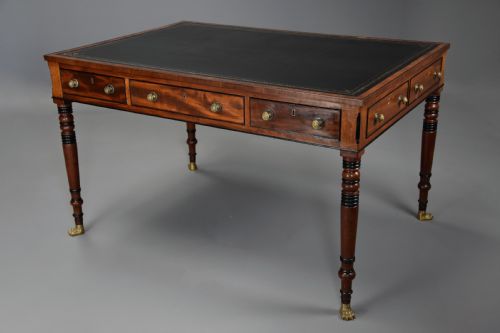
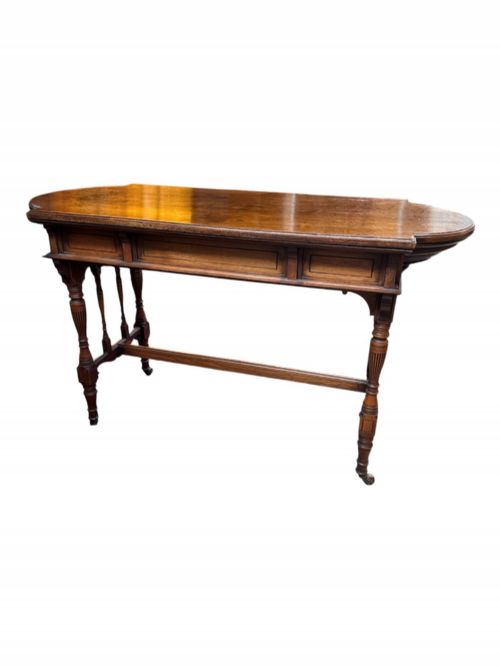
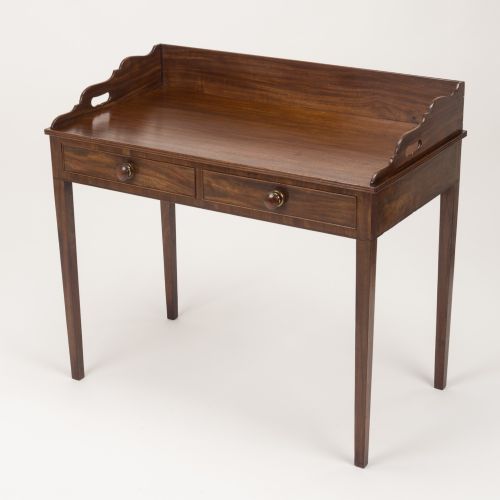
The most common formats found here are mahogany writing tables and library tables featuring multiple drawers and leather writing surfaces, alongside specialised partners desks and slope forms.
These pieces originated across British, Irish, French, and Dutch workshops, reflecting varied regional aesthetic priorities from formal Regency design to utilitarian oak construction.
Materials and Construction
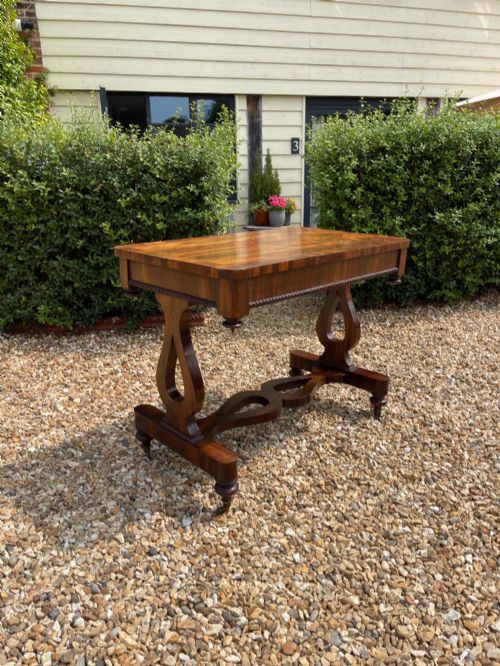
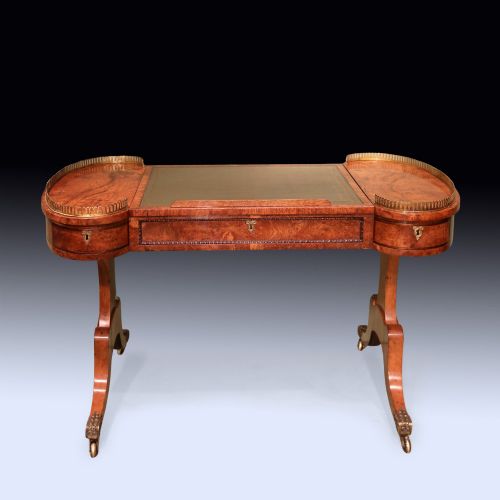
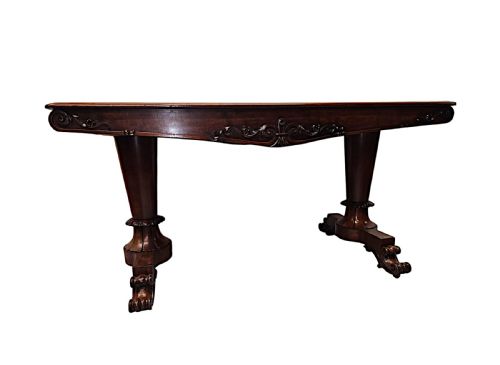
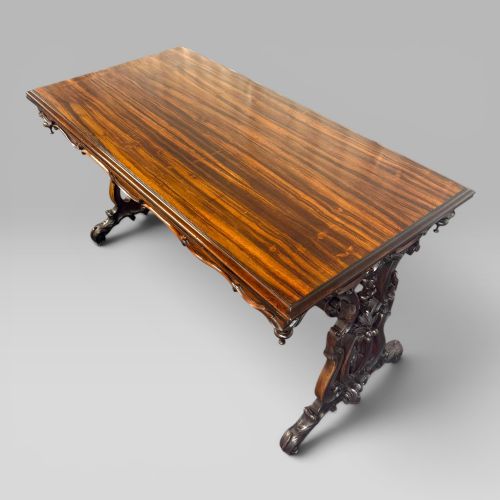
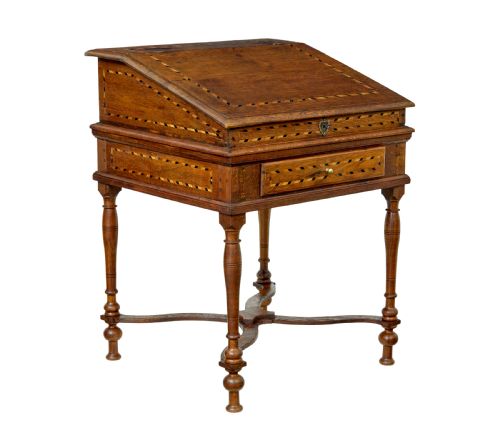
Makers utilised solid and veneered timbers predominantly in mahogany, rosewood, burr oak, and walnut, frequently accented with marquetry and brass fittings.
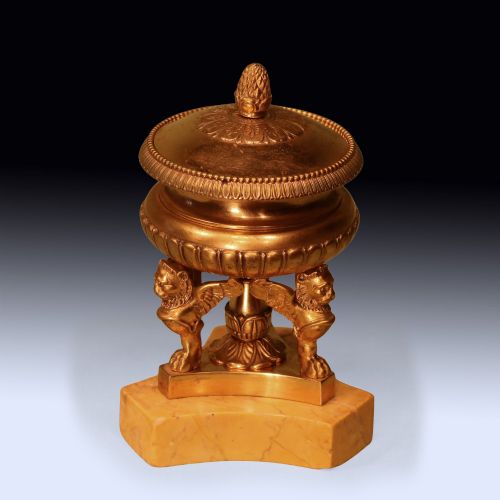
Writing surfaces incorporated tooled leather insets, while specific decorative elements relied on ormolu mounts, Sienna marble, and glass components.
Cabinetmakers joined structural elements using traditional hand-cut dovetails and pegged joints, integrating tambour mechanisms and folding leaves where functional versatility required.
The inventory spans multiple design phases from Georgian restraint through Regency elegance to Early Victorian utility.
Distinctions in Quality
The standard of a piece rests upon timber selection, evident in the depth of grain figures, flame mahogany patterns, and the book-matching of veneers across large surfaces.
Construction integrity defines upper-tier examples, shown through smooth drawer operation, original brass hardware, and precise marquetry inlay rather than surface finish alone.
Attribution to known makers or distinctive regional styles elevates certain pieces, separating standard utilitarian furniture from bespoke cabinetmaker output.
Williams and Gibton·Jean-Joseph Chapuis·Gillows of Lancaster
The Early 19th Century Writing Desk Glossary
- Partners desk
- A large double-sided desk designed for two people to work opposite one another, featuring drawers on both faces.
- Secretaire bookcase
- A tall cabinet combining a shelved upper bookcase with a fall-front desk drawer concealing pigeonholes and small drawers.
- Tambour
- A sliding shutter made from narrow vertical strips of wood glued to canvas, used to enclose desk compartments.
- Ormolu
- Gilded bronze used for decorative mounts and accents on furniture, popular during the Regency and French Empire periods.
- Davenport
- A compact box desk featuring a sloped writing lid with storage drawers opening to the side.
- Marquetry
- Decorative veneer patterns formed by fitting together thin pieces of wood, ivory, or shell to create pictorial designs.
Early 19th Century Writing Desk: Frequently Asked Questions
What is a tambour desk?
A tambour desk incorporates flexible wooden slats running in tracks to conceal the writing surface and interior compartments.
This mechanism offers a neat appearance when closed while providing secure storage for writing materials.
How do I identify a Regency writing table?
Regency writing tables typically exhibit classical proportions with architectural influences, Sabre legs, and restrained brass inlay.
They reflect the design trends active during the early decades of the nineteenth century.
Where should I place a library table?
Library tables work effectively as freestanding centrepieces in a room due to their finished backs and drawers accessible from multiple sides.
Ensure adequate clearance around the piece for chair movement and drawer access.
What distinguishes a Davenport desk?
A Davenport is a small, compact desk with a slanted top for writing and a set of drawers opening to one side.
Its space-saving footprint made it popular for parlour and bedroom use during the Victorian era.