

Early 19th Century Pedestal Table
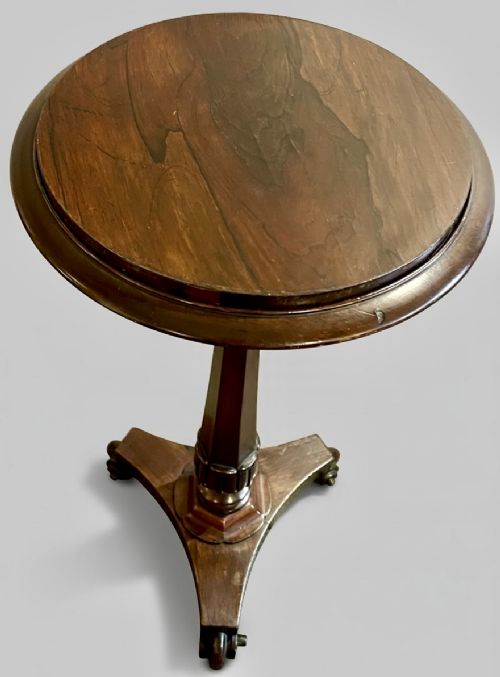
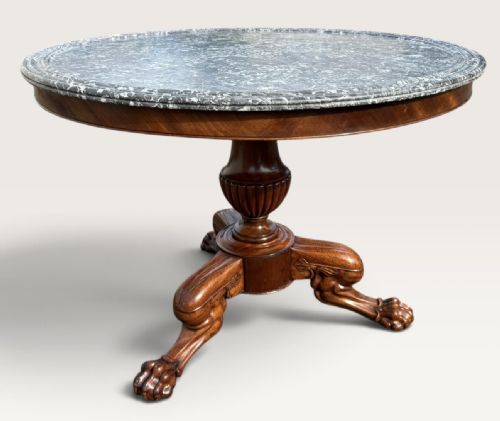
An early 19th century pedestal table brings solid mahogany, rosewood, and burr oak craftsmanship together to anchor a room with practical utility.
Early 19th Century Pedestal Table
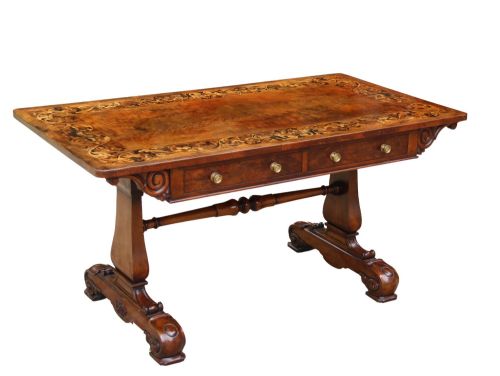
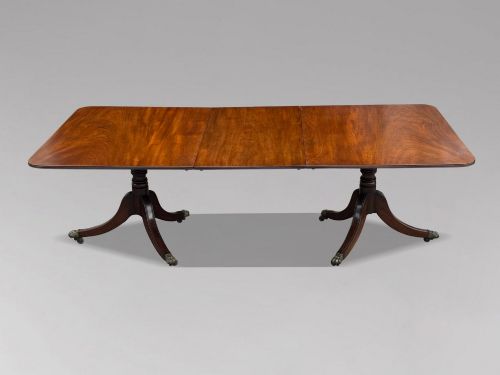
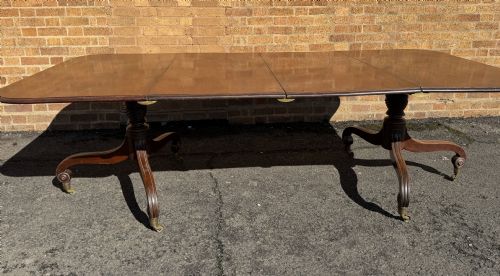
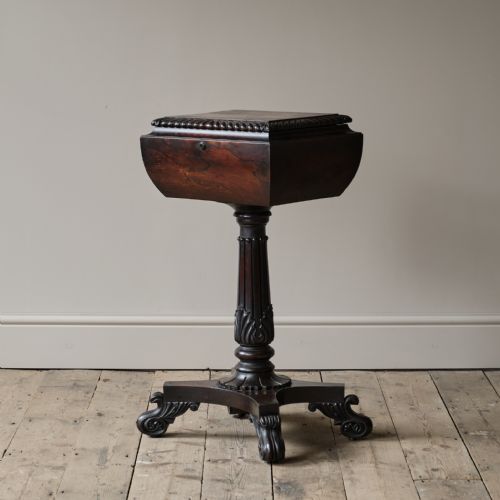
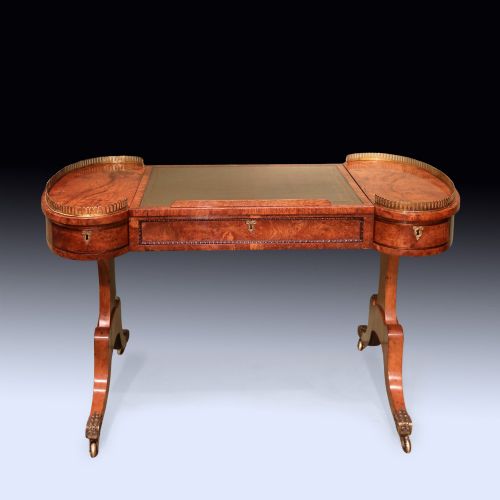
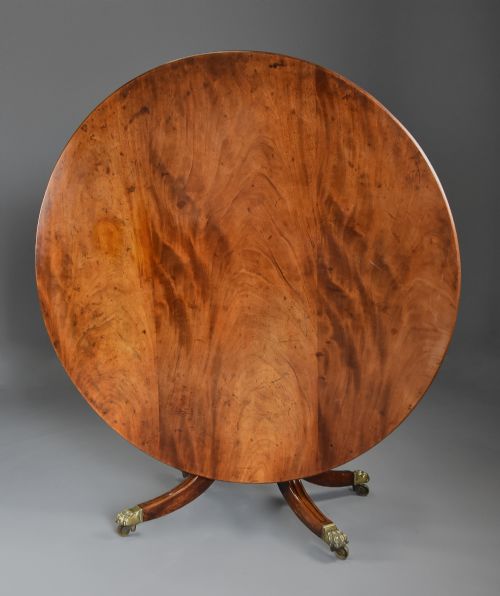
An early 19th century pedestal table encompasses dining tables, centre tables, occasional tables, library tables, and tea tables originating from Regency, Georgian, and Early Victorian periods. These pieces serve functional roles in domestic interiors, offering versatile formats from twin-pillar dining designs to tilt-top drum tables.
Makers and provinces stretch across English workshops, French provincial origins, Irish makers, and Scandinavian studios. Buyers encounter round centre dining tables, tripod bases, and swivel-top gaming formats reflecting the diverse social habits of the period.
Materials and Techniques
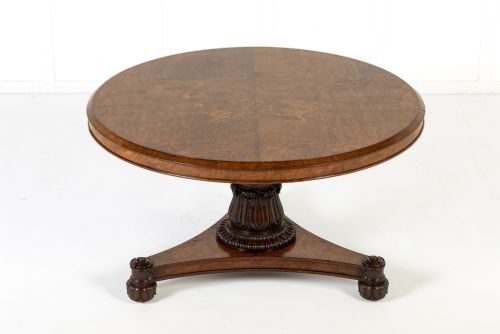
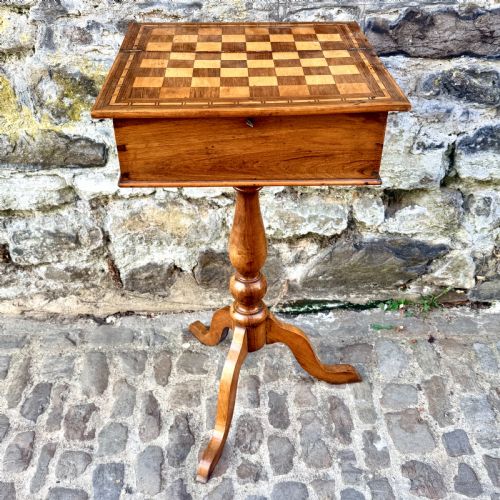
Cabinet makers utilised dense timbers including mahogany, rosewood, burr oak, pollard oak, fruitwood, and burr root maple, frequently selecting figured veneers to create striking table tops. Brass fittings, leather inserts, and marble tops appear on specific library and bistro variations.
Construction relies on stable pillar and tripod supports, tilt-top mechanisms, and folding leaf hinges. Joinery techniques from the era ensure the central pedestal bears the weight of large extending dining formats and heavy drum tables.
Early 19th Century Pedestal Table Retail Price Guide 2026
Typical asking prices for early 19th century pedestal table among the pieces listed under this phrase on Sellingantiques today, from the lower quarter to the upper quarter. They describe what is for sale here now, not the wider market.
Some library tables contain secret rotating compartments designed to keep midnight reading material entirely out of sight.
Distinctions in Execution
The degree of refinement in timber selection separates standard utilitarian items from exceptional examples, particularly in the choice of figured burr oak, pollard oak, or matched rosewood veneers. Finely turned pedestals, crisp carving, and original brass castors indicate higher workshop standards.
Proportion and structural integrity define the upper tier of these tables. Well-balanced tripod bases and smoothly functioning tilt or swivel mechanisms demonstrate superior historical craftsmanship.
Williams and Gibton
The Early 19th Century Pedestal Table Glossary
- Drum table
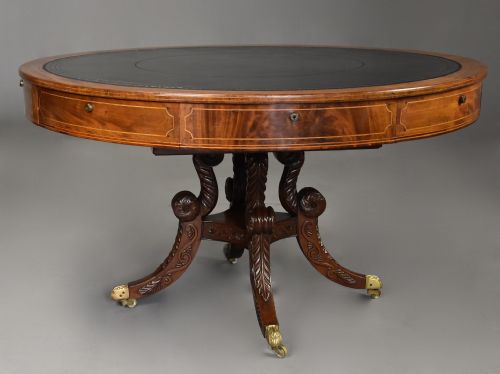
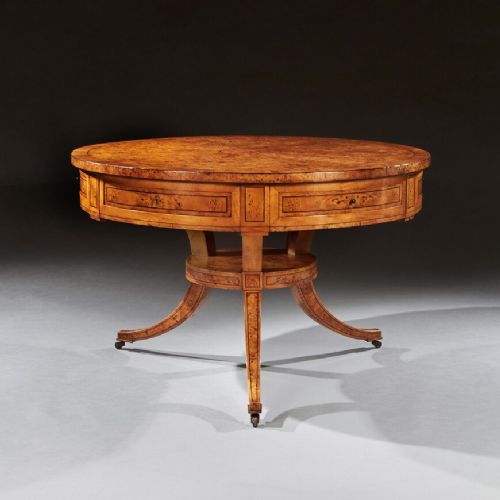
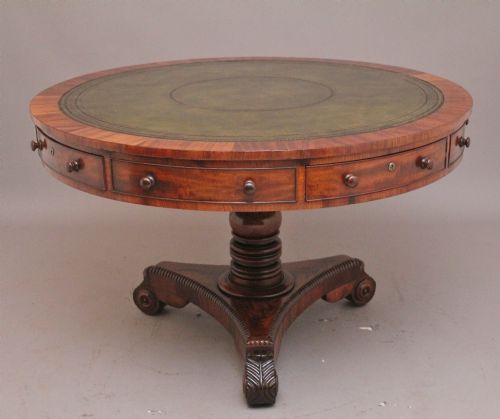
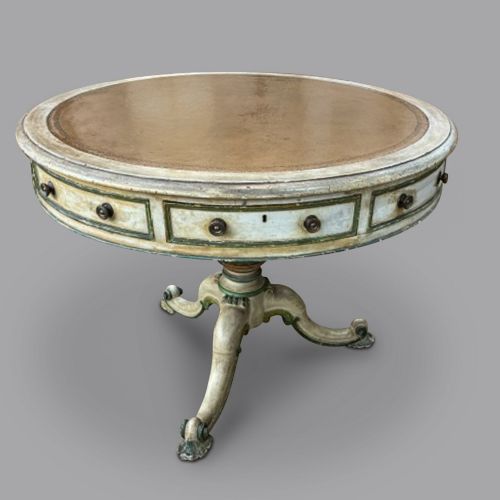
- A round library table with a deep top containing drawers, usually supported on a central pillar and tripod base. These tables were designed for sorting papers and reading in studies.
- Tilt-top table
- A table featuring a mechanism that allows the top to pivot vertically when not in use, saving space in domestic rooms. This design appears frequently on tripod and breakfast tables.
- Twin pedestal table
- A dining table supported by two separate central pillars rather than four corner legs, allowing greater legroom for diners. These tables often incorporate extending leaves.
- Centre table
- A freestanding table designed to be viewed from all sides and placed in the middle of a room rather than against a wall. Examples from this era include French gueridon and rosewood pedestal formats.
- Boxwood-strung
- Inlaid with narrow strips of contrasting boxwood to create delicate decorative borders along table edges and legs. This technique is typical of Regency cabinet work.
Early 19th Century Pedestal Table: Frequently Asked Questions
How were pedestal tables used originally?
These tables served specific domestic functions depending on their form, such as dining, tea service, gaming, or holding books in a library.
Larger twin pedestal versions accommodated guests for formal meals, while smaller tripod and drum tables stood in drawing rooms and studies for daily correspondence.
Where should I place a centre table?
A centre table is designed to stand freely in the middle of a room rather than pushed against a wall, displaying its finish from all angles.
Rooms with adequate circulation space allow these pieces to function as a focal point for lamps, books, or decorative objects.
How do I distinguish Regency from Victorian examples?
Regency pieces often display restrained classical lines, boxwood stringing, and elegant rosewood or mahogany veneers dating from the early decades of the century.
Victorian pieces tend to be heavier in proportion, utilising darker rosewood or walnut with more robust carving and wider bases.
What is a tilt-top mechanism used for?
The tilt-top mechanism allows the table top to be locked in a vertical position when not in use.
This practical feature enabled historical households to store tables flat against walls to clear floor space for other activities.