
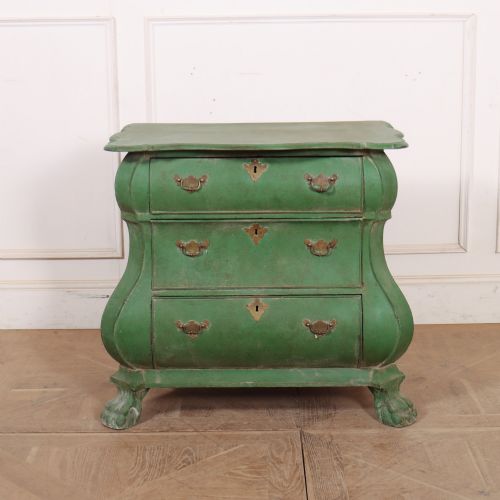


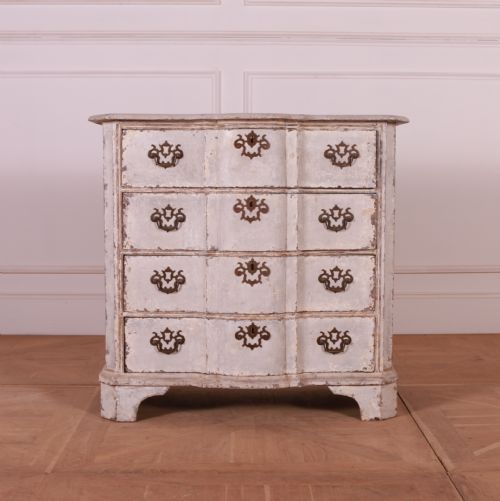
Dutch Serpentine Chest
A Dutch serpentine chest brings bold continental curves and rich timber figure into a room.
Dutch Serpentine Chest
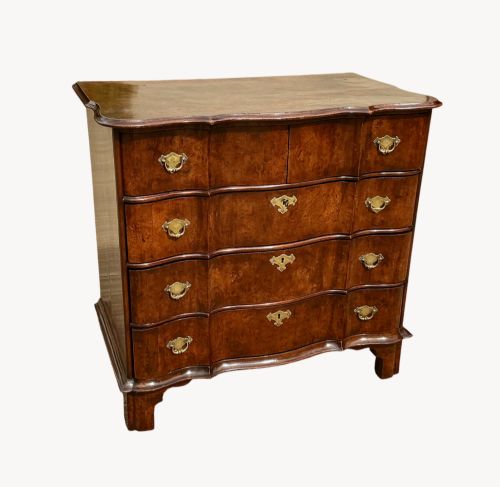
A Dutch serpentine chest presents a distinctively curved front that sweeps outward and inward across the drawer tiers. These striking pieces emerge across the eighteenth and nineteenth centuries, spanning eras from the Georgian period through the Victorian age.
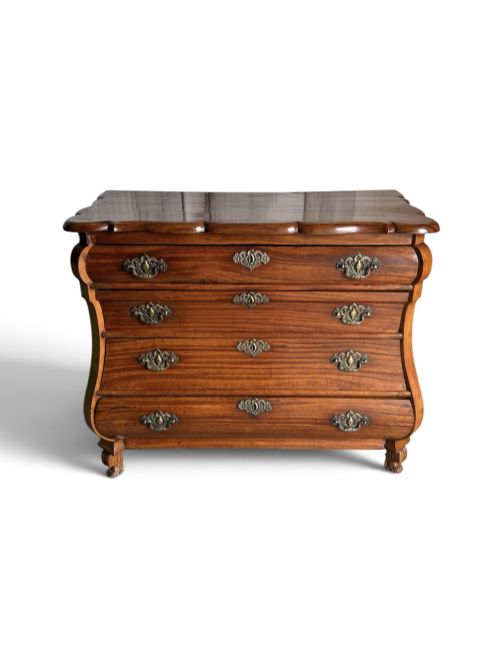
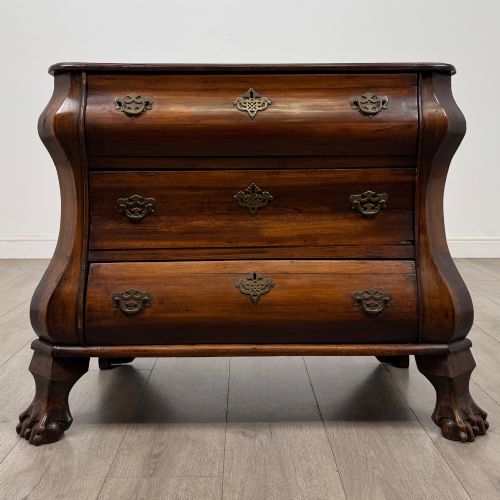
The most common form met on this page is the bombe commode, where the sides and front swell outward in a pronounced convex curve. Alongside these swollen silhouettes, plainer serpentine and shaped-front chests appear in native and imported timbers.
How they were made
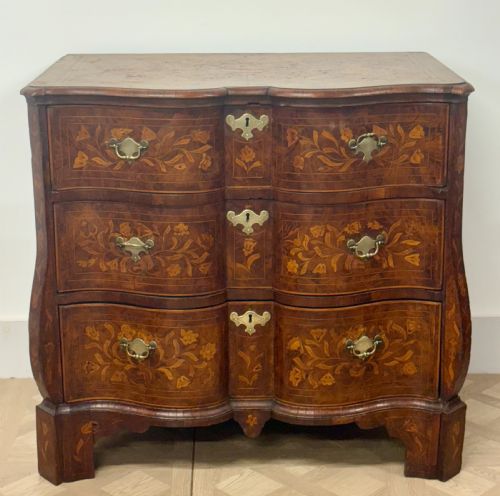
Cabinetmakers constructed these forms using robust primary woods such as oak and pine for the carcase frames, applying expensive face veneers over top. Walnut, mahogany, and burr elm provide the primary visual surfaces, often enriched with intricate floral marquetry.
Brass handles and escutcheons secure the drawer fronts, matched to the specific period style from Rococo cast mounts to later hardware. Surface finishes rely on traditional polish or paint, with several examples finished in painted wood or solid satinwood.
What varies in quality
The ambition of the timber selection dictates much of the visual success, particularly where lively burr walnut or dense floral marquetry covers the entire facade. Finely handled serpentine sweeps require absolute precision in the underlying joinery to maintain smooth drawer movement across the curved planes.
Original mounts and undisturbed surface patination elevate certain examples above those with later replacements. The complexity of the bombe swell, especially when combined with elaborate parquetry or marquetry, separates standard production from masterwork cabinetmaking.
The Dutch Serpentine Chest Glossary
- Bombe
- A swollen, bulging contour found on the sides and fronts of continental furniture. This curving profile requires advanced framing techniques to stabilise the timber against natural movement.
- Serpentine
- A shaped furniture front featuring a convex centre flanked by concave curves. This undulating line creates dynamic play of light across polished wood surfaces.
- Marquetry
- Decorative patterns formed by fitting together thin slices of various coloured woods into a veneer. Floral motifs are particularly characteristic of eighteenth-century Dutch cabinetwork.
- Commode
- A low chest of drawers, generally standing on short legs or feet. The term originates from French furniture terminology widely adopted across continental workshops.
- Escutcheon
- A protective metal plate surrounding a keyhole. These hardware elements range from simple brass shields to elaborate rococo cast brass mounts.
Dutch Serpentine Chest: Frequently Asked Questions
Where should I place a Dutch serpentine chest?
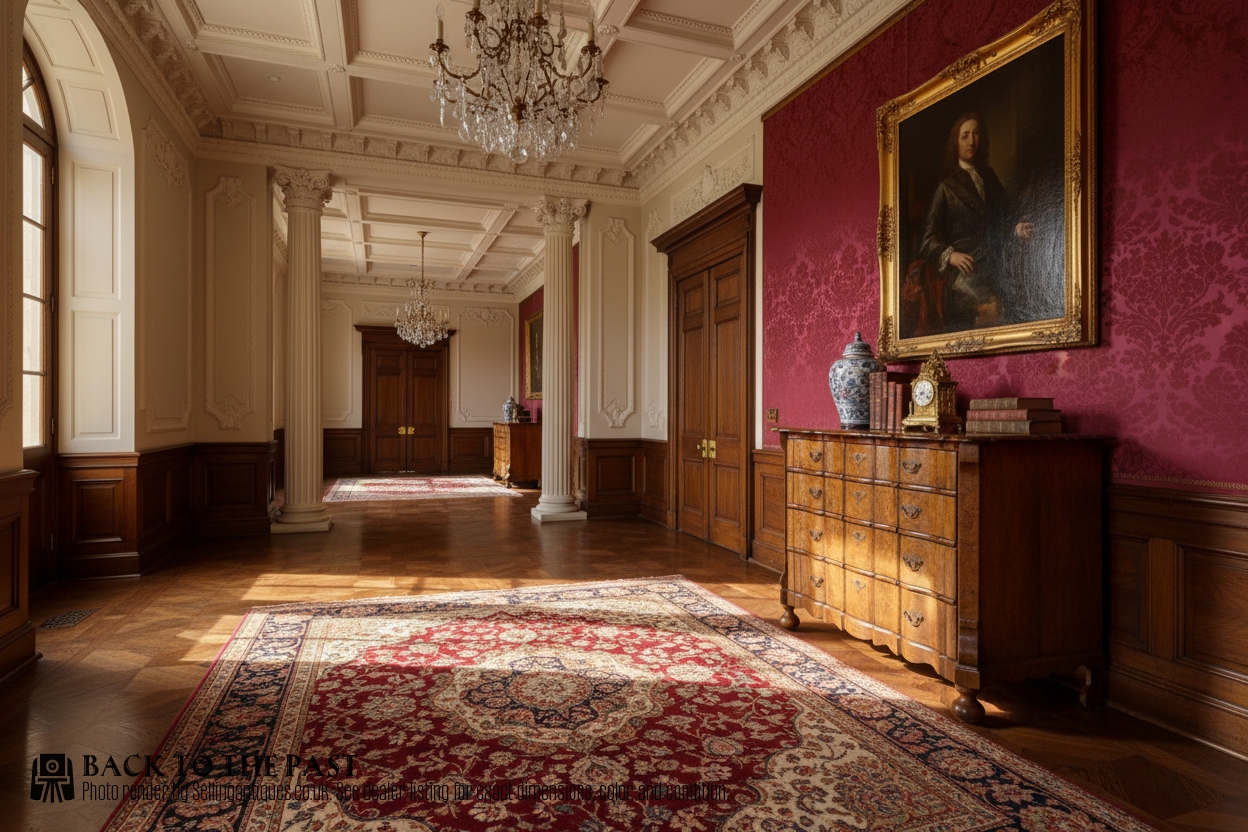
These chests suit entrance halls, reception rooms, or bedrooms where their sculptural curves can be appreciated from multiple angles. Their deep profiles require adequate floor space away from narrow thoroughfares.
Because of their decorative surfaces, keeping them out of direct sunlight preserves the rich tones of the walnut, mahogany, or marquetry inlay over time.
How do I care for the timber surface?
Routine maintenance involves dusting with a soft, dry cloth to prevent particulate accumulation on the polished wood or painted finishes. Avoid modern silicone sprays that can penetrate old finishes and attract grime.
Applying a traditional beeswax polish periodically nourishes the timber and maintains the subtle sheen expected on antique furniture.
How do I distinguish eighteenth-century pieces from later revivals?
Eighteenth-century examples typically display hand-cut dovetails, oak secondary framing, and timber shrinkage appropriate to age. The hand-carved details and natural patination develop distinct characteristics over generations of use.
Nineteenth-century revival pieces often utilise machine-sawn components and standardised hardware, though they still employ traditional veneering methods.
Are the drawers on a bombe chest difficult to use?
The curved fronts mean that drawer interiors follow the exterior swell, creating deep central cavities with narrower sides. Operating them simply requires a straight pull to clear the curved drawer sides.
Well-fitted historical pieces glide smoothly within their carcases once adjusted to the ambient humidity of a home.