



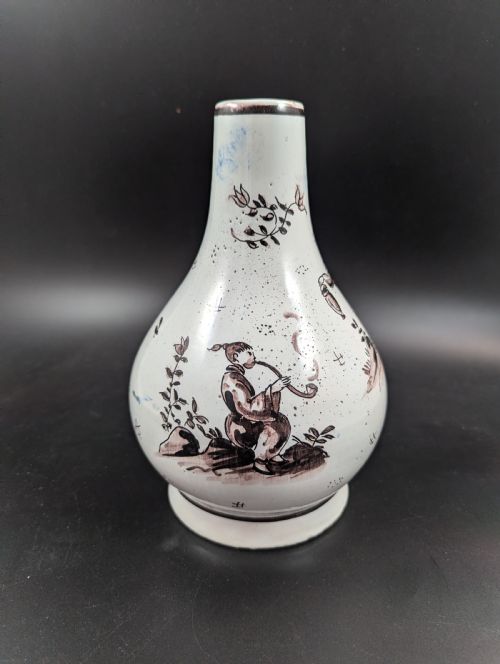
Dutch Pottery Vessel
These dutch pottery vessel examples range from seventeenth-century slipware to eighteenth-century delftware, bringing historic ceramic tradition straight into your home.
Dutch Pottery Vessel
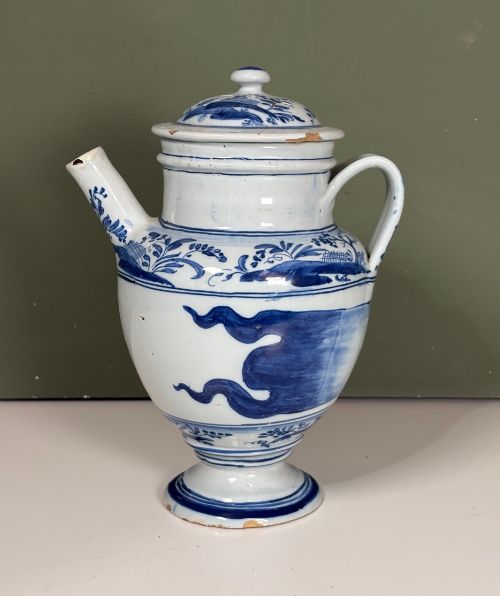
A dutch pottery vessel encompasses an array of historic forms including apothecary jars, bough pots, posset pots, and puzzle jugs. These items showcase the domestic and decorative uses of ceramics across three distinct centuries.
The pieces on this page lean heavily towards eighteenth-century delftware alongside seventeenth-century slipware and nineteenth-century vases. Buyers frequently encounter tin-glazed earthenware decorated in characteristic styles such as Dutch Delft.
Makers utilised earthenware, porcelain, and ceramic bodies finished with tin glaze, lead glaze, and enamel. Influences stretch from local Dutch baroque aesthetics to Chinese export patterns.
Materials and construction
Potters shaped earthenware and ceramic bodies by hand, often applying a tin glaze or lead glaze to the surface. These wet glazes provided a smooth white ground suitable for subsequent enamel painting.
Slipware pieces relied on liquid clay applied to a coarser body to create contrasting surface patterns before firing. Advanced examples incorporated specialised forms like perforated lids for bough pots or intricate internal channels for puzzle jugs.
Dutch Pottery Vessel Retail Price Guide 2026
Typical asking prices for dutch pottery vessel among the pieces listed under this phrase on Sellingantiques today, from the lower quarter to the upper quarter. They describe what is for sale here now, not the wider market.
Listings span the seventeenth, eighteenth, and nineteenth centuries, featuring earthenware, porcelain, and tin glaze.
Assessing quality and character
Quality reveals itself in the crispness of the painted enamel decoration and the evenness of the tin glaze or lead glaze. Finer vessels display confident brushwork and balanced proportions across complex forms like posset pots and apothecary jars.
The historical significance of the period, ranging from seventeenth-century slipware to mid-eighteenth-century delft, heavily influences the character of each piece. Superior examples maintain their original lids and structural integrity despite centuries of handling.
The Dutch Pottery Vessel Glossary
- Delftware
- Tin-glazed earthenware produced in the Netherlands, notably in towns like Delft, featuring an opaque white glaze.
- Slipware
- Pottery decorated with a thin mixture of clay and water called slip, applied before firing to create patterns.
- Posset pot
- A historic vessel with spouts and handles, used for serving a spiced milk and wine drink during social gatherings.
- Bough pot
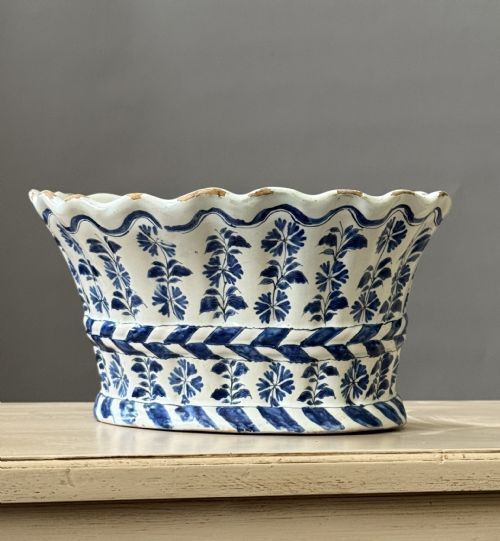
- A specialised ceramic container designed to hold cut branches or flowers, often featuring multiple spouts on the lid.
- Puzzle jug
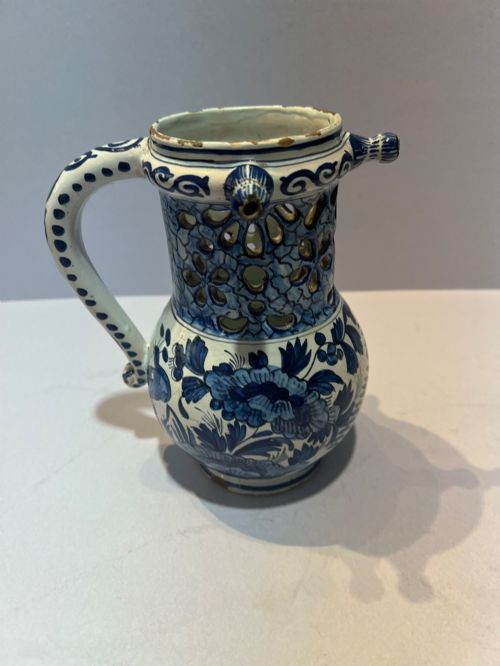
- A vessel with a perforated neck and misleading passages that challenge the drinker to consume the contents without spilling.
Dutch Pottery Vessel: Frequently Asked Questions
What is a dutch pottery vessel used for?
These vessels served various domestic and decorative purposes, from storing dry goods in apothecary jars to displaying cut flowers in bough pots.
Posset pots and puzzle jugs fulfilled social functions during meals and gatherings, while large vases provided purely ornamental displays in historic interiors.
How do I date a dutch pottery vessel?
Dating relies on stylistic clues, potting techniques, and materials such as tin-glazed earthenware or lead-glazed slipware.
Seventeenth-century pieces often feature heavier slipware bodies, whereas eighteenth-century examples frequently showcase refined delft tin glaze and enamel painting.
What is clobbered porcelain?
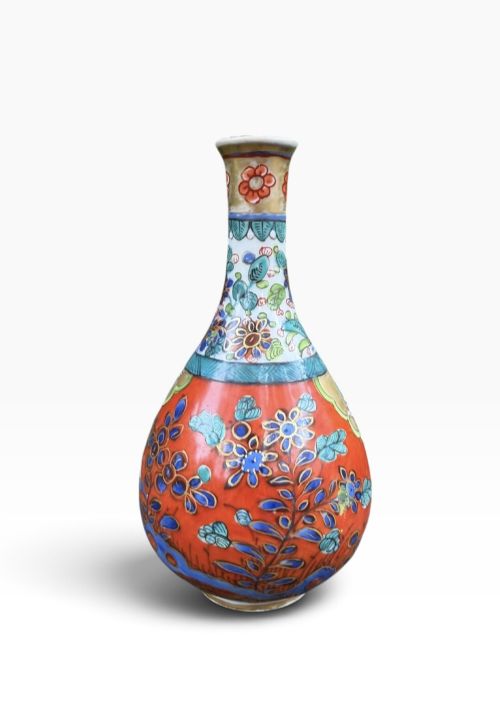
Clobbered porcelain refers to older Chinese export pieces that received secondary overglaze enamel decoration in Europe, often in Dutch workshops.
This practice added vibrant colours to earlier blue-and-white imports to satisfy changing European tastes.