





Dutch Mahogany Chest
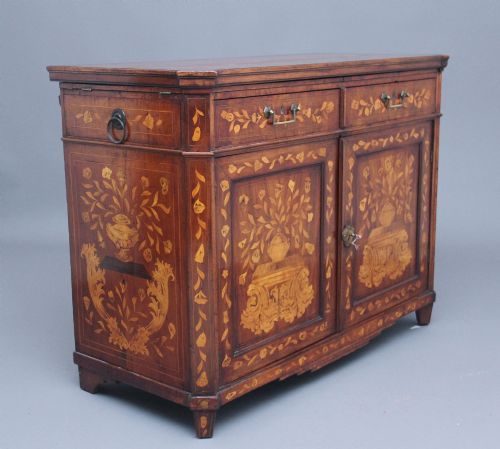
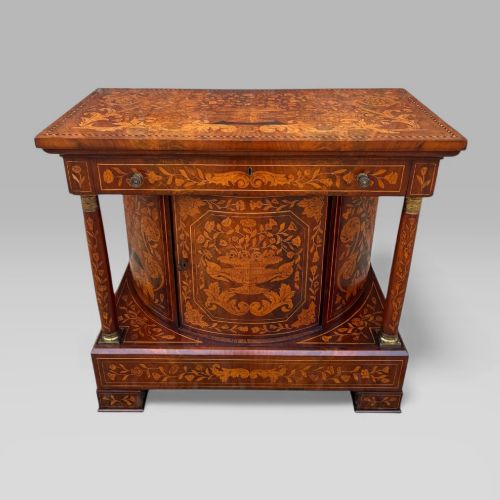
A Dutch mahogany chest brings unmistakable continental presence into a room, combining architectural form with intricate floral marquetry.
Dutch Mahogany Chest
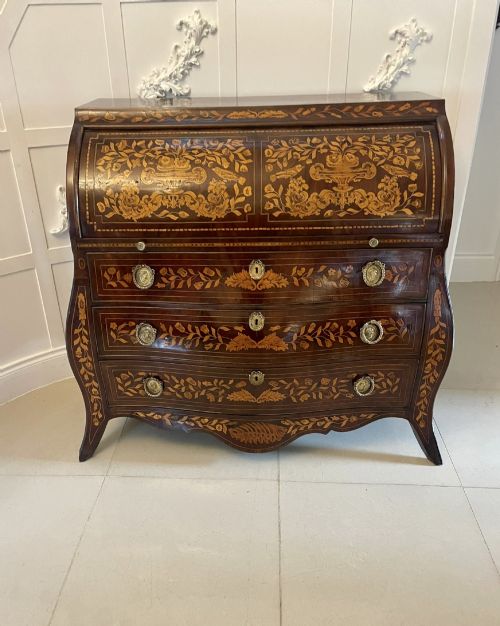
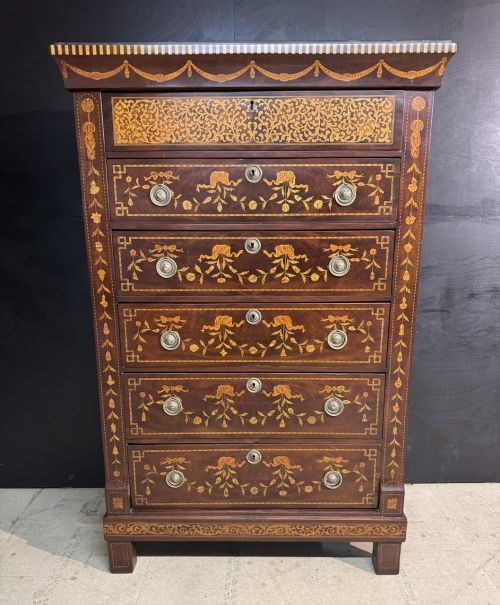
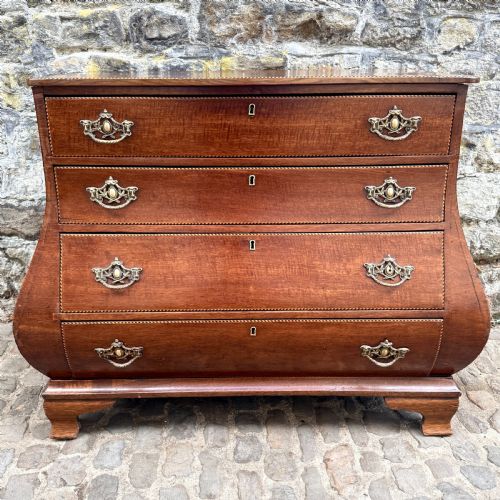
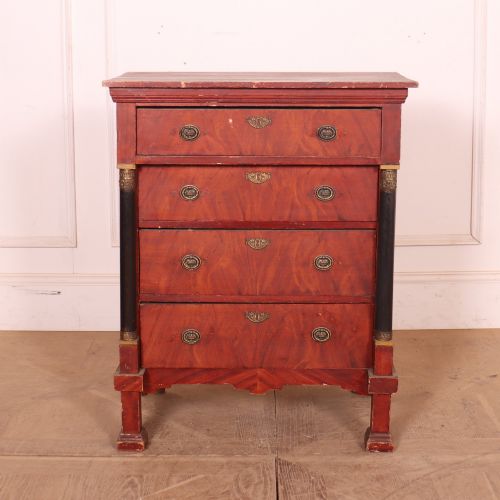
When searching for a dutch mahogany chest, a buyer encounters pieces primarily spanning the eighteenth and nineteenth centuries, including distinct bombe profiles and tall drawer configurations. These items originate from periods encompassing Dutch Baroque, Rococo, Neo-Classical, and Empire styles, often enriched with detailed marquetry.
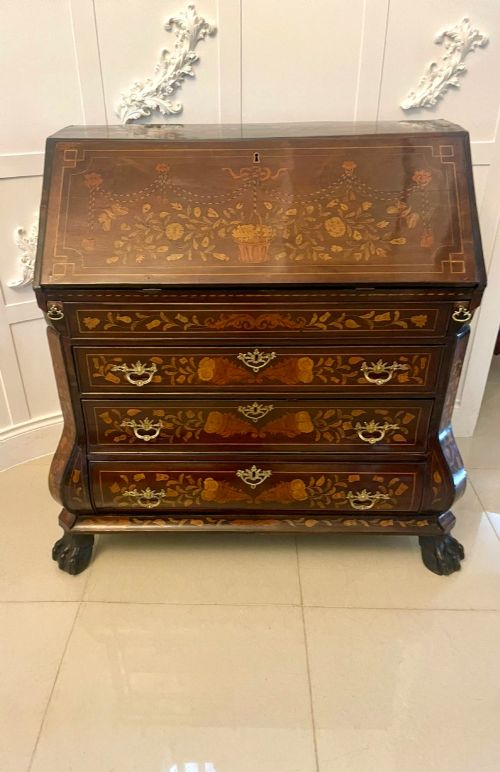
The version most frequently met on this page is the eighteenth-century drawer chest or bureau adorned with floral marquetry inlay, frequently resting upon claw feet. Alongside these, travellers' cabinets, dressing tables, console tables, and secretaire cabinets appear in mahogany, sometimes incorporating fruitwood, walnut, and boxwood details.
Makers and craftsmen of these periods utilised dense timbers and elaborate veneering techniques to create storage furniture that functioned equally as decorative focal points. The selection balances larger tall chests with neat-sized nineteenth-century examples and Edwardian interpretations.
How they were made
Cabinet makers constructed these pieces using a foundation of solid mahogany or secondary woods, upon which elaborate veneers of fruitwood, boxwood, and walnut were applied. Floral marquetry designs were meticulously hand-cut and pieced together before being set into the primary surfaces.
Bombe shapes required advanced woodworking skills to achieve the characteristic outward sweep and curved drawer fronts. Brass hardware, including handles and escutcheons, complemented the rich grain of the timber and the precision of the inlay.
Dutch Mahogany Chest Retail Price Guide 2026
Typical asking prices for dutch mahogany chest among the pieces listed under this phrase on Sellingantiques today, from the lower quarter to the upper quarter. They describe what is for sale here now, not the wider market.
Some chests stand on elaborate claw feet, giving heavy mahogany storage a surprisingly nimble stance.
What varies in quality
The sophistication of the floral marquetry dictates much of the distinction between pieces, with finer examples displaying exceptional shading and variety in the fruitwood and boxwood inlay. The crispness of the carving on claw feet and the fluidity of the bombe contouring also separate standard cabinetwork from master production.
Structural integrity, the retention of original brass mounts, and the preservation of the polished mahogany surface influence the standing of an item. Superior examples maintain the alignment of intricate drawer fronts and the original harmony of the contrasting wood veneers.
The Dutch Mahogany Chest Glossary
- Bombe
- A swelling or bulging curved profile characteristic of eighteenth-century continental furniture. This contoured shape demands high technical skill from the cabinet maker.
- Marquetry
- Decorative veneer work forming pictures or patterns using various coloured woods. In these pieces, floral and foliage motifs dominate.
- Secretaire
- A cabinet or chest incorporating a writing drawer with a drop-down front and internal compartments. It combines storage with a compact desk facility.
- Escutcheon
- A protective plate surrounding a keyhole, often made from brass on these pieces. It serves both a functional and a decorative purpose.
Dutch Mahogany Chest: Frequently Asked Questions
How do I clean a dutch mahogany chest?
Dust the surfaces regularly with a soft, dry cloth to prevent particulate build-up in the intricate marquetry and carved sections. Avoid modern silicone sprays or harsh chemical polishes.
Apply a traditional beeswax occasionally to nourish the mahogany and preserve the natural sheen of the wood. Keep the piece away from direct heat sources and strong sunlight to protect the delicate fruitwood inlay.
What is a bombe profile?
A bombe profile refers to furniture with convex, outward-curving sides and fronts that swell gracefully towards the base. This shape creates a substantial, sculptural silhouette.
Crafting this contour required exceptional joinery expertise to bend and shape the solid timbers and veneers without compromising structural strength.
Are these chests suitable for modern bedrooms?
These chests offer generous drawer capacity and a striking visual anchor that suits contemporary bedroom layouts. Their rich timber tones mix well with various interior schemes.
Consider the depth and overall footprint of the piece, particularly if looking at bombe or tall chest variations which require adequate floor clearance.
How do I distinguish eighteenth-century pieces?
Eighteenth-century examples typically display hand-cut floral marquetry, denser mahogany grains, and specific regional construction methods like hand-beveled drawer linings. Stylistic cues align with Baroque, Rococo, or Neo-Classical design periods.
Later nineteenth-century and Edwardian pieces often replicate these earlier forms but can feature machine-sawn veneers or different secondary wood choices upon closer inspection.