


Dutch Impressionist Painting
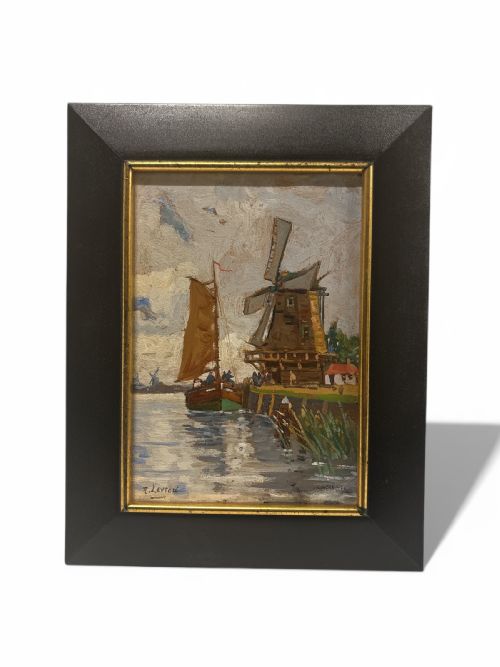
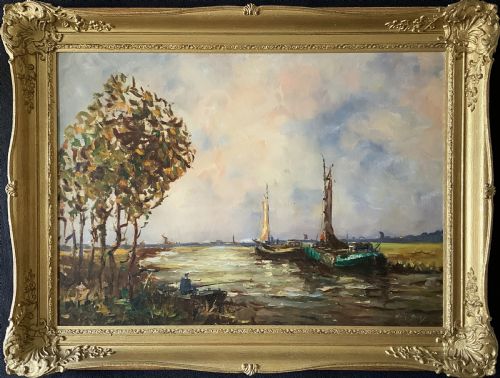
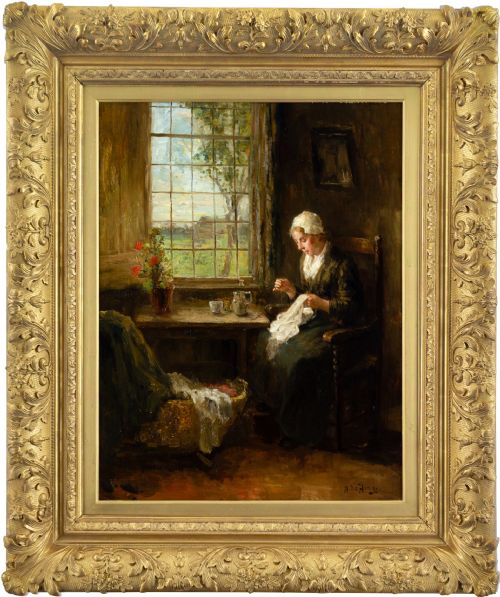
A dutch impressionist painting brings atmospheric light and loose brushwork into a room, capturing rural canals, quiet interiors, and coastal harbours.
Dutch Impressionist Painting
When searching for a dutch impressionist painting, collectors encounter works executed primarily in oil paint on canvas, board, and panel, alongside watercolours. The selections span from the late nineteenth century through the Edwardian era and into the mid-twentieth century.
The most common subjects met on this page include rural landscapes, polders, canal scenes, sheep grazing, and domestic interior views. Many pieces reflect the Hague School tradition or related post-impressionist movements originating from the Netherlands and neighbouring regions.
Materials and construction
Artists applied oil paint and watercolour onto stretched canvas, wooden panels, and canvas boards, frequently framing the finished works in gesso and gilt wood mouldings finished with gold leaf. The physical support often dictates the texture of the brushwork, with wooden panels offering a smooth resistance to the bristles.
The technique relies on broken colour and visible, expressive brush strokes rather than rigid academic finish. Pigments were layered to capture shifting natural light upon water, pasture, and sky.
Several canvases faithfully record stubborn sheep refusing to leave muddy paths, reminding us that Dutch weather has tested livestock for centuries.
Factors of quality
Quality rests in the handling of light and the confidence of the mark-making, distinguishing observant tonal harmony from stiff or formulaic composition. Stronger examples demonstrate a distinct command of atmosphere, where the paint surface breathes and holds the viewer's eye.
The integration of the frame, often period gilt wood, contributes to the integrity of the piece. Works that retain their original stretcher bars and uncompromised paint layers command greater interest among serious collectors.
Bernard De Hoog·Willem Bos·Willem Anton Alexander Knip·Jozef Israëls·Anthonij Anton Mauve·Julien Stappers
The Dutch Impressionist Painting Glossary
- Hague School
- A group of nineteenth-century Dutch artists who painted in a realistic, tonal style influenced by the French Barbizon school. Their work laid the groundwork for later impressionist approaches in the Netherlands.
- Polder
- A low-lying tract of land enclosed by dikes that forms an artificial hydrological system. It is a recurring subject in Dutch landscape painting.
- Gesso
- A primer mixture consisting of a binder mixed with chalk, gypsum, or pigment used to prepare wood panels or frames before gilding or painting. It provides a smooth, stable surface.
- Gilt wood
- Wood that has been coated with a thin layer of gold leaf or metallic powder. Antique frames often utilise this finish to complement warm tones in oil paintings.
- Post-Impressionism
- An art movement that developed from impressionism, extending its use of vivid colours and thick application while placing greater emphasis on geometric forms or expressive weight.
Dutch Impressionist Painting: Frequently Asked Questions
What is a dutch impressionist painting?
These works are oil or watercolour paintings created by artists working in the Netherlands or under Dutch influence, focusing on light, atmosphere, and everyday rural or urban scenes.
They capture specific moments in time through loose brushwork and tonal colour palettes rather than strict academic detail.
How should I hang my painting?
Select a wall away from direct sunlight and damp conditions to protect the oil paint and the gilt wood frame.
Ensure the piece is hung securely at eye level using appropriate fixings suited to the weight of the frame and canvas.
How do I identify the period?
Examine the stretcher bars, the canvas type, and the framing style, alongside any signatures or labels on the reverse. Early works from the nineteenth century often feature heavier wooden stretchers and hand-carved gilt frames.
Were these paintings used in homes?
Historically, these oil paintings and watercolours were acquired by middle-class collectors and displayed in domestic reception rooms and parlours.
They brought the natural landscape and pastoral calm of the Dutch countryside directly into urban domestic interiors.