

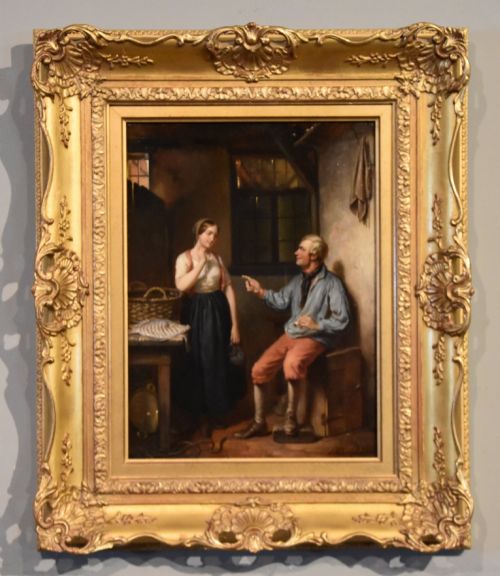
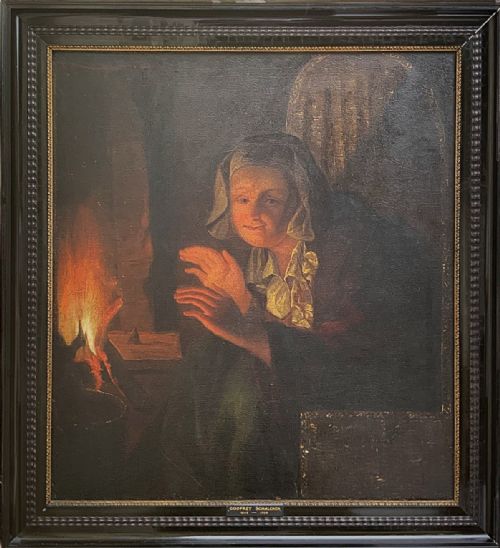
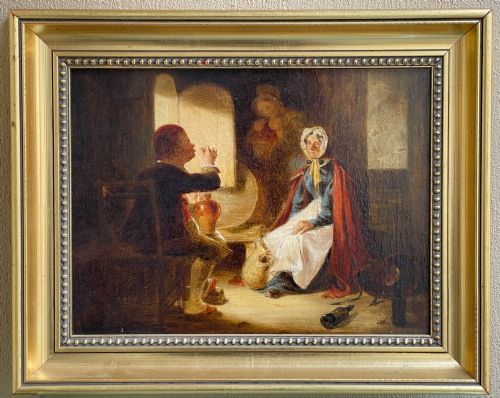


Dutch Genre Oil Painting
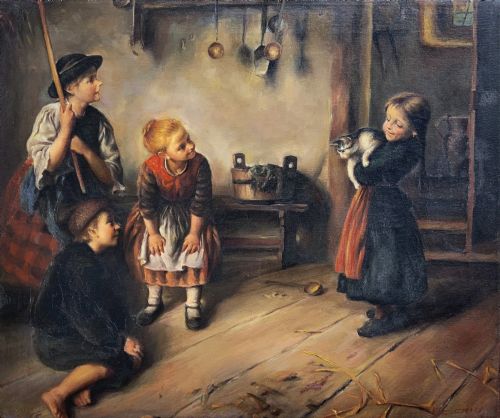
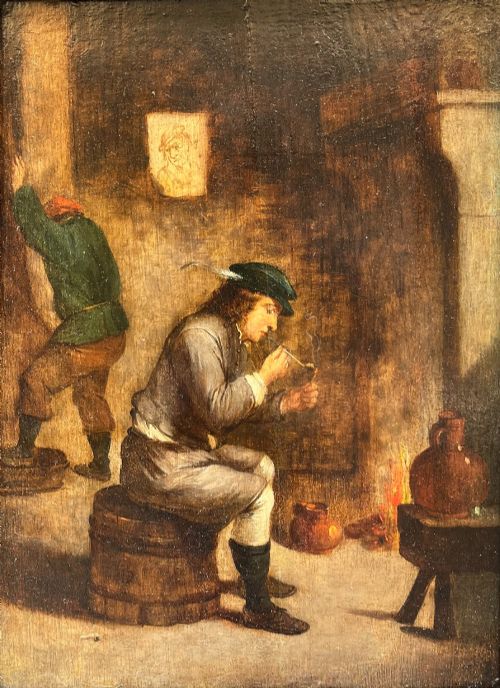
A dutch genre oil painting captures domestic interiors, tavern scenes and peasant life, offering a tangible window into past European domesticity.
Dutch Genre Oil Painting
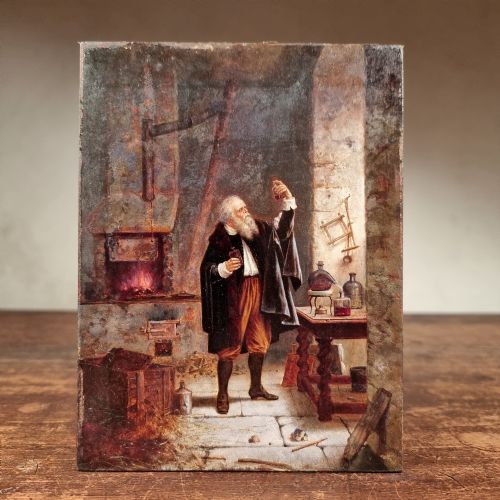
A dutch genre oil painting depicts scenes of everyday life, focusing on ordinary people at work, rest or socialising within domestic or public spaces. These works range from seventeenth-century golden age compositions to nineteenth-century interpretations and mid-century examples.
The most common subjects encountered include tavern interiors, musicians, spinners, children and kitchen scenes executed on canvas, wood panels or copper supports. Such pieces reflect regional artistic traditions celebrating human activity without idealised heroics.
How They Were Made
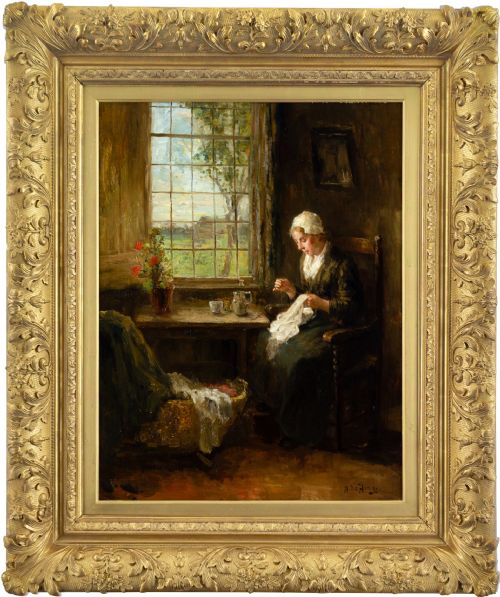
Painters applied oil paint to stretched canvas, prepared wooden panels, copper plates or tin sheets, often building layers to achieve rich tonal depth. Frames constructed from giltwood with gesso ornamentation frequently accompanied these artworks.
Techniques varied from meticulous seventeenth-century Dutch golden age precision to looser nineteenth-century realism and the Hague school approach, utilising distinct brushwork to render fabrics, light and shadow.
Listings feature works spanning the seventeenth, eighteenth and nineteenth centuries, alongside mid-century interpretations.
What Varies in Quality
Quality rests upon the confidence of the brushwork, the anatomical proportions of the figures and the handling of light within the interior or landscape setting. Superior examples display subtle tonal modulation and convincing spatial depth rather than flat, mechanical application.
The preservation of the original paint surface and support materially influences the standard of the piece. Works retaining crisp detail and minimal overpainting command greater appreciation among collectors.
David Teniers·Bernard De Hoog·Jacob Akkersdijk·Godfried Schalcken·Jan Cossiers·Joachim Bueckelaer·Quirijn Van Brekelenkamp·Jozef Israëls·Ludolf de Jongh·Christoffel Bisschop·Willem Johannes Martens·Karel Frans Philippeau·Reinier de la Haye·Jan Steen·Bartholomeus Van der Helst
The Dutch Genre Oil Painting Glossary
- Genre painting
- The pictorial representation of scenes from everyday life involving ordinary people. This category excludes formal portraiture, landscape and historical narrative.
- Panel painting
- An artwork executed on a flat piece of wood rather than canvas. Oak was frequently utilised in earlier European traditions.
- Giltwood
- Wood that has been coated with a thin layer of gold leaf or gold paint. It appears widely on traditional picture frames.
- Gesso
- A plaster-like mixture applied to wood or canvas as a base for painting or gilding. It provides a smooth surface for the artist.
- Oil on copper
- A technique where artists painted directly onto a prepared copper sheet. This support offers an exceptionally smooth surface preserving fine detail.
Dutch Genre Oil Painting: Frequently Asked Questions
What is a dutch genre oil painting?
A dutch genre oil painting depicts everyday scenes involving ordinary people, such as tavern gatherings, domestic chores or musical performances. These artworks document social habits and interiors from various historical periods.
Artists utilised oil pigments on canvas, wood panels or copper plates to achieve lasting colour and depth. The style originated in the Netherlands during the golden age and inspired later European schools.
How do I identify the period?
Dating relies upon examining the support material, framing style and artistic technique visible in the brushwork. Seventeenth-century pieces often use oak panels, whilst nineteenth-century works frequently appear on canvas.
Subject matter and costume details also provide clues regarding the era of creation. Comparative study of known artist signatures and historical handling helps narrow the timeframe.
How were these paintings displayed?
Historical interiors accommodated these artworks within domestic rooms, often housed in decorative giltwood frames with gesso mouldings. They served as conversation pieces and demonstrations of refined taste.
Today, collectors hang them in residential settings alongside traditional or contemporary furnishings. Proper placement avoids direct sunlight to protect the fragile oil pigments.
Are these paintings original?
Listings comprise period originals, nineteenth-century copies after older masters, and works created in the manner of established painters. Documentation and stylistic analysis distinguish contemporary creations from historical pieces.
Evidence of age appears in the natural craquelure of the oil paint and the oxidation of underlying supports. Professional examination confirms the physical integrity of the canvas or panel.