



Domestic Scene Fine Art
These domestic scene fine art works capture quiet household moments and family life, offering a charming window into historical interiors.
Domestic Scene Fine Art
Domestic scene fine art captures indoor life, family moments, and household tasks across various historical periods. These paintings portray everyday settings such as cottage interiors, dining rooms, and firesides, often focusing on figures engaged in simple daily routines. Such works provide a fascinating visual record of past domestic habits, clothing, and interior decoration.
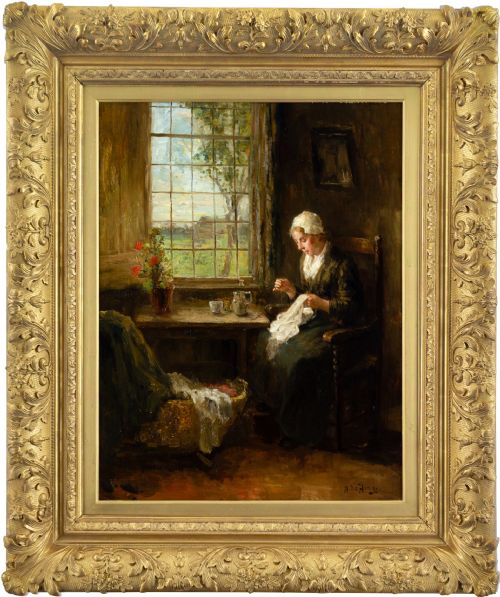
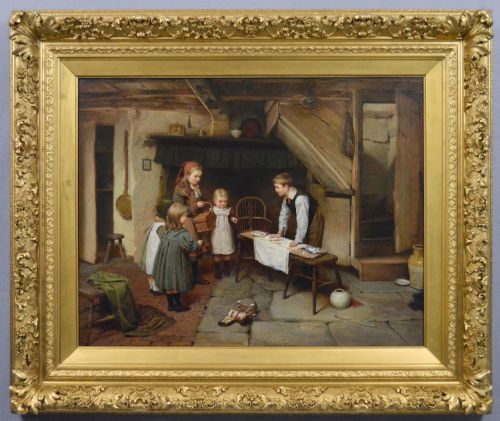
The selections available here lean heavily into nineteenth-century traditions, featuring both oil on canvas and oil on panel formats. Collectors will encounter works representing Scandinavian realism, the Hague school, and French realism alongside traditional Victorian genre painting. These pieces range from intimate cottage scenes with spinning maids to grander Victorian interiors and Dutch golden age styles.
Materials and methods
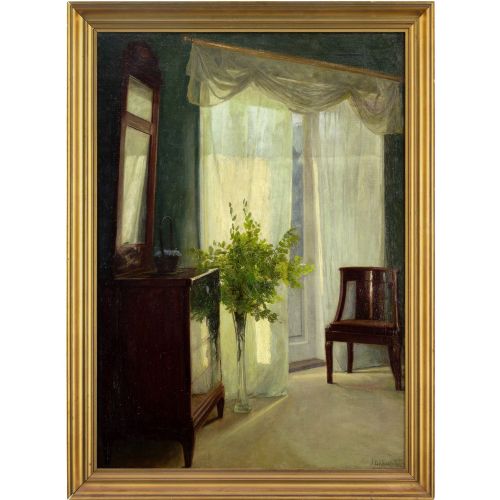
Artists producing domestic scene fine art primarily worked in oil paint, applying pigment either to stretched canvas or prepared wood panels. Oil paint offered the blending capability and depth required to render the play of light across indoor surfaces, such as sunlight filtering through a garden door or the warm glow of a hearth. Many of these canvases and panels remain housed within their period frames, some finished with gesso and gold leaf.
Support materials varied according to the painter's preference and regional tradition, with copper plates occasionally serving as a stable base for detailed genre pieces. The application of paint ranged from smooth, highly finished brushwork typical of academic interior scenes to more expressive handling associated with the Hague school. This careful manipulation of medium allowed artists to convey the texture of textiles, wood furniture, and domestic objects convincingly.
Domestic Scene Fine Art Retail Price Guide 2026
Typical asking prices for domestic scene fine art among the pieces listed under this phrase on Sellingantiques today, from the lower quarter to the upper quarter. They describe what is for sale here now, not the wider market.
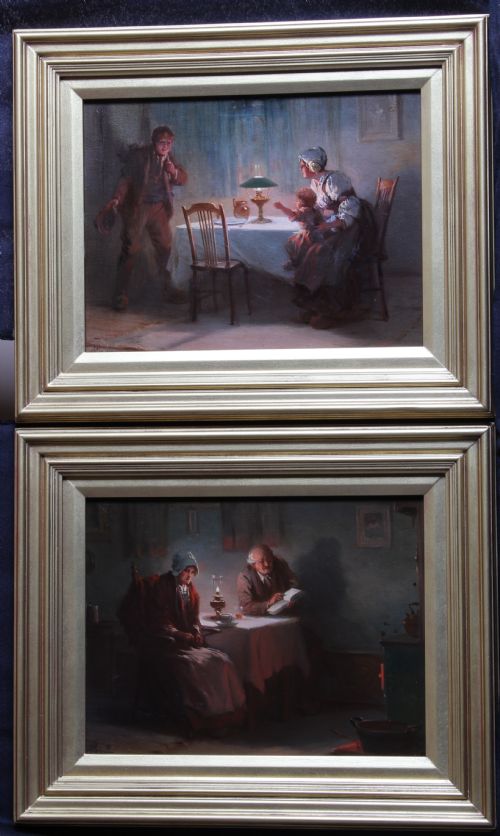
One gentleman's quiet shaving ritual faces an abrupt interruption by his wife.
Assessing quality and execution
Quality in domestic scene fine art rests on the artist's ability to handle light, shadow, and narrative detail within an interior space. Superior works demonstrate skilled management of natural illumination, such as sunlight entering a room or casting warmth near a fireplace, which brings depth and atmosphere to the composition. The depiction of human figures, facial expressions, and hands further distinguishes accomplished paintings from more mechanical studio output.
The integrity of the physical support and the preservation of the paint surface also dictate the standing of a piece. Works executed on wood panel or copper maintain stability differently than canvas, though all benefit from minimal overpainting and well-preserved original layers. The presence of period framing, legible signatures, and documented provenance on the reverse add weight to individual pieces.
John Lübschitz·Bernard De Hoog·Harry Brooker·Alexander Rosell·James Kyd·Théophile Emmanuel Duverger·Rolinda Sharples·Pauline Delacroix Garnier·Alfred Provis·Charles Lewis
The Domestic Scene Fine Art Glossary
- Genre painting
- The pictorial representation of scenes from everyday life, typically involving people in domestic or social settings rather than heroic or religious narratives. These works form the core of domestic scene fine art.
- Oil on panel
- A painting technique where oil paint is applied to a wooden board rather than canvas. Panels provide a rigid support that allows for fine, detailed brushwork.
- Gesso
- A plaster-like mixture applied to wood panels or frames to prepare a smooth surface for painting or gilding. It forms the base beneath gold leaf on many period frames.
- Hague school
- A group of artists from the late nineteenth century who worked in The Hague and painted in a realistic style. Their palette often featured subdued tones suited to interior and landscape subjects.
- Provenance
- The documented history of ownership of a work of art. Labels on the reverse of paintings often contribute to this record.
Domestic Scene Fine Art: Frequently Asked Questions
What is a genre painting?
A genre painting depicts ordinary people engaged in daily activities, domestic chores, or social pastimes. These works focus on relatable human moments rather than grand historical or mythological events.
In the context of domestic art, they frequently show figures in cottages, dining rooms, or near hearths, offering insight into historical lifestyles.
How should I care for oil paintings on panel?
Oil paintings on wood panels require stable indoor humidity and temperature levels to prevent the wood from warping or cracking. Keep them away from direct sunlight and sudden environmental changes.
Dust the surface gently with a soft, dry brush and avoid using any liquid cleaners or chemical agents on the paint.
What distinguishes Victorian genre art?
Victorian genre art typically emphasises storytelling, moral lessons, or sentimental domestic situations. These paintings often feature detailed interiors with narrative elements involving family members or children.
The style prioritises clear readability of human emotion and careful depiction of household objects and period clothing.
How do I identify the period of a painting?
Dating a painting involves examining the artist's signature, stylistic markers, clothing styles of the figures, and framing materials. Inscribed labels on the reverse also provide clues to creation dates.
Physical evidence such as the type of canvas stretcher, panel construction, or stamps from art suppliers can further narrow down the decade.