

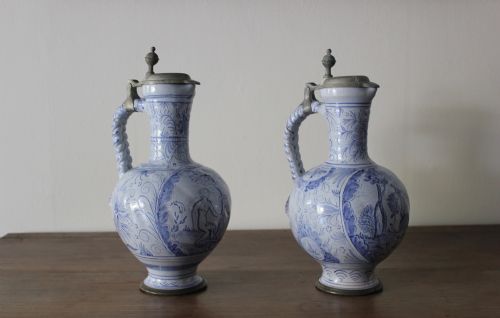


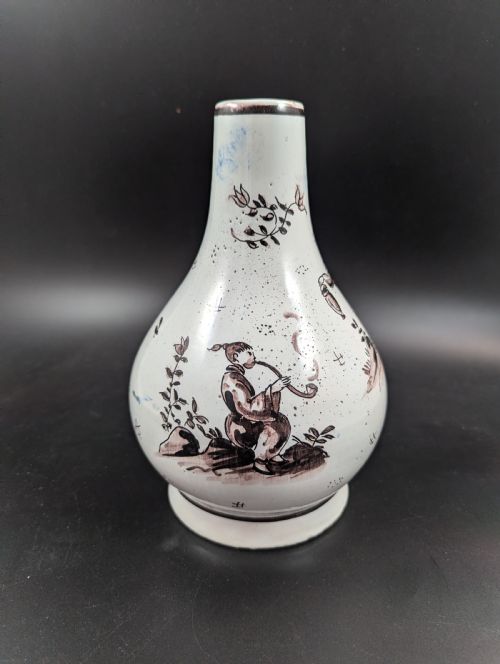


Dutch Earthenware Vessels
Dutch earthenware vessels are historical ceramic containers that bring centuries of European craftsmanship and striking blue-and-white glaze work into a modern interior.
Dutch Earthenware Vessels
When you search for dutch earthenware vessels, you encounter a specialised selection of historical containers spanning the seventeenth, eighteenth, and nineteenth centuries. These pieces encompass functional items and decorative display objects originating from the Netherlands, reflecting the rich domestic and commercial life of those eras.
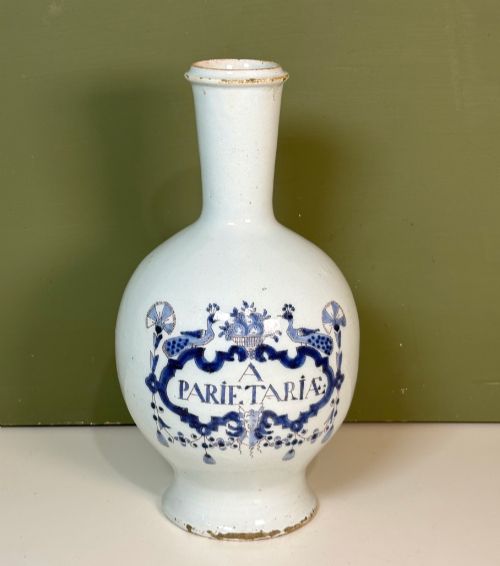
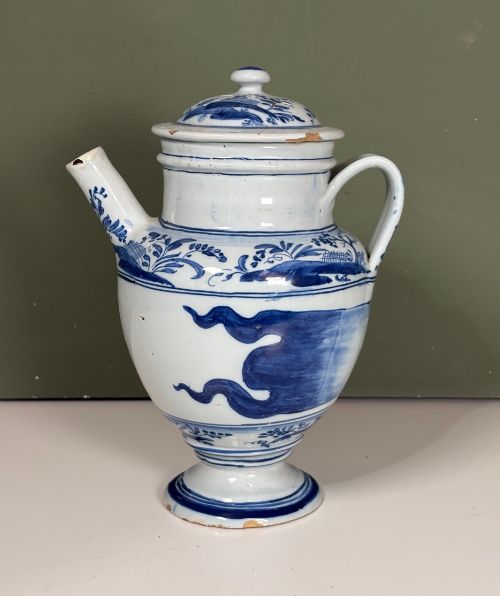
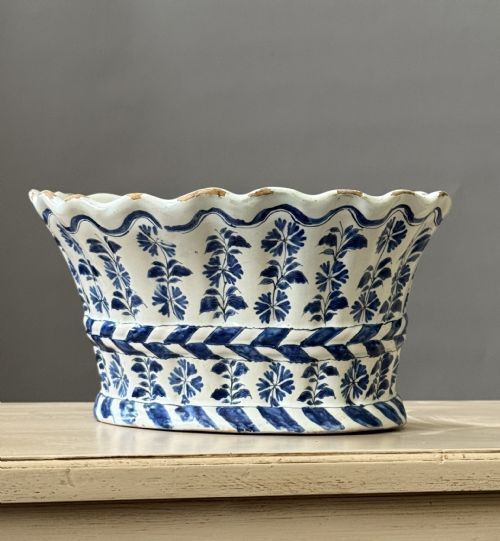
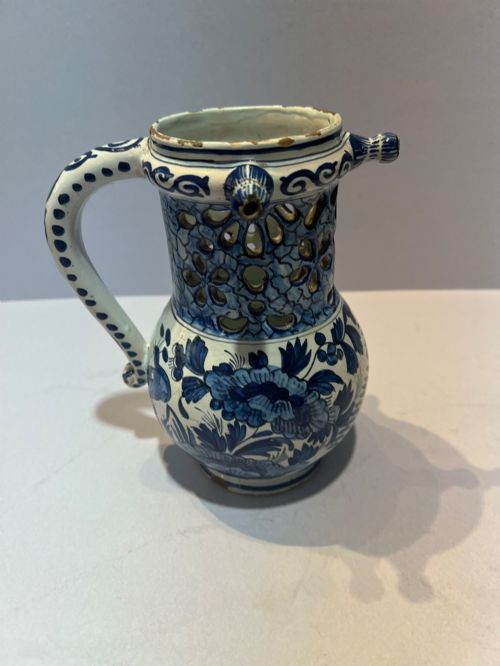
The objects on this page most frequently take the form of apothecary jars, apothecary bottles, vases, and lidded vessels such as posset pots and tobacco jars. You will also find rarer survivals like puzzle jugs, bough pots, and slipware strawberry jars that demonstrate domestic ingenuity and traditional folk art.
The aesthetic of these items is heavily anchored in Dutch Delftware styles and Dutch Baroque influences, alongside rustic slipware traditions. Surviving pieces range from refined blue glazed vessels to robust seventeenth-century earthenware intended for daily pantry use or medical storage.
How they were made
The physical construction of these objects relies on earthenware bodies shaped on the wheel or pressed into moulds before firing. Potters applied tin glaze or lead glaze to seal the porous clay and provide a smooth white surface suitable for subsequent painting.
Cobalt oxide served as the primary pigment for the characteristic blue decoration found across the tin-glazed pieces. For the slipware items, liquid clay slip was trailed over a contrasting body to create decorative patterns under a transparent lead glaze.
Dutch Earthenware Vessels Retail Price Guide 2026
Typical asking prices for dutch earthenware vessels among the pieces listed under this phrase on Sellingantiques today, from the lower quarter to the upper quarter. They describe what is for sale here now, not the wider market.
Listings span the seventeenth, eighteenth, and nineteenth centuries, featuring tin glaze, lead glaze, and slipware across utilitarian and decorative forms.
What varies in quality
Quality in these ceramics depends significantly on the crispness of the hand-painted cobalt decoration and the control shown during the high-temperature firing process. Finer pieces display confident brushwork and balanced proportions, while simpler utilitarian items show a heavier, more rustic hand.
The survival of original lids on posset pots, tobacco jars, and apothecary vessels heavily influences the desirability and integrity of the piece. Additionally, the smoothness of the tin glaze and the absence of heavy warping distinguish workshop output of higher ambition.
The Dutch Earthenware Vessels Glossary
- Tin-Glazed Earthenware
- Pottery coated in a lead glaze made opaque by the addition of tin oxide, creating a white surface for painted decoration. This technique forms the foundation of traditional Delftware production.
- Slipware
- Earthenware decorated with a thin mixture of clay and water called slip, applied before glazing and firing. It produces tactile, contrasting linear patterns often seen in earlier domestic kitchenwares.
- Cobalt Oxide
- A mineral pigment used by ceramists to achieve the deep blue colour seen on tin-glazed vessels. It withstands high firing temperatures without losing its intense hue.
- Posset Pot
- A multi-handled vessel historically used for serving a rich hot drink made of curdled milk mixed with wine or ale. Surviving examples often feature fitted lids and spouts.
- Apothecary Jar
- A cylindrical or urn-shaped container designed to store medicinal herbs, syrups, or dry drugs in pharmacies. Many examples carry painted Latin labels to identify their original contents.
Dutch Earthenware Vessels: Frequently Asked Questions
What were apothecary jars used for?
Apothecary jars served as storage containers for dried herbs, roots, powders, and liquid medicines in seventeenth and eighteenth-century dispensaries. Their tin-glazed surfaces protected contents from moisture and pests.
Many of these jars featured abbreviated Latin inscriptions painted on the front so practitioners could identify medicines quickly on the shelf.
How do I tell seventeenth and eighteenth-century pieces apart?
Seventeenth-century items often show heavier earthenware bodies, earthier slipware techniques, and bolder, less refined forms. Eighteenth-century pieces frequently display thinner walls and more intricate tin-glazed cobalt painting.
Examining the glaze consistency and the style of the painted motifs helps establish the likely period of manufacture.
Are these vessels waterproof?
Most tin-glazed and lead-glazed earthenware vessels were originally designed to hold liquids or damp materials. However, centuries of age can render the clay body fragile and microscopic hairline cracks can develop.
It is generally advisable to use a modern liner inside antique vases or jugs if you intend to display fresh flowers with water.
How should I clean antique earthenware?
Dust these pieces gently with a soft, dry brush to prevent accumulation in crevices and painted recesses. Avoid using chemical cleaners, detergents, or soaking the ceramics in water, as old glazes can be porous.
Stable handling with clean hands protects the aged ceramic body and preserves any vulnerable surface crazing.