

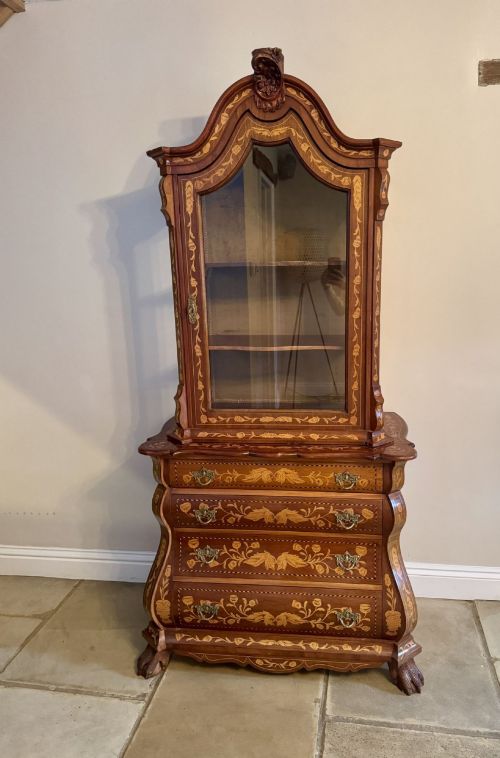
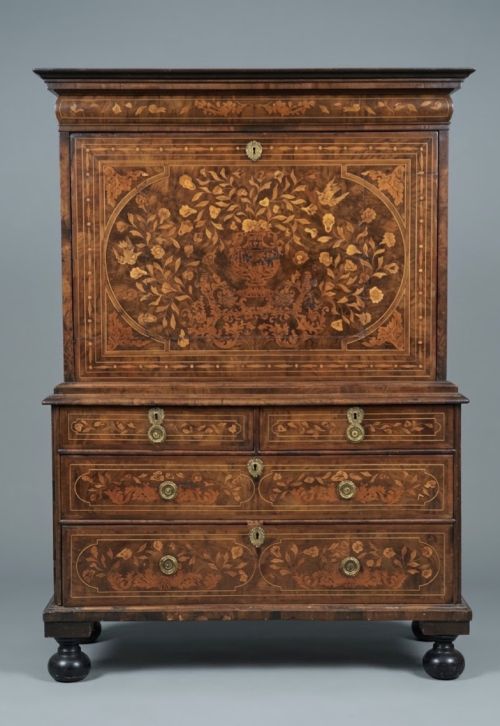
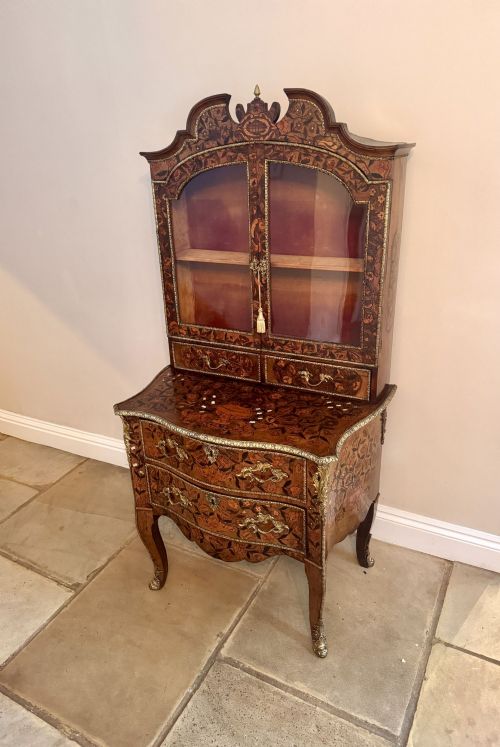
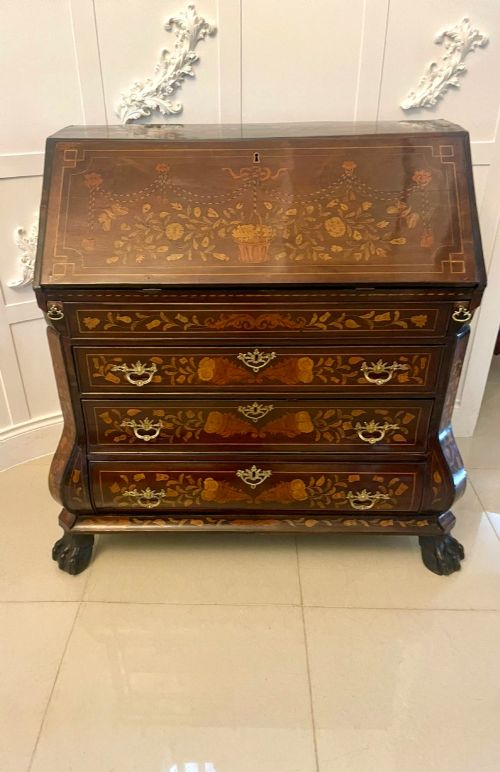


Dutch Drawer Cabinet
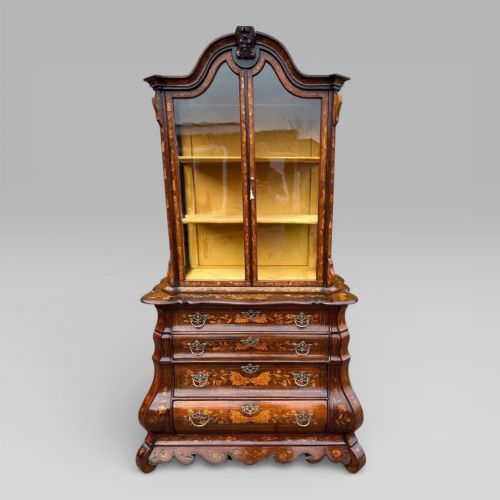
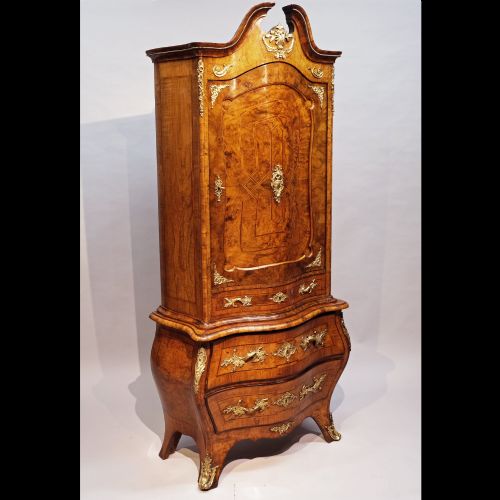
A dutch drawer cabinet brings complex floral marquetry and bombé forms into a room, offering generous storage alongside striking period craftsmanship.
Dutch Drawer Cabinet
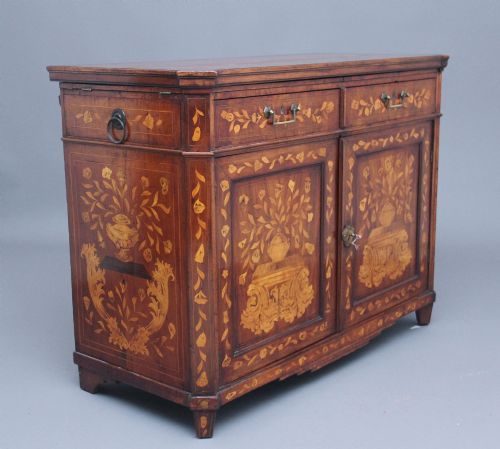
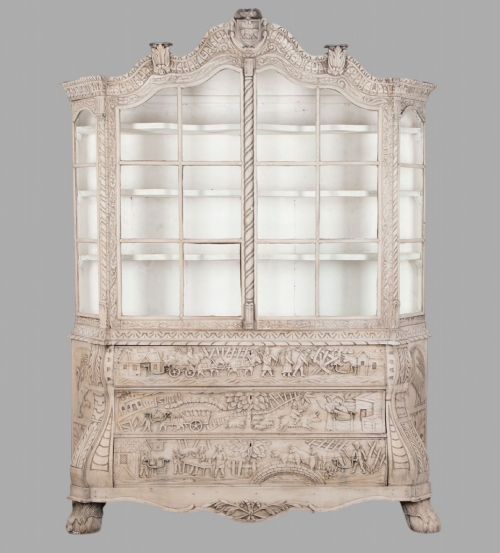
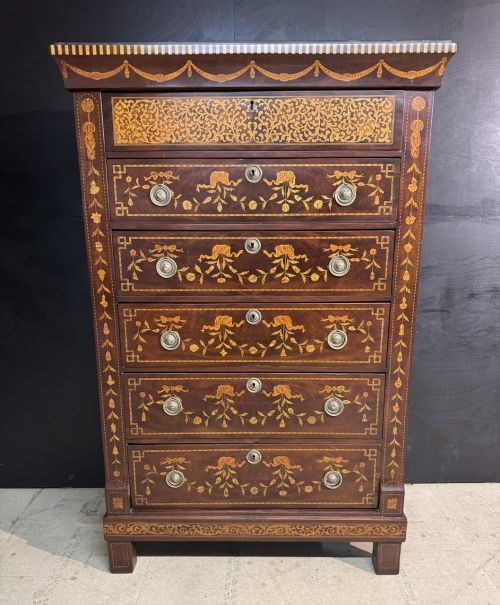
A dutch drawer cabinet encompasses a range of storage forms, from tall chests of drawers and commodes to bureau bookcases, writing desks, and display cabinets on stands. The most frequent examples encountered on this page date from the eighteenth and nineteenth centuries, spanning periods like the Georgian era up to the early twentieth century.
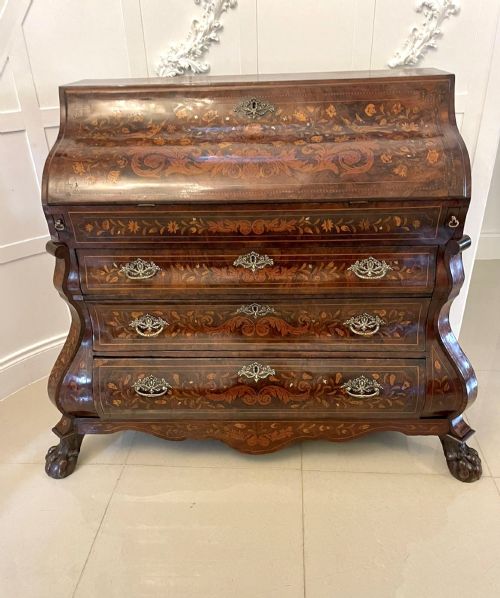
Makers shaped these pieces in oak, walnut, burr walnut, mahogany, fruitwood, elm, pine, and glass, frequently employing elaborate marquetry inlay alongside carved or painted surfaces. Forms range from straight-sided commodes and linen presses to serpentine and bombé profiles, sometimes fitted with brass handles and marble tops.
How they were made
Cabinet makers constructed carcass frames in solid native and imported timbers such as oak, walnut, mahogany, and pine, applying specialised joinery to support heavy upper display sections and multi-drawer chests. Drawer fronts and flat surfaces often received decorative veneers of burr walnut, fruitwood, and mahogany.
Marquetry panels were meticulously hand-cut and laid onto the carcass, depicting floral and botanical motifs using contrasting wood veneers. Selected pieces incorporated brass hardware, glazed doors, and carved architectural details to finish the exterior.
Dutch Drawer Cabinet Retail Price Guide 2026
Typical asking prices for dutch drawer cabinet among the pieces listed under this phrase on Sellingantiques today, from the lower quarter to the upper quarter. They describe what is for sale here now, not the wider market.
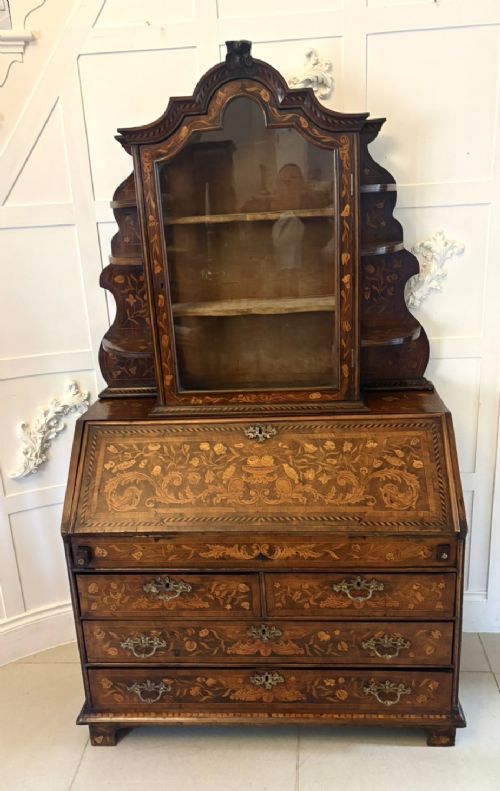
Several pieces feature floral marquetry so detailed that individual wooden petals appear almost ready to flutter off the drawer front.
What varies in quality
The sophistication of the floral marquetry inlay dictates much of the visual distinction across these pieces, separating simple geometric or repeating patterns from elaborate, finely shaded botanical designs spread across bombé fronts. The choice of primary and secondary timbers also marks the tier of a piece, with figured burr walnut and rich mahogany commanding greater presence than standard pine or painted finishes.
Proportion and structural execution separate masterworks from utilitarian workshops, particularly in the difficult shaping of curved bombé drawers and the flush alignment of fall-front desks or secretaire drawers. The integration of period brass mounts, well-fitted glazed display sections, and stable secondary framing completes the higher standard of cabinetmaking.
Edwards & Roberts
The Dutch Drawer Cabinet Glossary
- Bombe
- A bulging, outward-curving swell on the lower portion of a chest of drawers, commode, or bureau. This voluptuous profile required advanced joinery and veneer work to execute successfully.
- Marquetry
- The art of forming decorative patterns by fitting together contrasting wood veneers onto a structural carcass. Floral designs are especially prominent in continental European examples.
- Bureau bookcase
- A writing desk featuring a sloping fall-front writing flap positioned beneath an upper enclosed shelving or display cabinet. These pieces combine functional workspace with prominent vertical storage.
- Commode
- A low, freestanding chest of drawers or cabinet designed for domestic storage. They frequently feature decorative veneers, marble tops, or shaped fronts.
- Escritoire
- A tall cabinet or desk incorporating a fitted writing compartment hidden behind a hinged fall-front panel. They provide organised storage for correspondence and documents.
Dutch Drawer Cabinet: Frequently Asked Questions
What is a bureau bookcase?
A bureau bookcase combines a lower writing desk featuring a sloping fall-front flap with an upper display or shelving section enclosed by doors. These multi-functional pieces were designed to store books and provide a dedicated writing surface.
They appear in various timber finishes, frequently decorated with intricate floral marquetry inlay across the drawer fronts and writing slopes.
What woods were used?
Cabinet makers utilised a range of timbers, including walnut, burr walnut, mahogany, oak, fruitwood, elm, and pine. These woods served as both solid construction frames and decorative veneering surfaces.
Contrasting fruitwoods and exotic timbers were deliberately chosen for detailed marquetry inlay panels depicting floral and botanical motifs.
Where were these cabinets placed?
These cabinets served primary storage and display functions in formal reception rooms, bedrooms, and studies. Glazed display variations allowed owners to showcase porcelain and collectibles, while chests and commodes managed household linens and garments.
Writing forms like bureaux and escritoires provided private spaces for correspondence and administrative tasks within the home.