




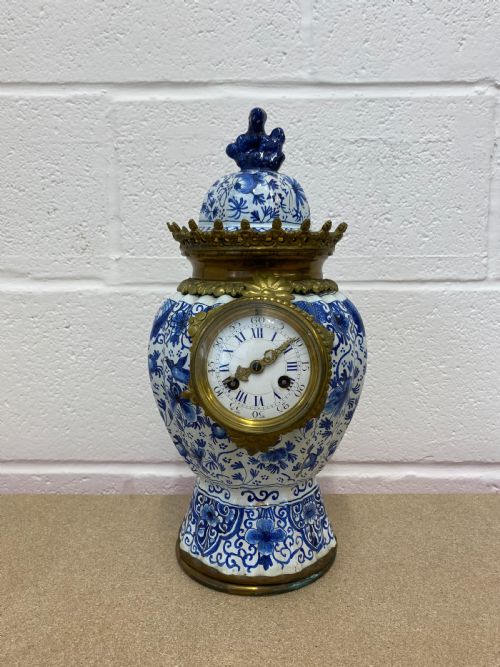


Dutch Delft Jars
Dutch delft jars are tin-glazed earthenware vessels prized for their vibrant cobalt painting and historical forms.
Dutch Delft Jars
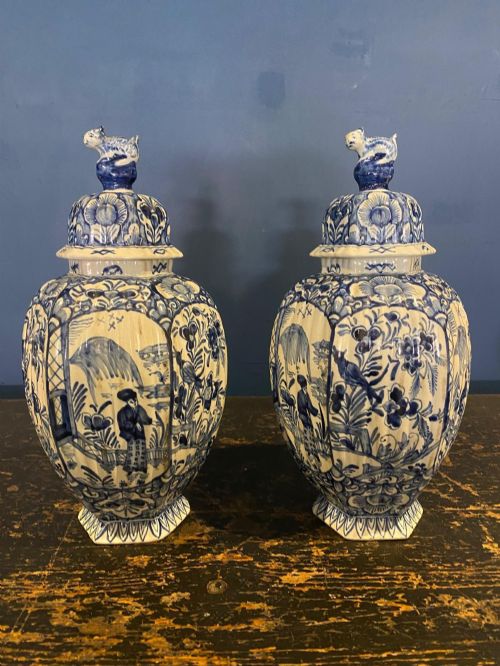
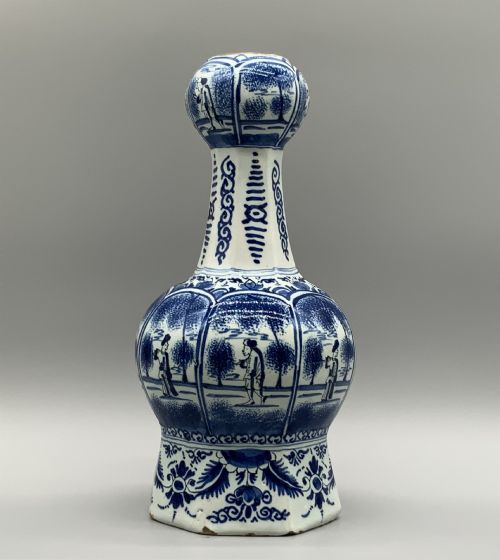
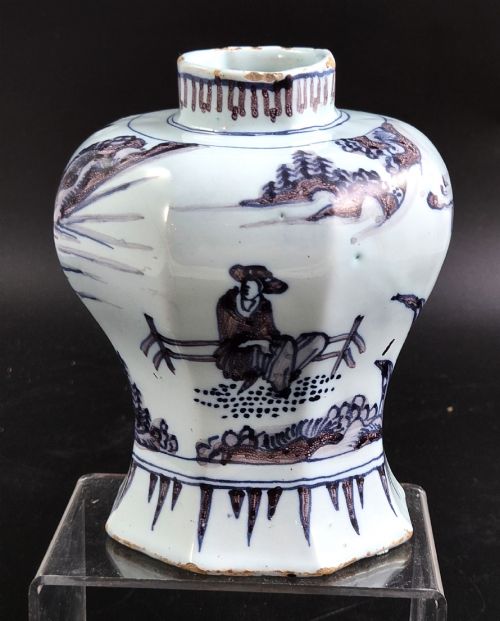
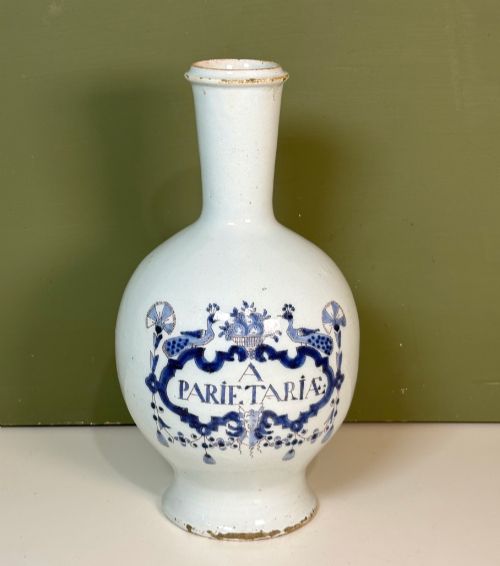
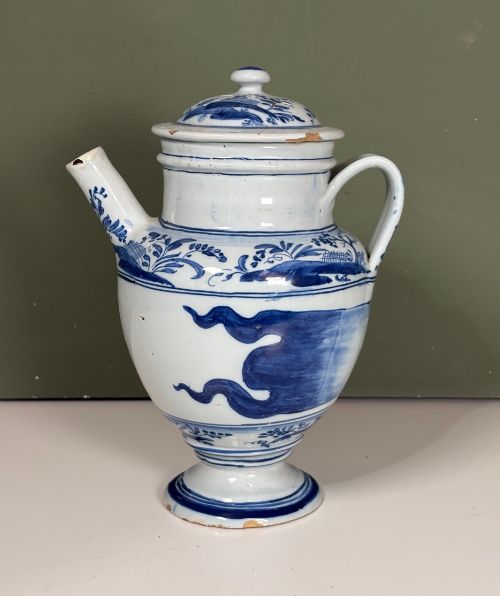
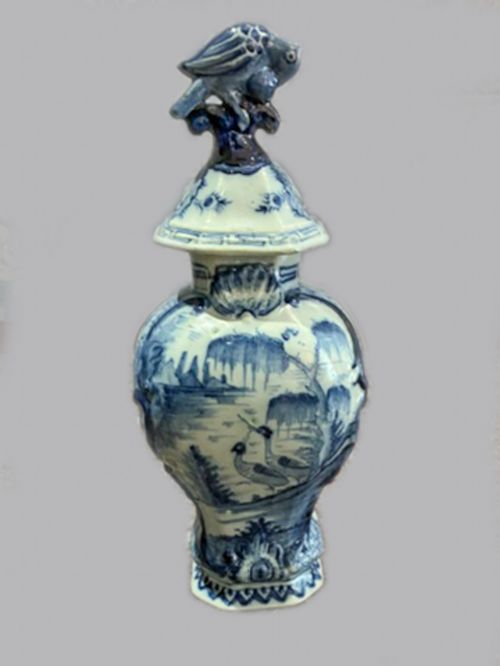
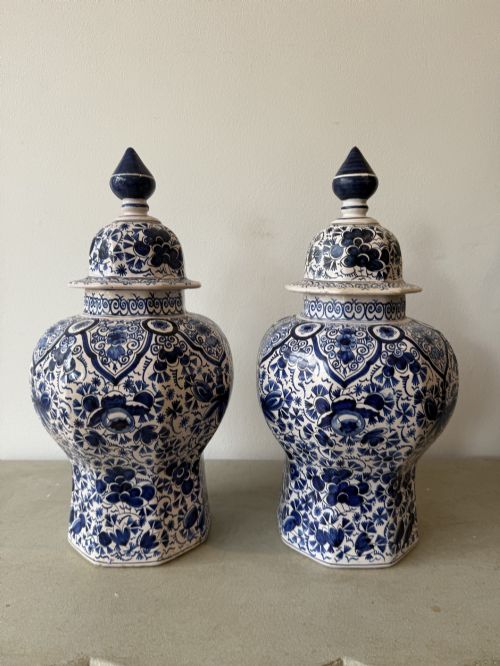
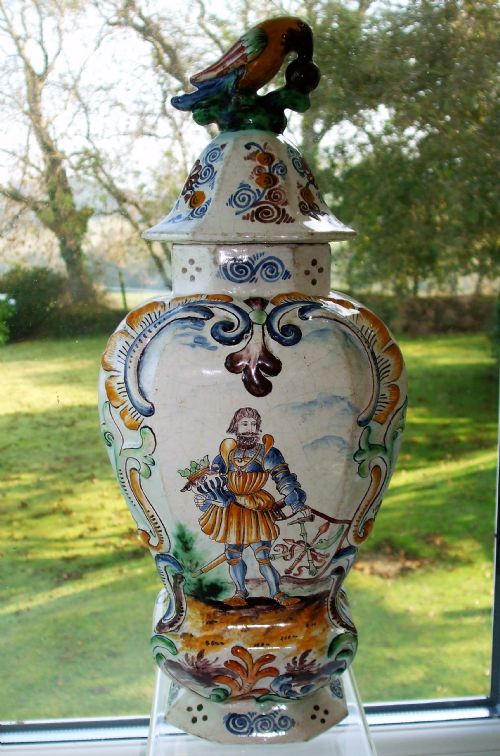
When you search for dutch delft jars, you encounter ceramic vessels spanning the seventeenth, eighteenth, and nineteenth centuries. These pieces encompass apothecary jars, lidded vases, baluster vases, tobacco jars, and decorative urns.
The selection here draws heavily on eighteenth-century examples alongside seventeenth-century Chinoiserie pieces and nineteenth-century adaptations. Forms range from simple storage containers to grand covered vases and converted table lamps.
How They Were Made
Maker's workshops utilised earthenware bodies coated in tin glaze to create a smooth, opaque white surface suitable for painting. Artisans applied cobalt pigment directly onto this absorbent glaze before firing.
Some examples incorporate brass fittings or hardwood elements alongside the primary ceramic body. Polychrome designs required additional pigment applications to achieve multi-coloured palettes.
Dutch Delft Jars Retail Price Guide 2026
Typical asking prices for dutch delft jars among the pieces listed under this phrase on Sellingantiques today, from the lower quarter to the upper quarter. They describe what is for sale here now, not the wider market.
Several jars were evidently trusted with dried leaves and medicines before retiring to centuries of quiet contemplation on mantelpieces.
What Varies in Quality
The fineness of the cobalt painting distinguishes simpler production from masterwork execution, particularly in detailed floral and bird motifs. Brushwork dexterity and the clarity of the white tin glaze dictate visual depth.
Integrity of form and the presence of original lids heavily influence the character of each vessel. Early seventeenth-century pieces display different potting proportions compared to later nineteenth-century interpretations.
The Dutch Delft Jars Glossary
- Tin-Glazed Earthenware
- Earthenware pottery covered with a lead glaze made opaque by the addition of tin oxide. This coating provided the white ground for blue and polychrome painting.
- Cobalt Pigment
- A metallic colourant used to achieve deep blue decoration on ceramic wares. It withstands high firing temperatures without losing intensity.
- Baluster Vase
- A vessel with a rounded body that tapers toward the base and swells above, resembling an architectural baluster. This shape appears frequently among lidded jars.
- Chinoiserie
- European artistic style reflecting Chinese motifs and scenes. This aesthetic influenced seventeenth and eighteenth-century delft decoration.
- Polychrome
- Decoration employing multiple colours rather than a single pigment. In delftware, this typically includes iron red, green, and yellow alongside blue.
Dutch Delft Jars: Frequently Asked Questions
How do I date a delft jar?
Dating relies on stylistic shifts, potting techniques, and the composition of the tin glaze. Seventeenth-century examples often show distinct Chinoiserie influences, while eighteenth-century pieces lean toward baluster forms and apothecary labels.
Changes in palette and body thickness also help separate earlier production from nineteenth-century interpretations.
Were these jars used to store food?
Many specific forms served functional roles in households and apothecaries. Tobacco jars and apothecary jars held dry goods and medicinal ingredients.
Lidded vases and urns functioned primarily as decorative display items within wealthy interiors.
Are original lids common on these jars?
Finding a jar with its matching original cover is uncommon due to centuries of handling. Many surviving lidded vases have associated or replacement covers gathered over time.
Matching covers that share identical glaze and decoration add significantly to the integrity of the piece.
How should I clean my delft jar?
Dusting with a dry, soft cloth is sufficient for routine maintenance. Avoid submerging historical ceramics in water, as the porous earthenware body and historic glazes remain vulnerable to moisture penetration.
Professional restoration advice should be sought for any deeper cleaning.
What is the difference between delft and porcelain?
Delft is a tin-glazed earthenware made from local clays, resulting in a heavier, more porous body. Porcelain is a vitrified ceramic fired at higher temperatures to achieve a dense, translucent white body.
Potters developed delft as a European alternative to imported Chinese porcelain.