

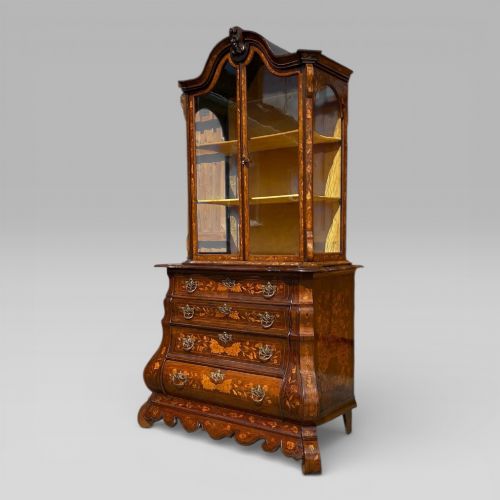


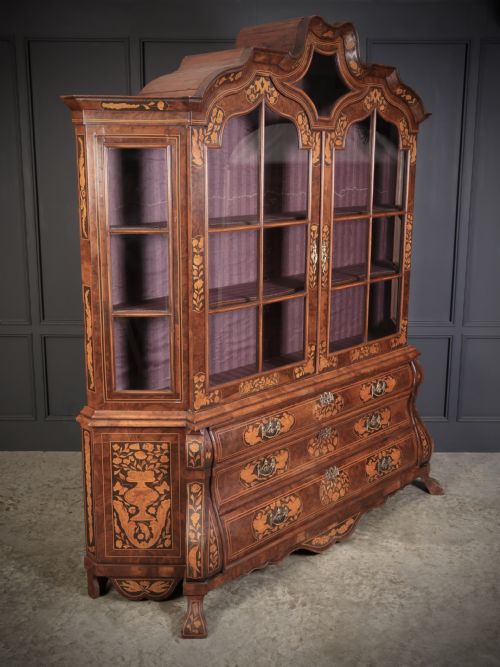


Dutch Bombe Display Cabinet
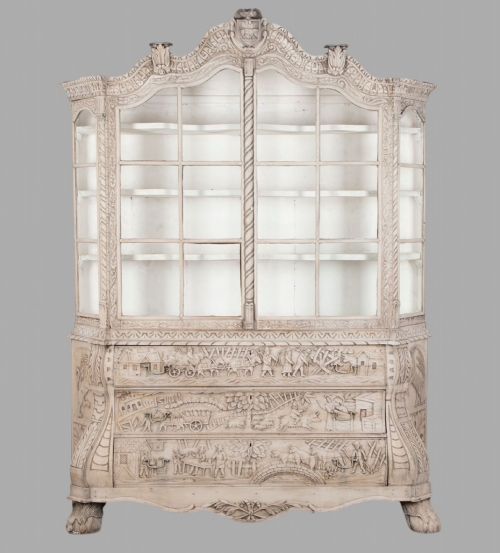
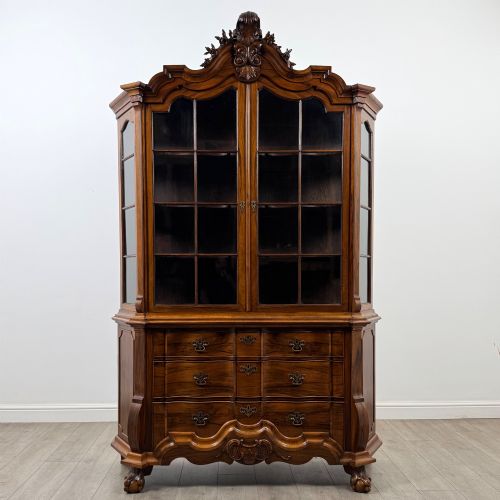
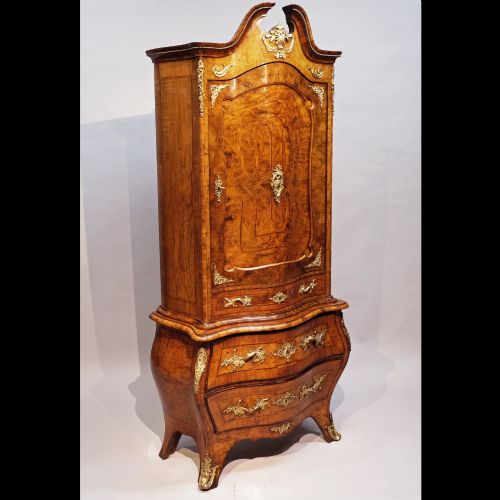
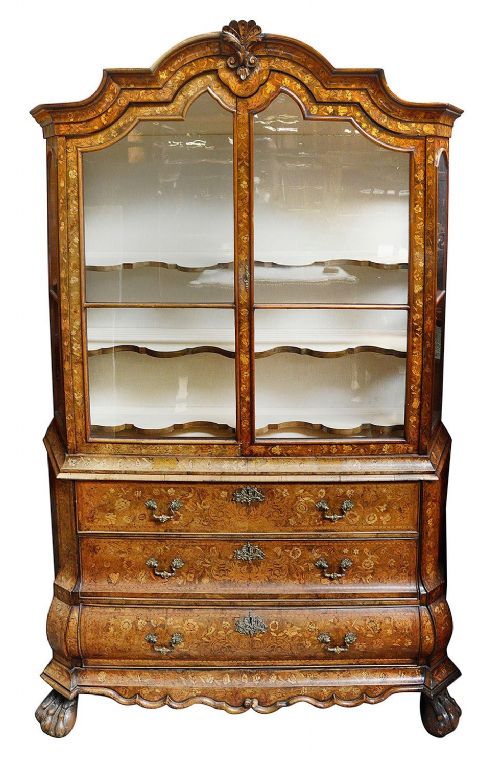
These Dutch bombe display cabinet examples combine curved profiles with intricate marquetry, offering striking storage for fine collections.

Dutch Bombe Display Cabinet
A dutch bombe display cabinet presents a characteristic swelling front profile that merges practical storage with dramatic furniture design. The evidence shows these pieces appearing as standalone display cabinets, bureau bookcases, and cabinets on chest.
Most examples encountered on this page date from the eighteenth century through to the early twentieth century, spanning revival styles such as Dutch Baroque and Dutch Rococo. Forms include vitrines and two-part display cabinets designed to showcase valued objects behind glass.
The regional aesthetic draws heavily on marquetry inlay depicting floral motifs, distinguishing these cabinets from standard European storage furniture. Buyers find both monumental proportions and compact configurations across walnut and fruitwood timbers.
How They Were Made
Cabinet makers built these pieces using solid oak and fruitwood carcasses veneered with figured walnut and burr walnut. Complex curving bombe profiles required skilled joinery to shape the timber outwards before applying detailed marquetry inlay.
Surface decoration relies on elaborate fruitwood marquetry patterns, often depicting floral and botanical arrangements across the doors and drawers. Metalwork fittings such as brass handles and ormolu mounts complete the construction, alongside glazed panels for display sections.
Listings feature pieces spanning the eighteenth century to the twentieth century, incorporating walnut, burr walnut, fruitwood, and oak.
What Varies in Quality
The refinement of the marquetry and the choice of timber set the standard for these cabinets. Finer pieces display dense, natural burr walnut veneers and intricately shaded fruitwood floral inlays that cover the curved surfaces with precision.
Structural harmony in the bombe shaping dictates the overall presence of the piece, where smooth, balanced swells distinguish superior craftsmanship. Original glass panels, well-fitted doors, and patinated brass or ormolu mounts elevate the status of individual cabinets.
Edwards and Roberts
The Dutch Bombe Display Cabinet Glossary
- Bombe
- A bulging or swelling convex shape characteristic of the lower sections of these cabinets. This curved profile requires advanced cabinet-making techniques.
- Marquetry
- Decorative veneer work forming intricate pictures or patterns using various coloured woods. Floral designs dominate the inlaid surfaces seen on these pieces.
- Vitrine
- A glass-fronted cabinet specifically designed for displaying fine objects or porcelain. The evidence includes multiple examples functioning as vitrines or display cases.
- Bureau Bookcase
- A dual-purpose piece combining a sloping writing desk compartment with upper shelving or display space. These often sit upon the characteristic swelling bombe base.
- Ormolu
- Gilt-bronze mounts applied as decorative ornaments on furniture. These metallic details accent the wooden surfaces of revival and eighteenth-century examples.
Dutch Bombe Display Cabinet: Frequently Asked Questions
What is a bombe display cabinet?
A bombe display cabinet is a storage piece featuring a distinct outward-swelling curved front profile. These cabinets combine glass display areas with lower enclosed storage.
Evidence shows variations including bureau bookcases and cabinets on chests executed in walnut and fruitwood.
How do I date a Dutch display cabinet?
Dating relies on examining the timber veneers, construction methods, and decorative styles present on the piece. Eighteenth-century models often feature hand-cut marquetry and specific regional furniture traits.
Revival pieces from the nineteenth and twentieth centuries adopt earlier Dutch Baroque and Rococo design elements.
What woods were used in these cabinets?
Cabinet makers primarily utilised walnut, burr walnut, oak, and various fruitwoods for these pieces. Burr walnut provided highly figured surfaces for the main body.
Contrasting fruitwoods were selected specifically for the detailed marquetry floral inlays across the doors and drawers.
Are these cabinets made in two parts?
Many examples are constructed as two-part furniture, separating the upper display section from the lower bombe base. This modular design helped with transport and placement in historic interiors.
The listings record both two-part display cabinets and integrated single-carcass cupboards.