





Dutch Bureau Desk
A dutch antique bureau desk brings centuries of cabinet-making skill into a room, offering a sloping writing surface over drawers alongside hidden compartments.
Dutch Bureau Desk
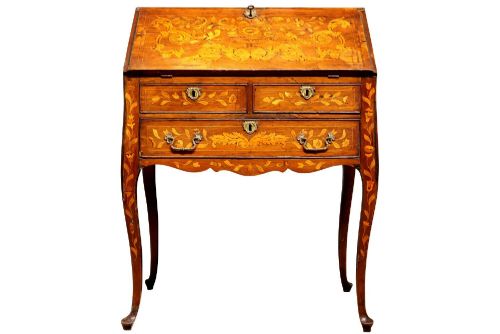
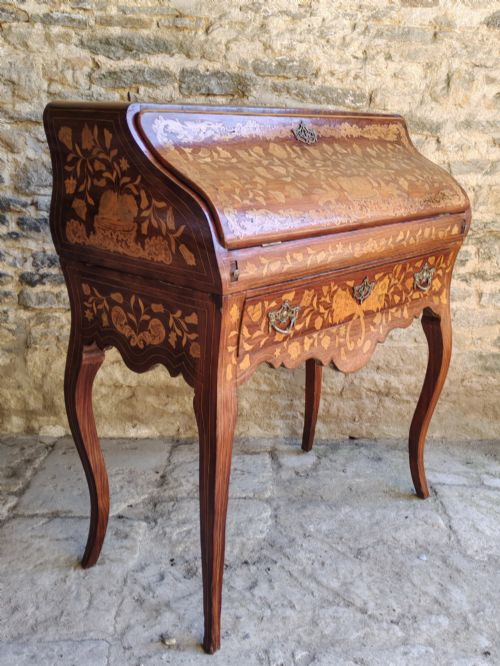
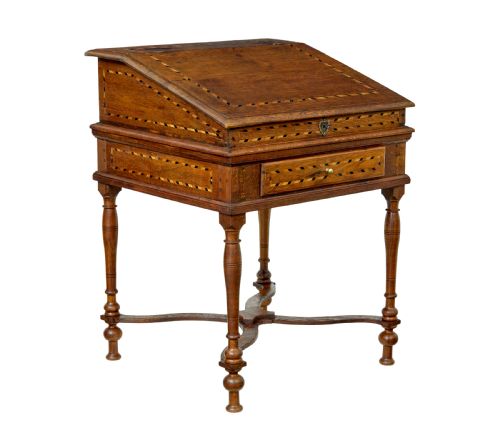
A dutch antique bureau desk encompasses a range of writing furniture from the eighteenth and nineteenth centuries, including fall-front writing slopes, cylinder desks, and large bureau bookcases. These pieces combine a practical writing surface with extensive storage, often featuring fitted internal drawers and pigeonholes behind the sloping flap.
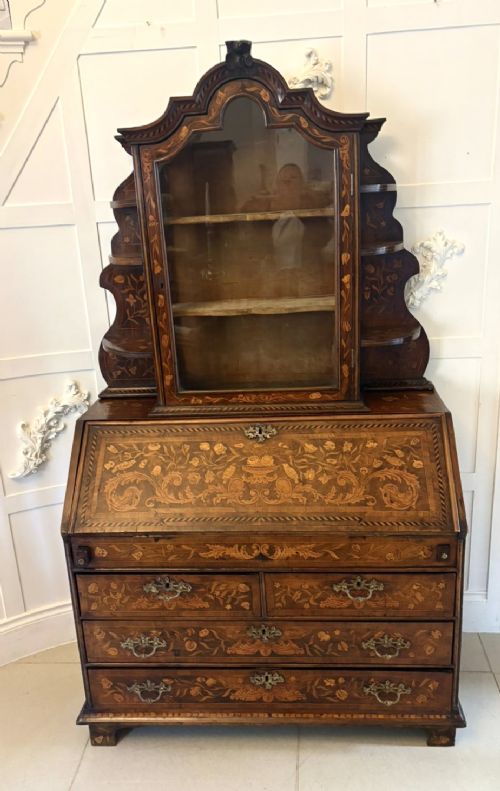
The most common examples encountered on this page date from the eighteenth century and the 1800 period, frequently constructed with substantial bureau bookcase superstructures. Cabinet makers designed these dual-purpose items to serve both as private writing cabinets and as architectural display furniture for the home.
Materials and construction
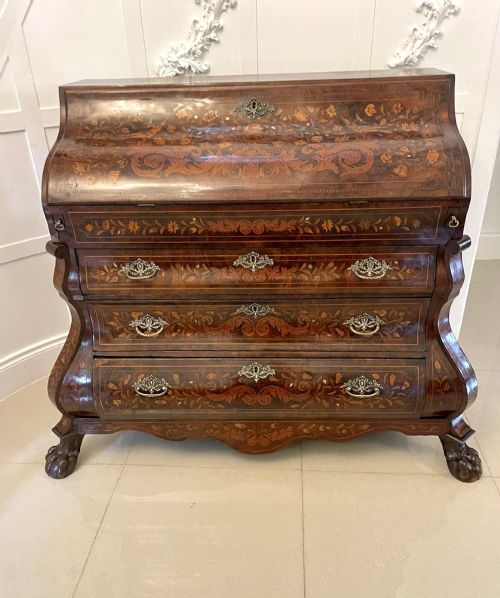
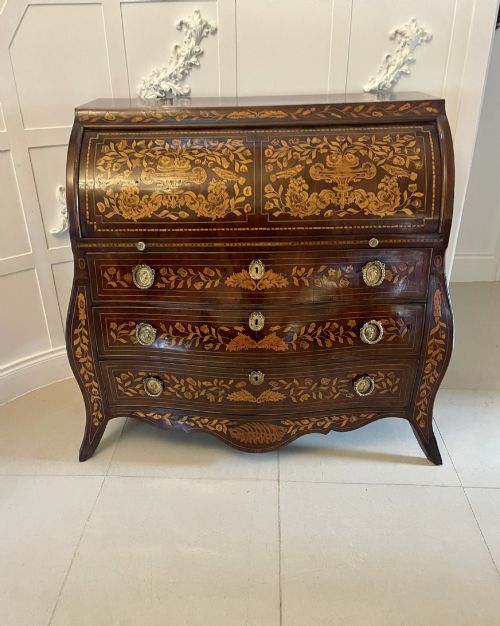
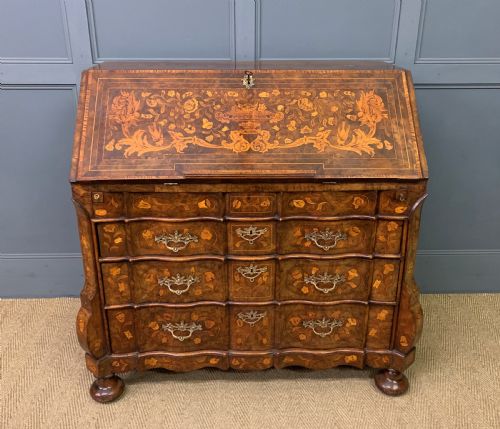
Cabinet makers built these pieces using solid oak and walnut carcases, applying burr walnut and fruitwood veneers to the exterior surfaces. The characteristic floral marquetry and fruitwood inlay required precise hand-cutting of diverse timber veneers to form elaborate botanical motifs across the curved and flat panels.
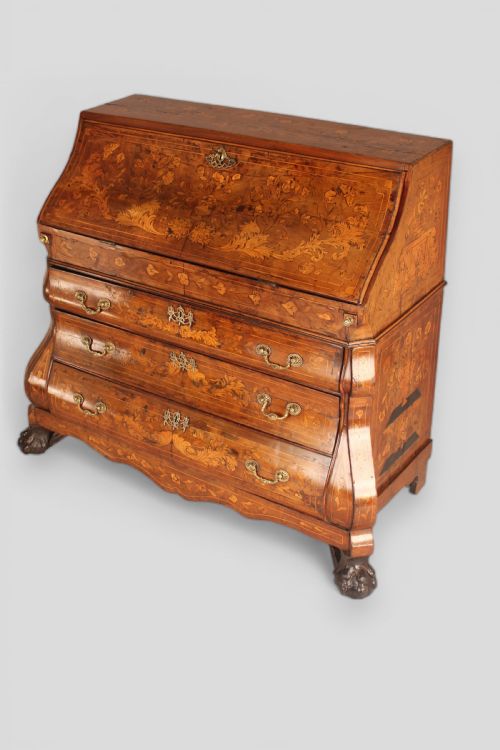
Structural complexity defines the bombe form, which required specialist framing to achieve the swelling, outward-curving front and sides. Workshops utilised traditional brass hardware, including key escutcheons and drop handles, to secure the fall fronts and drawers.
Certain desks conceal secret compartments behind miniature pigeonholes, designed for keeping private letters away from prying eyes.
Assessing craftsmanship
The distinction between tiers of quality rests upon the complexity of the veneer work and the ambition of the carcase shape. Pieces featuring full floral marquetry across every drawer front and the sloping flap demand significantly greater skill than plain walnut or oak versions.
Structural execution also separates standard items from exceptional ones, particularly in the handling of bombe contours and the integration of upper bookcase sections. The crispness of the fruitwood inlay and the internal arrangement of secret compartments determine the standing of the piece.
Morison of Edinburgh
The Dutch Bureau Desk Glossary
- Bombe
- A bulging, outward-curving shape used on the front and sides of furniture, requiring advanced woodworking skill to construct. This swelling profile defines many notable eighteenth-century examples.
- Bureau bookcase
- A writing bureau with a fitted shelving or cabinet superstructure attached to the top. These tall combinations provided dual storage and display functions.
- Escritoire
- A writing cabinet or desk fitted with drawers and pigeonholes. The term often describes fall-front variants.
- Cylinder desk
- A desk featuring a rolling curved wooden cylinder that conceals the writing surface and interior compartments. This mechanism offers an alternative to the traditional hinged flap.
Dutch Bureau Desk: Frequently Asked Questions
How do I use a bureau desk?
Lower the hinged wooden flap to reveal the internal writing surface, small drawers, and pigeonholes. The slope provides a stable angled platform for correspondence and paperwork.
Store writing materials and documents within the fitted compartments behind the flap and utilise the lower chest drawers for larger storage needs.
How do I tell eighteenth-century pieces apart from nineteenth-century ones?
Examine the timber selection and the depth of the marquetry shading, as eighteenth-century makers frequently relied on hot sand-searing to create tonal gradation in floral petals. Construction methods inside the drawer boxes also reveal age through hand-cut dovetailing.
Nineteenth-century pieces often display revival styles with slightly different proportions and mechanical complexity, though they continued the traditional walnut and fruitwood inlay techniques.
What is a bombe front?
A bombe front curves outward in a pronounced convex sweep from top to bottom, creating a sculptural profile. This shape requires specialist joinery to bend and fit the wood veneers accurately.
Cabinet makers used this technique to add visual weight and decorative presence to high-status writing furniture.
Where should I place a bureau bookcase?
Position the piece against a sturdy wall in a principal room where the height of the bookcase top and the projection of the open writing flap do not obstruct movement. Avoid placing antique walnut and fruitwood directly beside heat sources or in intense sunlight.
Allow sufficient clearance in front of the desk to pull out a chair and lower the writing flap comfortably.