



Duck Painting Framed
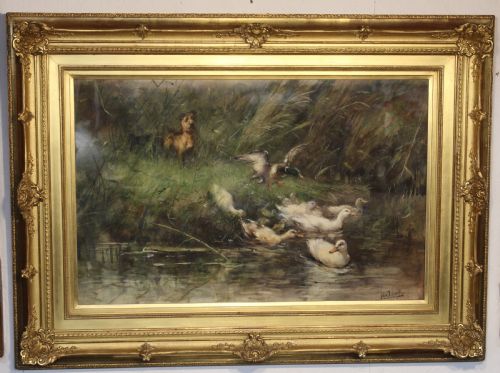
A duck painting framed brings the rustic charm of rural waterways and farmyards straight onto the wall.
Duck Painting Framed
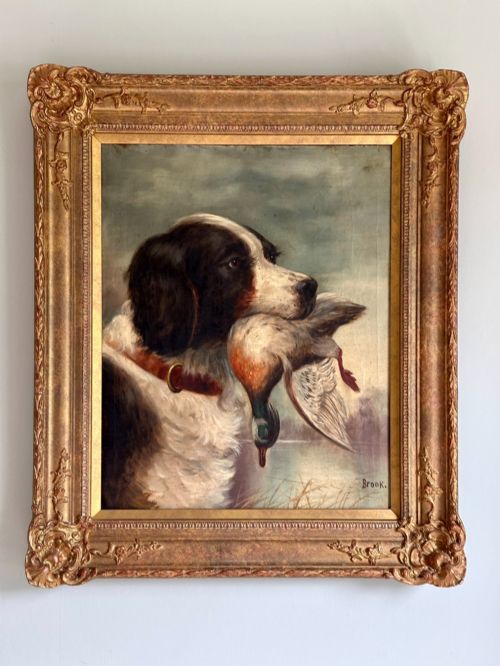
A duck painting framed captures avian life and rural scenes across the nineteenth and early twentieth centuries, spanning periods from the eighteen-seventies through to nineteen-sixty. These works appear in forms such as oil paintings, watercolours, and wall art, reflecting subjects ranging from sporting art to pastoral landscapes.
The buyer meets various depictions, including river landscapes with ducks and ducklings, farmyard scenes with poultry, and sporting art featuring gun dogs. Many pieces combine these birds with wider farm animals, horses, and wider countryside settings.
Origins stretch from Victorian rural realism and British animalier traditions to earlier European works. Most examples present traditional British and Victorian aesthetic values framed in wood or giltwood.
How these artworks were constructed
Makers utilised oil on canvas or watercolour pigment applied to paper, mounted securely beneath glass and held within wooden or giltwood frames. The interaction between pigment and canvas or paper dictates the preservation of colour and line.
Framing materials range from simple timber mouldings to ornate gilded frames, protecting the fragile paper or canvas surfaces from environmental wear.
Duck Painting Framed Retail Price Guide 2026
Typical asking prices for duck painting framed among the pieces listed under this phrase on Sellingantiques today, from the lower quarter to the upper quarter. They describe what is for sale here now, not the wider market.
Several ducks share their canvas with frogs, toads, and unsuspecting harvesters.
What defines the grade of a duck painting framed
Quality rests upon the precision of brushwork, the vitality captured in the depiction of the birds and their natural environment, and the harmony between the painting and its original frame. Works by recorded artists command greater attention through their established draughtsmanship and compositional balance.
Condition of the canvas or paper surface, alongside the integrity of the original giltwood or wooden frame, marks the distinction between standard decorative pieces and finer collectable works.
Edgar Hunt·John Frederick Herring Jnr·Philipp Ferdinand de Hamilton·James Hardy Junior·John Frederick Herring·George Kilburne·Claude Cardon·Arthur Walker Redgate·Alfred Banner·Thomas Blinks·Constant Ludovic Artz·David Adolph Constant Artz
The Duck Painting Framed Glossary
- Watercolour pigment
- Finely ground colour suspended in a water-soluble binder, applied to paper to create transparent washes of tone.
- Oil on canvas
- Pigment mixed with drying oils such as linseed, spread across a stretched woven fabric support.
- Giltwood
- Timber carved and surfaced with a thin layer of gold leaf, commonly utilised for traditional picture framing.
- Victorian Sporting Art
- Nineteenth-century imagery focusing on rural pursuits, game, gun dogs, and wildlife.
- British Animalier
- Artistic tradition concentrating primarily on the accurate portrayal of animals within natural or domestic settings.
Duck Painting Framed: Frequently Asked Questions
Where should I hang a duck painting framed?
These works suit dining rooms, studies, or hallways where traditional rural subjects complement classic interior décor and wooden furniture.
Keep them away from direct sunlight and damp walls to protect the paper, canvas, and giltwood frames.
How do I identify a Victorian duck painting?
Look for the characteristic brushwork, earthy palettes, and subject matter focusing on rural realism, sporting art, or pastoral farmyard scenes typical of the nineteenth century.
Examining the backing boards, paper ageing, and frame construction also helps confirm the period.
Are these watercolours framed under glass?
Yes, works on paper require glass protection to shield the delicate watercolour pigment from dust, moisture, and atmospheric pollutants.
Oil paintings on canvas are typically displayed open to the air within their wooden or giltwood surrounds.
What is the difference between oil and watercolour duck paintings?
Oil paintings utilise heavy pigment on canvas to create rich textures and deep tones, whereas watercolours rely on translucent washes on paper for a lighter effect.
Both mediums capture avian subjects differently, with oils offering robust durability and watercolours providing delicate atmospheric depth.