

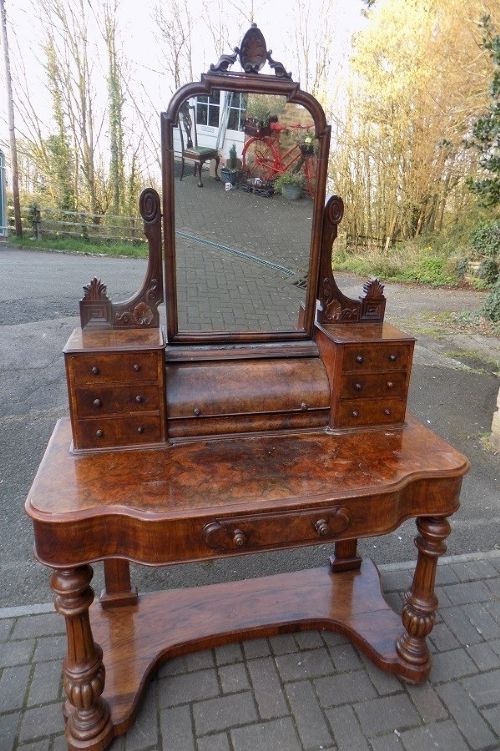
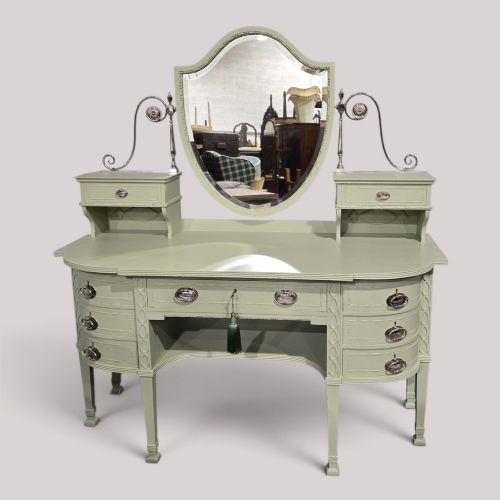
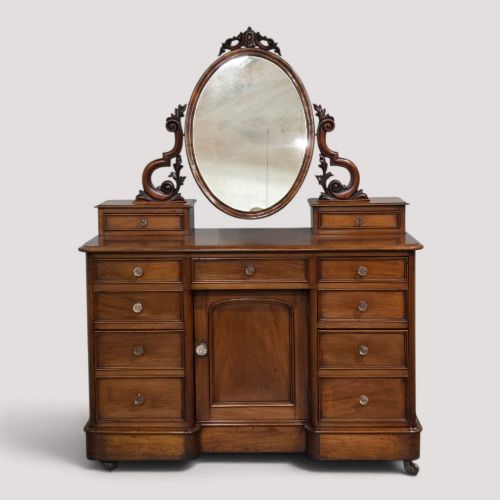
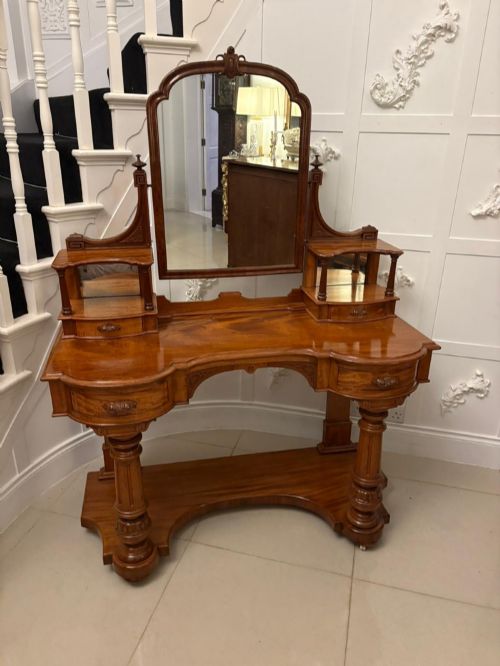



Duchess Vanity Mirror
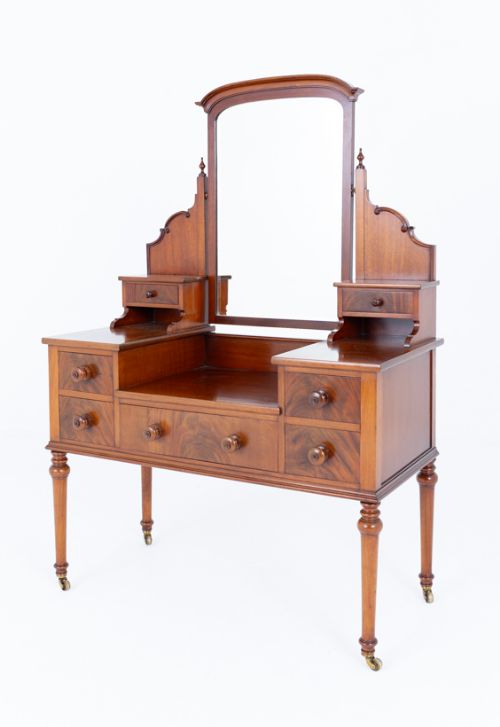
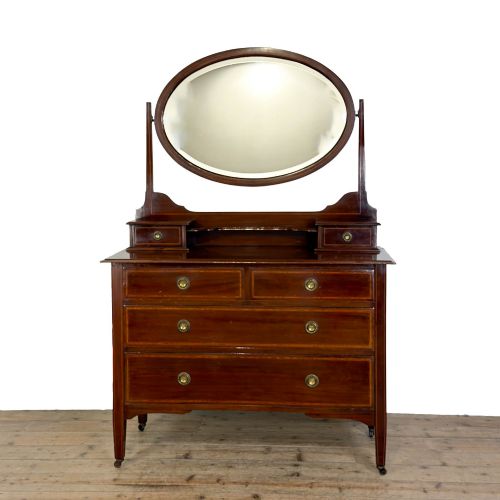
A duchess vanity mirror brings grandeur to a bedroom, combining a large tilting glass with a substantial timber base.
Duchess Vanity Mirror
When you search for a duchess vanity mirror, you encounter large dressing furniture originating primarily from the Victorian and Edwardian eras. These pieces typically combine a pivoting mirror frame, known as a toilet mirror, with a dedicated dressing table or chest.
The versions most commonly met on this page span the mid nineteenth century to the early twentieth century. They appear in dense timbers such as mahogany, walnut, and burr walnut, alongside painted or stencilled pine and lighter satinwood.
Makers designed these items for bedrooms, incorporating deep drawers and small trinket compartments alongside the central glass. Their styles range from plain utilitarian formats to elaborate Victorian Rococo Revival and Gothic Revival forms.
How they were made
Cabinetmakers constructed these frames and tables using solid hardwoods such as mahogany and walnut, frequently applying decorative veneers like burr walnut to prominent drawer fronts and surfaces. Secondary timbers like pine appear in internal carcases and drawer linings.
Glass production relied on traditional silvering techniques set within carved or moulded wooden frames, supported by brass pivots or brackets. Marquetry inlay, stencilled decoration, and ormolu mounts provided surface ornamentation on specific revival and continental models.
Duchess Vanity Mirror Retail Price Guide 2026
Typical asking prices for duchess vanity mirror among the pieces listed under this phrase on Sellingantiques today, from the lower quarter to the upper quarter. They describe what is for sale here now, not the wider market.
Listings span the Victorian and Edwardian periods, featuring materials from burr walnut and satinwood to painted pine.
What varies in quality
The hierarchy of these pieces rests on timber selection and the ambition of the carving. Exemplary examples employ richly figured burr walnut or fine satinwood with meticulous joinery, whereas standard pieces use straightforward mahogany or painted pine.
Hardware and secondary details also dictate distinction. Solid brass mounts, original mirror glass, and integrated stencilled decoration elevate an object above simpler utilitarian counterparts.
John Taylor of Edinburgh
The Duchess Vanity Mirror Glossary
- Toilet mirror
- A smaller mirror designed to sit atop a chest or dressing table, featuring a pivoting frame supported by upright arms.
- Duchess dressing table
- A large nineteenth-century dressing table incorporating a prominent attached mirror and multiple small drawers.
- Burr walnut
- A prized timber veneer harvested from walnut tree growths, displaying complex swirling grain patterns.
- Satinwood
- A pale, dense exotic hardwood with a lustrous, light-reflecting surface often used in high-status cabinetmaking.
- Ormolu
- Gilded bronze ornamentation applied to furniture, frequently seen on pieces influenced by French styles.
Duchess Vanity Mirror: Frequently Asked Questions
What is a duchess vanity mirror?
A duchess vanity mirror refers to the large pivoting glass attached to a nineteenth-century dressing table. These pieces served as the central grooming station in period bedrooms.
They combine generous storage drawers with an adjustable mirror mounted on scroll arms or upright supports. The design emphasises display as well as daily utility.
How do I date a dressing table?
Dating relies on timber choices, construction methods, and stylistic revivals. Mid nineteenth-century pieces often feature solid mahogany or burr walnut, while later decades introduce stencilled pine and satinwood.
Cabinet construction and drawer dovetailing also help establish the decade of manufacture. Heavier carved ornamentation usually points toward the high Victorian period.
Where were these pieces used?
These dressing items belonged in the principal bedrooms of Victorian and Edwardian homes. They provided a dedicated surface for morning toiletry and personal grooming.
Companion pieces often included bedside cabinets and matching wardrobe furniture. Their substantial scale required spacious rooms designed for elaborate bedroom suites.
What is the difference between mahogany and walnut?
Mahogany provides a dense, reddish-brown timber that accepts sharp carved details and sturdy structural lines. It remained a staple material throughout the Victorian era.
Walnut, and particularly burr walnut, offers highly figured, swirling grain patterns favored for decorative veneered surfaces. Both timbers represent high-quality nineteenth-century cabinetmaking.