
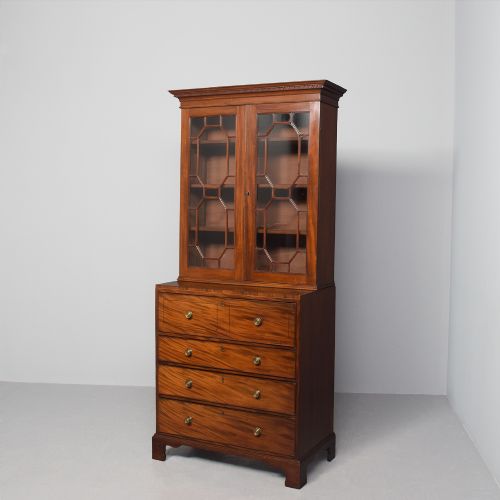
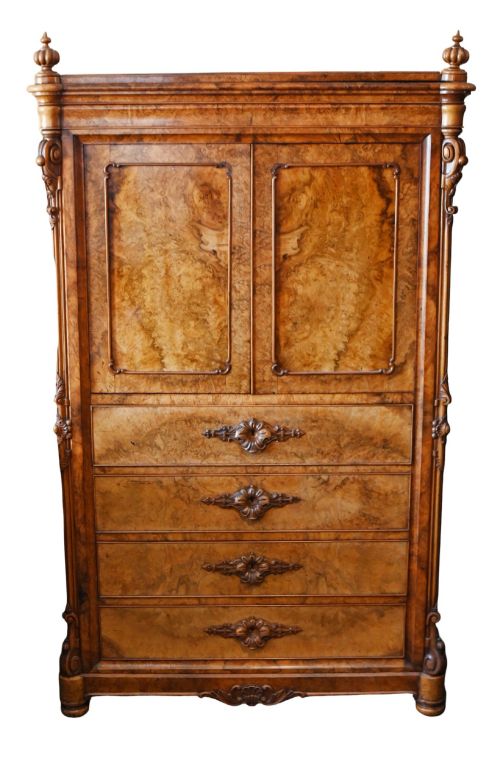
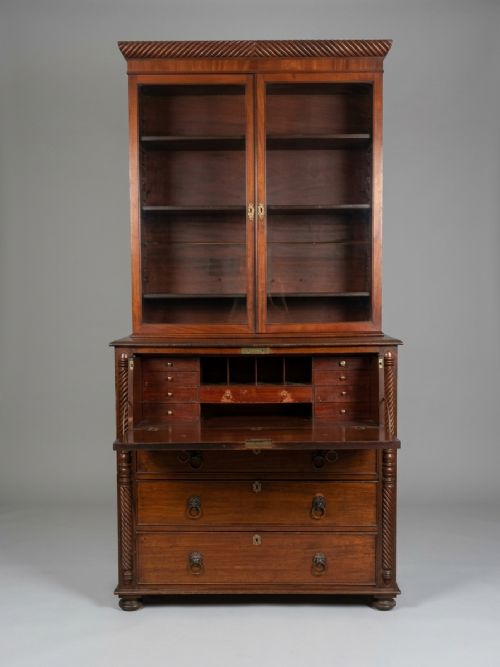
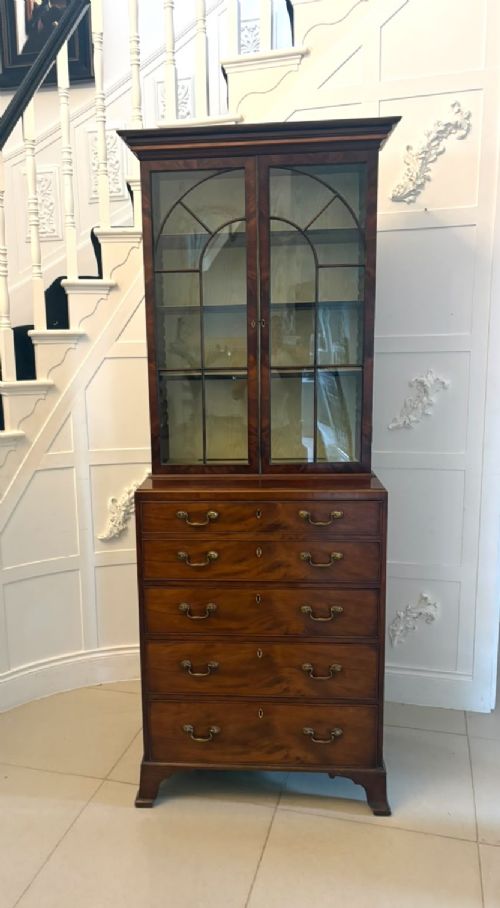
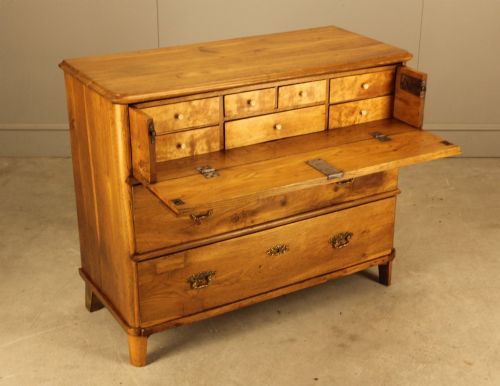
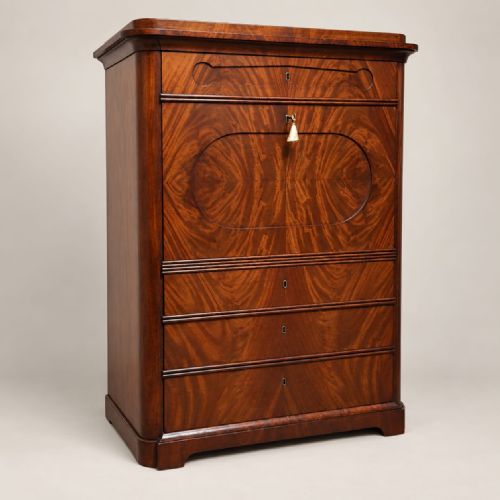
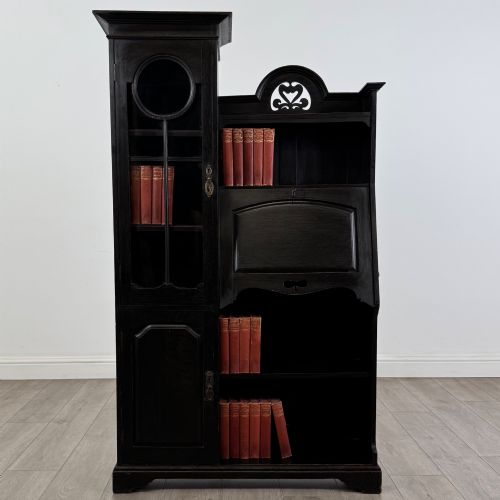
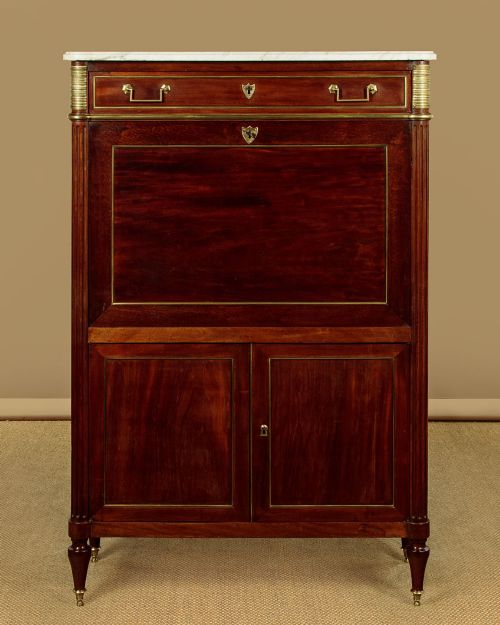
Drop Front Secretaire Desk
A drop front secretaire desk conceals a fitted writing interior behind a folding panel, combining concealed storage with formal display.
Drop Front Secretaire Desk
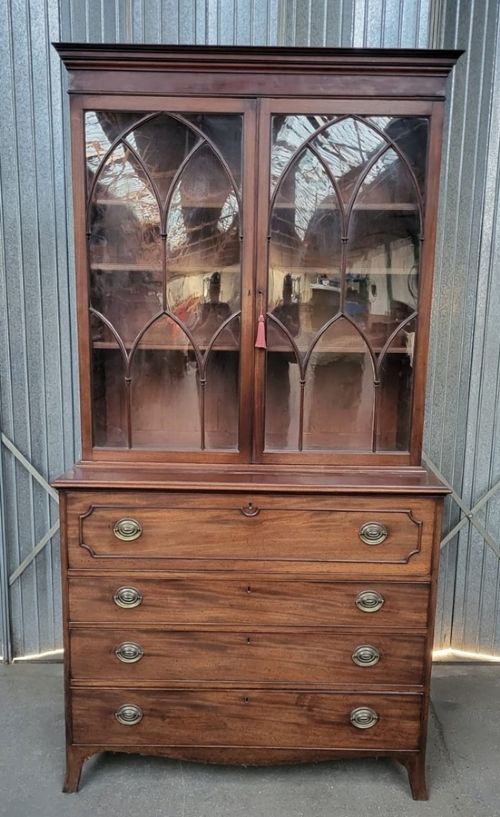
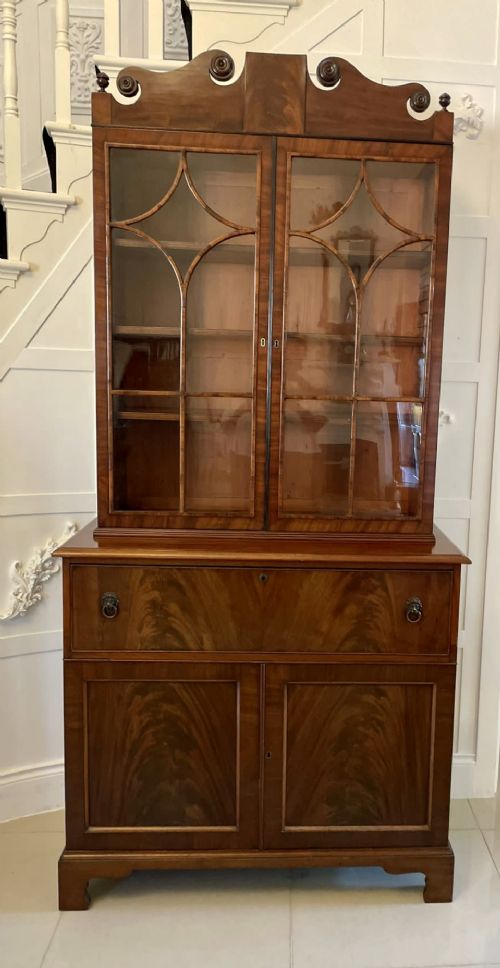
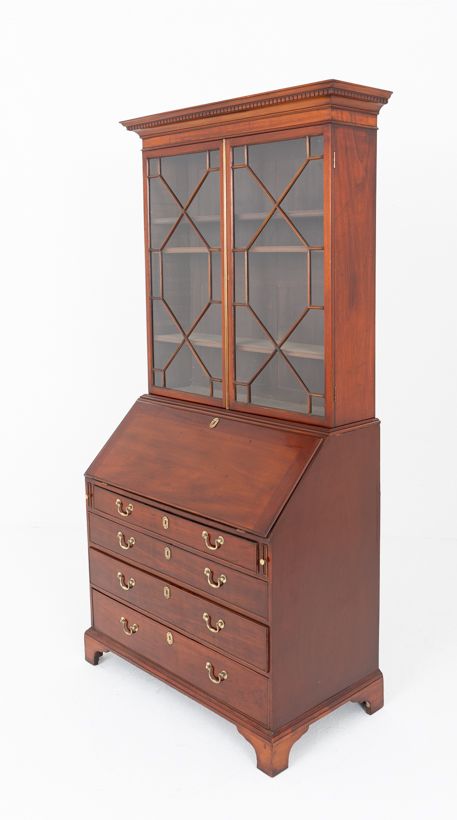
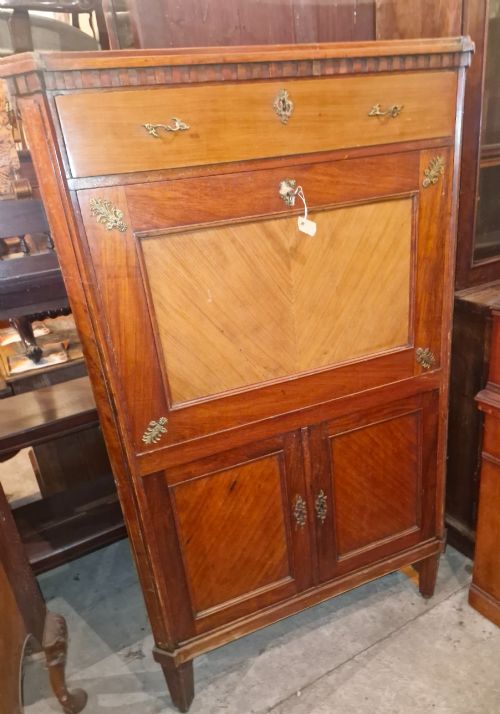
When you search for a drop front secretaire desk, you encounter case furniture designed for correspondence and concealment, bridging the cabinet and the writing table. The form takes several distinct shapes across periods ranging from the eighteenth century to the twentieth century, appearing as tall secretaire bookcases, upright abattants, and compact chests of drawers.
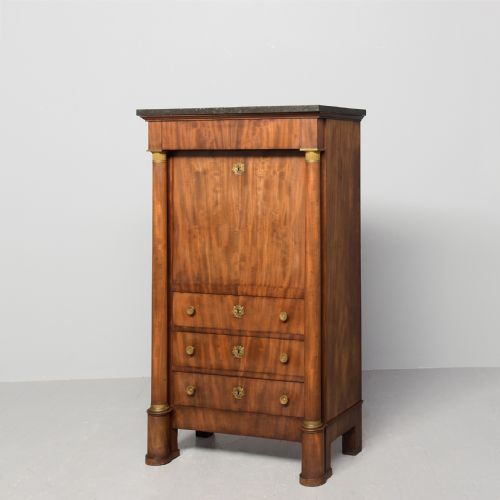
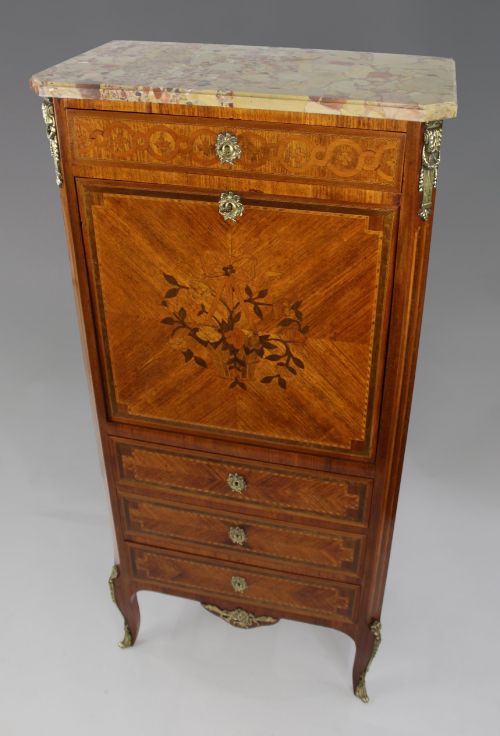
The version you are most likely to meet on this page is the nineteenth-century mahogany secretaire bookcase or the continental secretaire abattant fitted with a marble top. These pieces emerge in styles including Georgian, Regency, Victorian, and French periods such as Louis XV Revival and Empire.
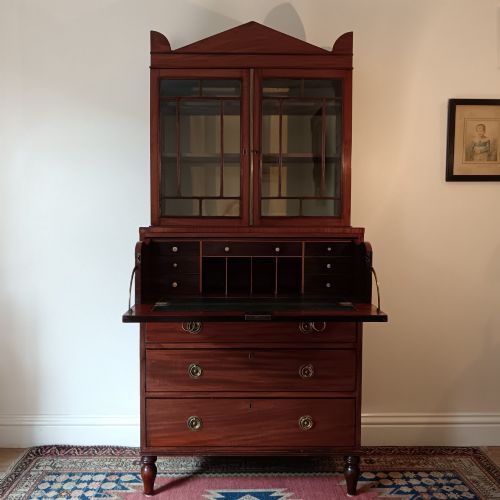
Makers and workshops construct these items to serve dual purposes, presenting glazed upper bookcase sections or polished wood facades that drop down to reveal pigeonholes, small drawers, and secret compartments. The internal fittings define the utility of the desk, separating public display from private paperwork.
Materials and construction
Cabinetmakers utilise dense timbers such as mahogany, walnut, rosewood, kingwood, and oak as the structural foundation for these desks. Veneers in flame mahogany, burr birch, and floral marquetry create patterned surfaces across the drop-down writing flaps and cabinet doors.
Joinery techniques incorporate brass hardware, ormolu or gilt bronze mounts, and leather writing surfaces inset into the fold-down panels. French abattants frequently integrate original marble tops and locking mechanisms that secure the internal secret drawers alongside the main writing compartment.
Listings feature woods including mahogany, walnut, rosewood, kingwood, burr birch, and oak across Georgian, Regency, Victorian, and Edwardian periods.
Variations in quality
The calibre of a drop front secretaire desk rests on the selection of timber grains, such as matched flame mahogany or intricate marquetry patterns, and the crispness of carved or cast bronze mounts. Superior examples demonstrate precise dovetailing in the concealed inner drawers and well-balanced mechanisms for the drop front flap.
Attribution to documented workshops or makers influences the standing of a piece, alongside the preservation of original glass, marble tops, and internal leather inserts. Uniformity in the patination and the integration of secondary woods indicate the standard of construction maintained by the maker.
George Oakley·Gillows of Lancaster·Blake
The Drop Front Secretaire Desk Glossary
- Secretaire abattant
- An upright writing cabinet featuring a drop-down front panel that conceals a fitted interior of small drawers and pigeonholes.
- Escritoire
- A writing desk or cabinet, often taking the form of a chest or bureau with a fall-front writing surface.
- Ormolu
- Gilt bronze mounts applied for decorative effect on cabinet corners, feet, and friezes, particularly common in French furniture.
- Marquetry
- Inlaid patterns of various coloured woods applied to furniture surfaces to form floral or geometric designs.
- Wellington chest
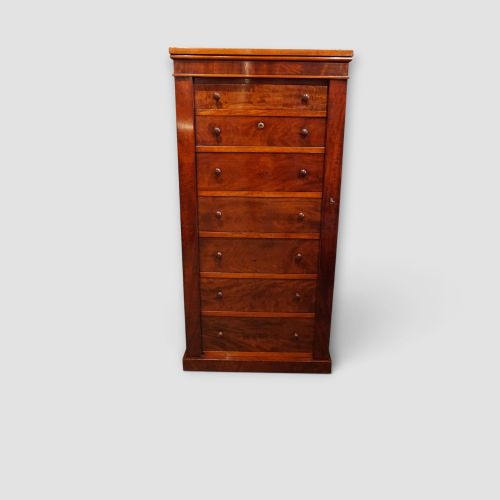
- A tall, slender chest of drawers secured by a vertical locking flap hinged on one side.
Drop Front Secretaire Desk: Frequently Asked Questions
What is a drop front secretaire desk?
A drop front secretaire desk is a cabinet or chest featuring a hinged writing flap that pulls down to reveal internal compartments, pigeonholes, and small drawers.
These pieces combine the storage capacity of a chest or bookcase with the dedicated workspace of a traditional writing table.
How do you use a secretaire abattant?
You unlock the main fall-front panel and lower it into a horizontal position, where support arms or desk stays hold it level for writing.
Inside, you access the fitted stationery compartments and hidden drawers before closing and locking the panel when not in use.
How do I identify Georgian secretaire bookcases?
Georgian secretaire bookcases display architectural proportions, solid mahogany or walnut construction, and glazed upper bookcase doors with wooden astragals.
The writing drawer pulls down to expose simple mahogany-lined interior drawers rather than the elaborate gilt mounts found on later continental pieces.